
Concrete and fiberglass pools often cost more because they require major excavation, longer timelines, permits,…
Doughboy vs. Fiberglass vs. Concrete Pools: What NC Homeowners Need to Know
Compare Doughboy, fiberglass, and concrete pools so you can choose the best fit for your North Carolina backyard, budget, and long-term maintenance needs.
Concrete pools last the longest but cost the most to build and own. Fiberglass is faster to install and easier to maintain. Semi-inground and inground Doughboy vinyl pools deliver a permanent backyard solution for 50 to 70% less than traditional builds, with liners that typically last 10 to 15 years and frames engineered to last 20 to 40 years. The right choice comes down to your budget, yard conditions, and how long you plan to stay in the home.
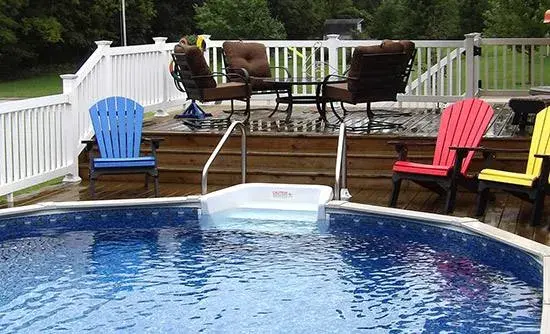
You get three quotes. The concrete pool comes in at $110,000. The fiberglass is $80,000. Then someone mentions a Doughboy semi-inground for $22,000. Your first instinct is probably that the Doughboy must be the cut-rate temporary option.
That instinct is understandable, but it misses a lot of the picture.
Doughboy is a pool manufacturer with decades of history building above-ground and semi-inground pools from heavy-gauge galvanized steel and commercial-grade vinyl liners. Their semi-inground Hydrosphere is the only ICC-ES certified semi-inground pool on the market, meaning it meets the same structural building codes used for permanent construction. That puts it in a different category than the cheap inflatable or thin-walled ring pools most people picture when they hear “above-ground.”
This article breaks down all three pool types: vinyl Doughboy, fiberglass, and concrete. You will see where each one wins, where each one falls short, and which type fits which buyer situation in North Carolina.
Table of Contents
What Is a Doughboy Pool and How Is It Different From a “Regular” Above-Ground Pool?
Doughboy pools use heavy-duty 14-gauge galvanized steel walls, virgin-vinyl liners, and structural frame systems built to ICC-ES certified standards. Unlike typical seasonal above-ground pools, Doughboy pools can be installed fully above ground, partially recessed as a semi-inground, or completely buried like a traditional inground pool. That flexibility, combined with their engineering, puts them in a different category from the pool-in-a-box options you find at big-box retailers.
The key distinction is the liner-and-wall system. Fiberglass and concrete pools use a hard shell or formed surface. Doughboy pools use a precision-fitted vinyl liner over a structural frame. The liner is replaceable. The frame is designed to last decades when properly maintained.
Generic above-ground pools typically use 20-gauge steel or thinner, with vinyl liners rated for 2 to 5 years. Doughboy’s 14-gauge walls are roughly 50% heavier than many competing above-ground pool brands, according to Doughboy’s product specifications, and their liners are rated for 10 to 15 years under normal conditions. Those are very different products, even if they both technically fall under the “above-ground” category.
When you are comparing a Doughboy semi-inground installation to a fiberglass or concrete pool, you are comparing a permanent backyard investment to two other permanent backyard investments. Not a seasonal toy to a real pool.
How Do Initial Costs Compare Across Pool Types?
Concrete pools typically start at $65,000 and can run $150,000 or more for a complete turnkey installation. Fiberglass installs usually range from $45,000 to $85,000 or higher depending on size and site conditions. A complete semi-inground or inground Doughboy installation typically ranges from $11,000 to $30,000, depending on the model, site prep, decking, and add-ons. For many North Carolina homeowners, that gap makes a Doughboy the only realistic path to a permanent pool.
Here is how the numbers compare:
| Pool Type | Kit or Shell Cost | Typical Turnkey Install | Key Cost Driver |
|---|---|---|---|
| Doughboy / Semi-inground vinyl | $6,000 to $15,000 | $11,000 to $30,000+ | Liner replacement every 10 to 15 years |
| Fiberglass | Starts around $55,000 | $45,000 to $85,000+ | Shell delivery, excavation, faster install |
| Concrete | Starts around $65,000 | $65,000 to $150,000+ | Custom build, long timeline, resurfacing cycle |
For a household with a $30,000 to $40,000 pool budget, semi-inground swimming pools like a Doughboy open a path that fiberglass and concrete simply do not. For a more complete look at what pools cost across all types in North Carolina, the cost of a swimming pool breakdown covers the line items worth knowing before you budget.
It is also worth noting that all three pool types carry costs beyond the pool itself. According to pool installation cost data compiled by HomeAdvisor, common add-ons include permits ($200 to $800 depending on county), electrical work ($1,500 to $3,500 or more), fencing requirements ($1,500 to $5,000), and landscaping repair after installation. Those costs apply across all three types, so they do not change the relative comparison, but they should not come as a surprise.
What Are the Real Long-Term Ownership Costs?
The purchase price is only part of what you will spend over the life of a pool. Concrete pools are the most expensive to own over time, largely because of resurfacing. Fiberglass has the lowest ongoing costs of the three. Vinyl Doughboy pools sit in the middle: lower upfront, but with a liner replacement cycle that should be factored in from the start.
Here is what to expect over the long term:
| Cost Category | Doughboy / Vinyl | Fiberglass | Concrete |
|---|---|---|---|
| Chemical use (yearly) | Moderate | Lowest | Highest |
| Surface lifespan | Liner: 10 to 15 years ($1,500 to $4,000+ to replace) | Gelcoat: 15 to 20 years before possible repair | Plaster: 10 to 15 years before resurfacing ($6,000 to $15,000) |
| Weekly brushing required | Occasional | Minimal | Yes (steel brush recommended) |
| Equipment replacement | Every 8 to 12 years | Every 8 to 12 years | Every 8 to 12 years |
A useful planning framework is what pool industry professionals sometimes call the “25/10 rule”: budget for major shell or surface work at the 25-year mark, and plan for equipment replacement every 8 to 10 years. All three pool types follow a similar equipment cycle. Where concrete separates itself is the resurfacing cost, which can run $6,000 to $15,000 depending on pool size and finish, according to data from Bob Vila’s cost research.
Expert Tip from Epic Swimming Pools: When customers come in comparing pool types, the conversation usually starts with the installation quote. What surprises most people is how much the ongoing costs shift the full picture. A concrete pool at $90,000 plus $10,000 in resurfacing every 10 to 15 years looks different over a 30-year period than a Doughboy installation at $25,000 with a $3,000 liner replacement. Running the total cost of ownership, not just the sticker price, is the comparison worth making.
How Long Do These Pools Actually Last?
Concrete pools have the longest structural lifespan, typically 50 years or more with proper care. Fiberglass pools generally last 20 to 40 years before the shell might need professional attention. Well-installed Doughboy pools can also last 20 to 40 years.
The part of a Doughboy pool that wears out first is the liner, not the frame. Liners typically last 10 to 15 years. That is a planned maintenance cost, not a structural failure. When the liner reaches the end of its life, you replace it. The walls, frame, and structural components continue.
| Pool Type | Structural Lifespan | Liner or Surface Life | Notes |
|---|---|---|---|
| Doughboy / Semi-inground vinyl | 20 to 40 years (frame) | 10 to 15 years (liner) | Liner is replaceable; frame is the long-term investment |
| Fiberglass | 20 to 40 years | 15 to 20 years (gelcoat may need repair) | Durable shell but not immune to surface wear |
| Concrete | 50+ years (structure) | 10 to 15 years before resurfacing | Most durable structure, highest ongoing surface cost |
According to the Pool and Hot Tub Alliance, all three pool types can provide decades of use when properly maintained and professionally installed. The lifespan difference between Doughboy and fiberglass is largely in the surface component, not the structural one.
One more thing worth noting: the Doughboy Hydrosphere is the only ICC-ES certified semi-inground pool available, meaning it is engineered and tested to meet formal building code standards. That certification matters when you are asking whether a Doughboy semi-inground is a real permanent installation. It is.
Which Pool Type Is Easier to Maintain?
Fiberglass requires the least maintenance of the three. Its non-porous gelcoat surface resists algae naturally, needs fewer chemicals to hold pH balance, and requires no heavy brushing. Vinyl is the middle ground: smooth and non-porous, easier to clean than concrete, but sensitive to sharp objects and requiring consistent chemical balance to prevent liner bleaching or early degradation. Concrete needs the most hands-on upkeep: weekly steel brushing, more frequent chemical adjustments, and a rough texture that swimmers sometimes call “pool toe.”
| Maintenance Factor | Doughboy / Vinyl | Fiberglass | Concrete |
|---|---|---|---|
| Surface texture | Smooth vinyl | Smooth gelcoat | Rough plaster |
| Algae resistance | Good (non-porous liner) | Best (non-porous gelcoat) | Low (porous plaster needs more treatment) |
| Chemical use | Moderate | Lowest | Highest |
| Brushing required | Occasional | Minimal | Weekly (steel brush) |
| Surface sensitivity | Sharp objects damage liner | Impact can chip gelcoat | Chemical staining and etching over time |
One thing to watch with vinyl pools: chemical balance matters more than with fiberglass. Too much chlorine or off-pH water over time will bleach or degrade the liner faster than normal wear would. This is manageable with consistent water testing, but it requires more attention than a fiberglass owner typically needs.
Epic Swimming Pools Note: North Carolina summers are warm and humid, and that combination accelerates algae growth in any pool. We see it most in concrete pools, where the porous plaster gives algae a foothold that vinyl and fiberglass surfaces do not provide in the same way. For NC homeowners who want to spend less time on pool upkeep during peak season, that surface difference is real and worth factoring into the comparison from the start.
What About Installation Speed and Backyard Disruption?
Concrete takes the longest to install: typically 3 to 6 months from excavation to swim-ready, involving heavy equipment, multiple subcontractors, plumbing, decking, and curing time. Fiberglass is the fastest inground option, with shells often delivered and set in a matter of weeks once permits are in order. Doughboy semi-inground kits are also relatively fast and are well-suited for yards where heavy excavation is difficult or impractical.
The disruption factor is often underestimated. A concrete build can leave your yard unusable for months. Fiberglass excavation is faster but still involves heavy equipment. Semi-inground and above-ground Doughboy installations generally require less excavation and less equipment access, which matters on tighter North Carolina suburban lots where a large excavator may not have easy entry.
For homeowners on sloped yards, semi-inground Doughboy installations are particularly practical. Full excavation on a sloped site can become complicated and expensive. A semi-inground system allows the pool to sit partially above the natural grade, using the slope to your advantage rather than fighting it. There is more detail on how different yard types affect pool selection in the pool options for small backyards guide.
Can You Customize These Pools?
Concrete offers the most flexibility. Because concrete is formed on-site, you can build virtually any shape: L-shaped, kidney, freeform, geometric, or fully custom. Fiberglass and Doughboy pools are constrained by manufacturer molds and available models.
That said, “constrained to pre-built models” is not the same as “no choices.” Doughboy offers several configuration options including oval, grecian, and freeform shapes across their pool line, with different wall heights and deck integration options available. Fiberglass shells come in a wide range of sizes and shapes depending on the manufacturer.
If you have a standard rectangular or oval footprint in mind, which covers most residential pools, all three types can serve you. If you have a highly irregular lot or want a completely custom shape, concrete is the only option that truly accommodates that.
Which Pool Type Is Best for North Carolina Yards?
For most North Carolina homeowners, the best pool type depends on budget, yard terrain, and how long you plan to stay in the home. NC’s clay-heavy soils, humid summers, HOA-heavy suburban communities, and relatively mild winters each affect which pool type makes the most practical sense.
| Buyer Situation | Best Pool Type | Why |
|---|---|---|
| Budget under $30,000 for a permanent pool | Doughboy semi-inground | Only option that delivers a permanent installed pool in this range |
| Sloped yard or limited excavation access | Doughboy semi-inground | Can be set above natural grade, avoids complex excavation |
| Lowest lifetime maintenance cost | Fiberglass | Non-porous surface, fewer chemicals, minimal brushing |
| Longest structural lifespan | Concrete | 50+ years with proper maintenance |
| Fastest installation | Fiberglass or Doughboy semi-inground | Both faster than concrete |
| Custom shape or irregular lot | Concrete | Only option with true custom shaping |
| Small or tighter suburban lot | Doughboy semi-inground | Compact footprint, less excavation required |
NC’s clay soils can be particularly challenging for concrete installations because clay expands and contracts with moisture changes, which stresses a rigid structure over time. Fiberglass shells handle soil movement better because the shell flexes slightly rather than resisting. Doughboy’s vinyl liner and structural frame system is also less susceptible to the pressure shifts that rigid concrete shells can experience in clay-heavy NC soils.
For homeowners in Raleigh, the Triangle, or Charlotte who want a permanent-looking pool without a six-figure budget, semi-inground swimming pools are often the most practical starting point for a conversation. A Raleigh pool contractor who knows local site conditions, permits, and HOA requirements can help figure out which type actually fits your specific yard.
From the Epic Swimming Pools Team: One of the situations where we often recommend a Doughboy semi-inground over fiberglass is when a customer has a sloped yard and a budget under $40,000. Fiberglass on a sloped site requires more grading and site prep, which adds cost. A semi-inground system uses the slope to your advantage and can actually look more integrated into the landscape than a fully buried shell would on the same terrain. It is worth asking about during a site consultation.
Which Pool Type Is Right for You?
There is no universal “best pool.” Concrete wins on longevity and customization. Fiberglass wins on low maintenance and fast installation. Doughboy semi-inground and inground installations win on upfront cost and are a legitimate permanent option for homeowners who have dismissed them as just another above-ground pool.
If you have a typical NC suburban yard, a budget under $40,000, or a sloped site that makes full excavation complicated, a Doughboy installation is worth a serious look. If lifetime maintenance simplicity matters most, fiberglass is hard to beat. If you have the budget, want a fully custom shape, and plan to stay in the home for decades, concrete may be worth the investment.
The team at Epic Swimming Pools works with homeowners across Raleigh, the Triangle, Sanford, and Charlotte to figure out which option actually makes sense for their specific yard and goals. Request pricing to start a conversation. There is no commitment involved, and you do not need to have everything figured out before reaching out.
Frequently Asked Questions
Is a Doughboy pool considered a permanent pool or a temporary one?
A quality Doughboy installation, particularly a semi-inground or fully buried configuration, is considered a permanent pool installation. The structural frame is designed to last 20 to 40 years. The Doughboy Hydrosphere is the only ICC-ES certified semi-inground pool on the market, meaning it meets the same formal building code standards used for permanent construction. The liner is a replaceable component, not a structural limit on the pool’s life.
How often does a Doughboy vinyl liner need to be replaced?
Doughboy liners typically last 10 to 15 years under normal conditions with proper chemical balance and care. The exact lifespan depends on water chemistry, UV exposure, usage, and maintenance. When a liner reaches the end of its life, it is replaced without affecting the structural frame. This is a planned maintenance cost, similar to resurfacing a concrete pool, not a sign that the pool has failed.
Does a concrete, fiberglass, or Doughboy pool add more value to my home?
All three pool types can contribute to home value when properly installed and maintained, but the relationship between pools and resale value is not straightforward. Permanent installations including Doughboy semi-inground and fiberglass pools generally contribute more to perceived value than temporary above-ground options. Concrete is traditionally associated with the highest perceived value, though higher maintenance costs and local buyer preferences affect the actual return. Verify expected resale impact with a local real estate professional before making a buying decision based primarily on home value assumptions.
Can a Doughboy pool be fully buried in the ground like a concrete or fiberglass pool?
Yes. Doughboy pools can be installed fully above ground, partially recessed as a semi-inground, or completely buried. The semi-inground and in-ground configurations use the same structural frame system engineered for the load and soil pressures involved in below-grade installation. Full burial is available on qualified models. Confirm which Doughboy models support full in-ground installation with your pool dealer before purchasing.
Which pool type needs the fewest chemicals to maintain?
Fiberglass requires the fewest chemicals of the three. Its non-porous gelcoat surface resists algae naturally, which reduces the sanitizer and algaecide needed to keep the water balanced. Vinyl pools are smooth and non-porous as well, making them easier to maintain than concrete, but slightly more chemical-sensitive because harsh imbalances can degrade the liner over time. Concrete pools need the most chemicals because the porous plaster surface provides a foothold for algae and requires more frequent pH and alkalinity correction.