
Small backyards don’t mean giving up on a pool. Compare the best swimming pool options…
Cost of a Swimming Pool in North Carolina
Discover the real costs of building your dream inground swimming pool in North Carolina, depending on size, materials like fiberglass or concrete, site preparation, and custom features, and get a personalized quote tailored to your backyard today!
Scrolling through pool photos on Instagram, it’s easy to imagine all the lazy summer afternoons with a cold drink in hand, the kids laughing, the water sparkling, not a worry in the world. Not too long after that fantasy, though, a sobering question always rears its head: Is having a pool expensive? And more specifically, how much does an inground pool cost to actually own and operate year after year?
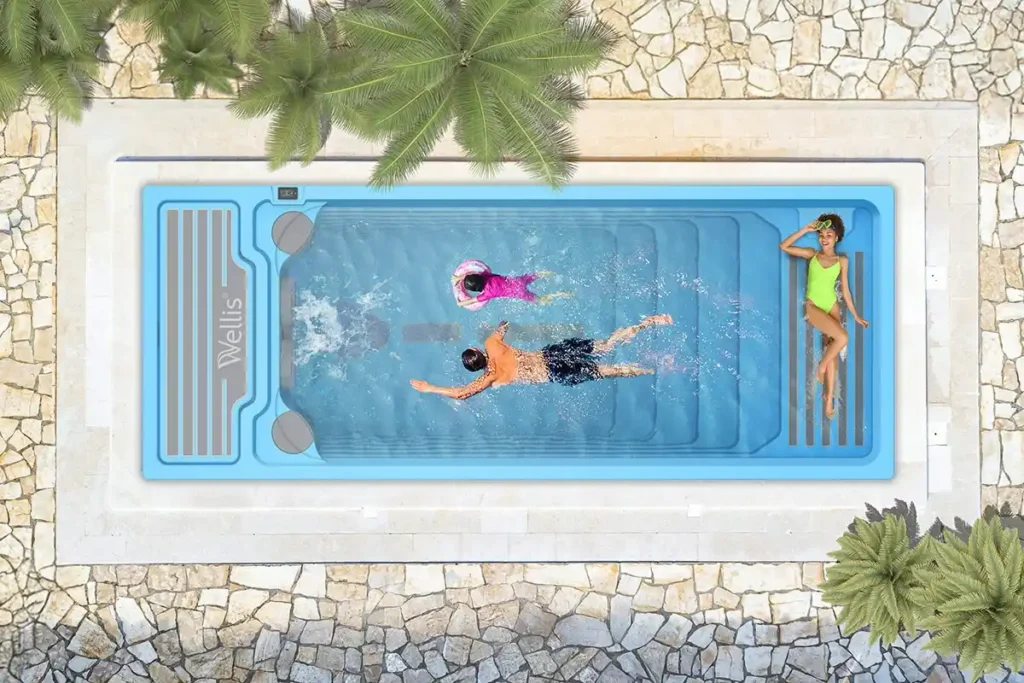
Most people focus on the installation price tag and forget about the swimming pool cost that keeps going. Routine upkeep runs about $80 to $150 a month, so roughly $960 to $1,800 a year. Large, heated or high-end pools push that toward $3,500 to $5,000, depending on pool type, size and how much of the work you do yourself.
To make sure you’re prepared for all the costs pool installation and ownership might throw your way, we’re covering:
- Complete breakdown of annual operating costs, from electricity to chemicals
- How different pool types affect your monthly expenses
- Smart strategies that reduce costs without sacrificing your pool experience
Ready to see the real numbers? Contact us for a personalized cost estimate for your situation.
Table of Contents
| Cost Category | Inground Pool (Fiberglass preferred) | Wellis Beach Club Swimming Pool |
|---|---|---|
| Upfront Cost (Unit + Installation) | $65,000 to $120,000 (Fiberglass: lower end; includes decking & features) | $35,000 to $45,000 |
| Installation Complexity | High (excavation, plumbing, electrical, decking; 1 to 3 months) | Low (above-ground placement, electrical hookup; quick setup) |
| Yearly Operating & Maintenance Costs | $1,200 to $4,000 (Fiberglass lowest; includes utilities, chemicals, service) | $800 to $1,800 (Smaller volume ~1,900 gal, efficient insulation & WellisGuard™ system) |
| Key Advantages | Full-size swimming, highest resale value, customizable | Year-round use, swim + relax zones, low energy/chemical use |
Understanding the True Cost of Pool Ownership
The purchase price is just the beginning. If you’re curious about just the initial installation expenses, our guide on the cost of building a swimming pool covers that in detail. This article focuses on what happens after installation: the ongoing expenses that add up over years of ownership.
The average pool owner spends between $3,000 and $6,000 annually on total pool costs, including utilities, chemicals, maintenance, and minor repairs. That number shifts based on three major factors: utility costs (electricity and water), maintenance expenses (DIY or professional), and equipment replacement (pumps, filters, heaters eventually fail).
Annual Operating Costs: What to Expect
The average cost of swimming pools for yearly operation varies significantly based on pool type, but understanding these numbers helps you budget realistically.
Typical Yearly Expense Ranges by Pool Type
Before you pick out the type of pool you want, consider how the materials will affect your maintenance costs each year:
- Fiberglass in-ground pools: $1,200 to $2,000 annually. These prefabricated units arrive ready-to-install with that smooth, non-porous surface that resists algae naturally, uses fewer chemicals, and insulates better than concrete (cutting heating costs by 15-20%).
- Vinyl liner pools: $1,500 to $2,800 annually. Mid-range maintenance with moderate chemical needs. The vinyl pool walls require less chemical treatment than concrete but more attention than fiberglass.
- Concrete pools: $2,500 to $4,000+ annually. Custom pool designs offer unlimited shapes and sizes but come with porous surfaces that require more chemicals, longer filter cycles, and constant attention.
When you factor in everything, the total cost of swimming pool ownership lands between $3,000 and $6,000 annually for most people.
Breaking Down Monthly Operating Costs
Monthly expenses range from $80 to $500 depending on setup and season. The cost of an average-size pool (15,000-20,000 gallons) with basic equipment typically runs $150-$300 monthly during peak season. DIY maintenance typically costs around $250 monthly during swimming season. Professional service averages $500 monthly.
Summer months hit harder. You might spend $300 monthly from May through September, then drop to $50 during off-season for basic chemical balance.
| Pool Type | DIY Maintenance | Professional Service | Electricity (No Heating) | Electricity (With Heating) | Total Monthly Range |
| Fiberglass | $40 to $60 | $100 to $250 | $30 to $80 | $80 to $180 | $100 to $250 (DIY) / $210 to $510 (Pro + Heating) |
| Vinyl Liner | $50 to $80 | $120 to $280 | $40 to $100 | $100 to $220 | $120 to $280 (DIY) / $260 to $580 (Pro + Heating) |
| Concrete | $60 to $100 | $150 to $300 | $50 to $120 | $120 to $250 | $150 to $320 (DIY) / $320 to $670 (Pro + Heating) |
Note: These ranges assume medium-sized pools (15,000-25,000 gallons) with variable-speed pumps and heat pump heating (where applicable). Gas heating adds $100-$300 more per month.
Electricity Costs: Pumps, Heaters, and Lighting
Your electric bill will go up when you add a pool. The question is how much.
| Equipment Type | Monthly Cost | Annual Savings Potential | Notes |
| Variable-Speed Pump | $13 to $50 | $300 to $600 vs single-speed | Most efficient; Energy Star certified options available |
| Dual-Speed Pump | $25 to $80 | $150 to $300 vs single-speed | Mid-range efficiency; good compromise |
| Single-Speed Pump | $30 to $150 | N/A (baseline) | Being phased out; highest energy consumption |
| Heat Pump | $50 to $150 | Up to 80% vs electric resistance | Best for warm climates (50°F+ outdoor temp) |
| Electric Resistance Heater | $175 to $600 | N/A (highest cost) | Fast heating but expensive operation |
| Gas Heater (Natural Gas) | $200 to $400 | Varies by region | $3 to $9 per hour; fast heating |
| Propane Heater | $400 to $850 | N/A (most expensive) | Last resort option for remote locations |
| Solar Heating | $10 to $25 | 85 to 95% vs other methods | $2,500 to $6,500 installation; best long-term ROI |
Other Factors That Might Affect Heat Costs
- Variable-speed pumps cost $800 to $1,500 more upfront but pay for themselves in 1-2 years through energy savings. Many utilities offer rebates covering 25-50% of the cost difference.
- Regional differences significantly impact heating costs. Hot, dry regions see 30% higher evaporation rates, meaning more heat loss. An IoT-controlled solar system reduced daily heating costs from $16.36 to just $0.28.
- Pool covers reduce heating costs by 50-70%. A $300 manual cover saves $500 to $1,000 annually. Automatic covers ($8,000-$20,000) ensure consistent use through convenience.
- LED Lighting saves 75-80% on energy versus halogen. Upfront cost is minimal ($20 to $100 per fixture), with payback in the first year. Bulb lifespan extends from a few thousand hours to 25,000-50,000 hours.
- Pool automation systems ($500-$3,000 installation) add just $5-$15 monthly to electricity bills but optimize pump schedules based on time-of-use rates and usage patterns. Many users see 15-25% reductions in total operating costs. Pool accessories like automatic cleaners and smart controls further enhance efficiency.
Total Monthly Electricity by Pool Size
- Small pools (10,000 to 15,000 gallons): $40 to $120/month with variable-speed pump and moderate heating
- Medium pools (15,000 to 25,000 gallons): $60 to $200/month with similar equipment
- Large pools (25,000+ gallons): $100 to $300+/month (40-60% more energy than medium pools)
Water Costs
Water usage is a major component of overall pool maintenance costs, and most homeowners can expect their monthly water bill to increase by $4 to $20, or roughly $50 to $245 per year. The exact amount depends on your local climate, pool size, and how effectively you manage water loss.
Climate, for one, plays a significant role in evaporation rates. Pools in hot, arid regions such as Arizona or Nevada can lose up to 30% more water than pools in humid areas, resulting in more frequent top-offs and higher utility bills. In contrast, states like Florida benefit from naturally high humidity, which slows evaporation and helps keep water levels more stable. Using a pool cover is one of the simplest ways to control these losses. Covers can reduce evaporation by 50% to 70%, which often translates into noticeable savings and a fast return on investment.
In addition to routine topping-off, homeowners should plan for periodic full refills. Most pools need to be completely drained and refilled every 3 to 5 years to remove dissolved solids, minerals, and chemical buildup that filtration alone cannot address. Depending on your local water rates and pool volume, this process typically costs $200 to $500 for a standard residential pool.
Chemical Costs
Chemicals are one of the most predictable ongoing expenses of pool ownership. Most homeowners spend $300 to $800 per year about $25 to $70 per month when managing their own water chemistry. The exact cost depends on your pool type, filtration efficiency, and how proactively you maintain water balance.
Here is what your shopping list will look like:
- Chlorine: Biggest ongoing expense. Tablets are convenient; liquid bleach is cheaper but requires more frequent application.
- pH balancers: Muriatic acid to lower pH, soda ash to raise it. Essential for chemical balancing and water quality.
- Alkalinity adjusters: Prevent corrosion and scaling
- Shock treatments: Super-chlorination to kill algae and bacteria, typically weekly or when water looks questionable
- Algaecide: Backup protection for algae prevention
Your filtration system plays a big role in how many of these chemicals you’ll actually need. A properly sized and well-maintained filter keeps debris under control and reduces the chemical load required to keep water clean. A struggling or undersized filter, on the other hand, forces you to compensate with more sanitizers, more shock, and more frequent chemical adjustments.
Chemical Usage by Pool Type
- Fiberglass pools: Up to 50% fewer chemicals thanks to non-porous gel coat surface that resists algae naturally. Over 10 years, fiberglass pool maintenance costs total $3,750-$6,500 while concrete pools hit $15,000-$27,000.
- Concrete pools: Highest chemical requirements due to porous surface that’s algae’s favorite home. More chlorine, more algaecide, more time brushing walls.
- Vinyl liner pools: Moderate chemical needs. Smooth liner helps but isn’t as resistant as fiberglass gel coat.
Advanced Systems and Chemical Costs
For homeowners looking to reduce chemical costs even further, advanced sanitization systems offer long-term savings. Saltwater systems (or salt chlorine generators) cost $1,500 to $2,500 upfront but automatically convert salt into chlorine, providing steady sanitization without the constant need to buy chlorine products.
Ozone generators and UV systems, typically $500 to $2,000, work alongside chlorine to kill contaminants, allowing you to use far less of it. Some specialty systems, such as WellisGuard™ used in Wellis swimming pools, combine multiple sanitizing technologies to keep water clearer with dramatically less chemical intervention.
Maintenance Costs: DIY vs. Professional Service
Once your pool is built, the way you maintain it becomes one of the biggest factors in long-term ownership costs. Whether you handle upkeep yourself or hire a professional service, each approach has its own costs, time commitments, and benefits.
DIY Pool Maintenance: $50 to $80 per Month
For homeowners willing to take on weekly upkeep, DIY maintenance is the most budget-friendly option. Most of the monthly cost comes from buying chemicals and replacing small pieces of equipment as they wear out.
DIY maintenance typically involves:
- Skimming debris off the surface before it sinks to the bottom.
- Vacuuming the pool weekly, either manually or with a basic automatic cleaner.
- Brushing the walls and steps to prevent algae buildup.
- Testing and adjusting water chemistry, often 2 to 3 times per week.
- Emptying skimmer and pump baskets to maintain proper circulation.
- Basic filter maintenance, such as backwashing or rinsing cartridges.
Most DIYers spend 30 to 60 minutes per week on these tasks. It’s cost-effective, but missing any steps can lead to algae blooms, stains, cloudy water, or equipment damage.
Professional Weekly Service: $100 to $300 per Month
Hiring a professional maintenance company adds convenience and can reduce long-term repair costs. It’s more expensive up front, but many homeowners find that the consistency and expertise prevent problems that could cost even more to fix.
Professional service typically includes:
- All standard DIY tasks
- Precise chemical testing and balancing
- Regular equipment inspections, catching small issues early
- Minor repairs, such as fixing pumps, fittings, or valves before they fail
- Monthly filter deep cleaning, which helps maintain clarity and circulation
One of the biggest advantages is avoiding costly mistakes. A single algae bloom can cost $50 to $100 to correct, and recurring blooms can damage filters and plaster.
Seasonal Maintenance Costs
Most pools also require seasonal services, though the price depends heavily on your climate.
Pool Opening: $150 to $300
Pool opening is the process of getting your pool ready for the swimming season after being inactive during cooler months. It involves removing the pool cover, reconnecting the pump and filtration equipment, bringing the water level back up, restarting circulation, and balancing the water chemistry so the pool is clean, safe, and ready to use.
Winterization: $200 to $300
Pool winterization prepares your pool for freezing weather. This includes shocking the water, lowering the water level, blowing out and sealing plumbing lines to prevent freeze damage, adding winter chemicals, and installing a secure winter cover. The goal is to protect your pool’s structure and equipment throughout the off-season and make reopening smoother in spring.
Cleaning Equipment Investments
Even with professional service, most pool owners need basic tools or automated cleaners.
Manual Tools: $50 to $200 per year
Skimmer nets, brushes, vacuum heads, and telescoping poles eventually wear out and need replacement.
Robotic Cleaners: $250 to $1,500 upfront
These high-efficiency cleaners dramatically reduce manual vacuuming and often lower energy costs by keeping water cleaner and reducing strain on the filtration system.
Pressure or Suction Cleaners: $200 to $600
These mid-range options connect directly to your pool’s existing plumbing and automate part of the cleaning process, though they are less effective than full robotic systems.
When Professional Help Makes Financial Sense
There are some cases when it’s always a better idea to call in the pros. Complex repairs, for instance, or any of the following, require expert knowledge and tools:
- Electrical work around water (safety critical, licensing required)
- Gas line installation for heaters
- Major leak detection (ultrasonic equipment needed)
Resurfacing Costs
For long-term expenses, resurfacing plays a major role in the overall cost of owning a pool, and the type of pool you choose determines how often (and how much) you’ll need to invest.
Concrete
Concrete pools require the most consistent resurfacing schedule. Homeowners should expect to spend about $5,000 per 1,000 square feet every 10 to 20 years, depending on usage, water chemistry, and climate conditions. This resurfacing is not optional; concrete inevitably wears down and must be renewed to prevent rough texture, staining, or structural issues.
Fiberglass
Fiberglass pools, on the other hand, offer a low-maintenance advantage. Thanks to their durable gelcoat surface, they typically need only minimal cosmetic repairs and no full resurfacing for 25 to 30 years, making them one of the most cost-effective long-term options.
Vinyl
Vinyl liner pools fall somewhere in the middle: while they don’t require resurfacing, their liners do need to be replaced periodically. A new liner usually costs between $3,000 and $7,500, and homeowners can expect to replace it every 6 to 12 years, depending on care, sunlight exposure, and water balance.
Understanding Inground Pool Installation Cost Factors
The inground pool installation cost affects your upfront budget and long-term operating expenses. Professional installation ensures proper equipment sizing, correct plumbing configurations, and electrical setups that optimize efficiency. Poor installation leads to higher energy consumption and frequent repairs.
When considering the cost to have pool installed, the upfront work will make its mark on ongoing costs:
- Proper pump sizing reduces unnecessary energy consumption
- Correct plumbing slope prevents circulation issues and dead zones
- Professional electrical work ensures safe, efficient operation and compliance
- Quality filtration setup minimizes maintenance headaches
The swimming pool installation cost typically includes equipment setup that directly affects your monthly operating expenses for years. Investing in professional installation with energy-efficient equipment pays dividends through lower utility bills over the pool’s lifetime.
Equipment Replacement and Long-Term Costs
| Equipment | Lifespan | Replacement Cost |
| Pool Pumps | 8-12 years | $700-$1,600 |
| Filters | 10-15 years | $250-$1,700 |
| Gas Heaters | 7-10 years | $1,600-$4,500 |
| Heat Pumps | 10-15 years | $2,000-$6,500 |
| Salt Cells | 3-7 years | $300-$900 |
Other Factors That Can Affect Operating Costs
Pool Size
Understanding the inground pool vs above-ground cost differences also helps frame expectations for operating expenses across pool types and sizes.
- Small pools (<15,000 gallons): $1,200-$2,500 annually. These need less powerful pumps, can be heated faster, and require fewer chemicals. The average cost of small inground pool operation makes them attractive for limited space or tighter budgets.
- Medium pools (15,000-25,000 gallons): $2,000-$4,000 annually. This is the standard residential size with balanced costs.
- Large pools (25,000+ gallons): $3,500-$6,000+ annually. High-capacity pumps use 40-60% more energy with extended runtimes.
Climate and Region
The outdoor swimming pool cost and pool in backyard cost calculations shift dramatically based on your climate zone. Regional cost differences for electricity, water, and labor can vary by 40-60% across the country.
Warm Southern Climates (NC, FL, TX): The extended 8-12 month swimming season in these climates means higher annual utility costs and year-round chemical balancing. States like Florida and North Carolina enjoy year-round pool potential but face higher evaporation rates. On the bright side, they boast lower heating needs compared to northern regions.
Cold Northern Climates (MN, MI, NY): In these climates, expect a short 3-5 month season. Minnesota pool owners face the shortest season but lowest annual heating costs. Heating costs spike $100-$300 monthly when in use, but total annual costs may be lower than year-round climates. Winterization will be mandatory, which will run you anywhere from $200 to $300.
Desert Climates (AZ, NV, CA): Desert climates mean extreme evaporation rates (30% higher than national average) and higher electricity rates, along with frequent filter cleaning from dust/debris.
Energy-Saving Upgrades That Pay for Themselves
Looking for quick ways to save on your pool costs? Consider these tips:
- Variable-Speed Pumps: These pumps cost an additional $800 to $1,500 upfront, but they typically save homeowners $300 to $600 per year, resulting in a payback period of just one to two years. Many utility companies also offer rebates that cover 25 to 50% of the price difference.
- Pool Covers: Pool covers range from $75 to $1,000 for manual options and $8,000 to $20,000 for automatic versions. They can reduce heating costs by 50 to 70%, cut water evaporation by up to 95%, and lower chemical usage by 35 to 60%. Even a basic $300 cover can save between $500 and $1,000 annually.
- Solar Heating: Solar heating systems cost between $2,500 and $6,500 to install and typically require only $10 to $25 per month to operate. They perform best in sunny climates and usually pay for themselves within two to five years, depending on the homeowner’s current heating method.
- LED Lighting: LED pool lights cost between $20 and $100 per fixture and offer 75 to 80% energy savings along with a lifespan of 25,000 to 50,000 hours. Most homeowners see a full return on investment within the first year.
- Smart Automation: Smart pool automation systems cost $500 to $3,000 to install and about $5 to $15 per month to operate. These systems optimize pump schedules, heating, lighting, and chemical usage, helping many homeowners reduce total pool operating costs by 15 to 25%.
Hidden Costs of Pool Ownership
Just as with any big purchase, there are some costs you might not initially factor in:
Insurance
Homeowners typically see their insurance premiums increase by $50 to $200 per year after adding a pool. Because pools are considered “attractive nuisances,” insurers often require additional liability coverage to protect against accidents. Most homeowners policies must be updated once a pool is installed to stay compliant with carrier requirements.
Property Taxes
A pool can raise your property’s assessed value, which usually increases property taxes by about 5 to 10%. The upside is that in warmer climates, pools can boost home resale value by 5 to 15%, which may help offset the long-term tax impact.
Permits and Regulations
Pool installation nearly always requires one or more permits, typically costing $200 to $500. Homeowners must also comply with local regulations, including rules about pool depth, distance from property lines (setbacks), electrical codes, and required safety features, before construction can begin.
Pool Fencing Requirements
Most municipalities require pools to have fencing equipped with self-closing, self-latching gates for safety and code compliance. Installing compliant fencing costs $1,500 to $10,000 depending on size and material. Expect an additional $100 to $300 per year for routine maintenance and repairs.
Deck Maintenance
Pool decks need periodic upkeep to stay safe and attractive. Sealing, repairs, and surface refinishing typically cost $500 to $2,000 every 5 to 10 years, depending on the material and exposure to weather.
Practical Tips to Reduce Operating Costs
You can’t eliminate costs, but smart strategies significantly reduce them.
Optimize Pump Runtime
Run the pump during off-peak electricity hours (saves 30-50%). Many utilities charge different rates for different times of day: Running your pump overnight or mid-morning cuts costs dramatically. Your pump doesn’t need to run 24/7 unless battling an algae bloom; most pools do fine with 6-8 hours of daily circulation.
Also make sure to match pump size to pool volume, oversized pumps waste electricity by circulating water faster than necessary.
Maintain Proper Water Chemistry
Balanced water is cheaper water. When pH, alkalinity, and calcium levels stay in range, your chlorine works efficiently. Out-of-balance water requires more chemicals to achieve the same sanitization.
Weekly testing takes 5 minutes and saves money by catching problems early. Wait until your water turns green, and you’re spending $50-$100 on shock treatments and algaecide to fix it.
Balanced water also prevents equipment corrosion – aggressive water (low pH, low alkalinity) eats away at metal components, shortening their lifespan.
Regular Equipment Maintenance
Clean your filter monthly. A clogged filter makes your pump work harder, uses more electricity, and filters less effectively. Most filters have a pressure gauge; when it reads 8-10 PSI above the clean baseline, it’s time for cleaning.
Inspect for leaks regularly too, as small drips waste water and can damage surrounding structures. Catch them early and repairs cost tens of dollars; ignore them and you’re looking at hundreds or thousands in structural damage.
Strategic Heating Practices
Maintaining 80°F water 24/7 when you swim once a week is wasteful, heat your pool only when you’re actually using the pool. Heat it up the day before you plan to use it, then let it cool when you’re done. Use solar covers religiously to retain heat overnight that would otherwise radiate into cool evening air.
Partial DIY Approach
You don’t have to choose between full DIY or full professional service. Many pool owners handle basic tasks themselves (skimming, basic chemical testing) but hire professionals for complex maintenance and repairs.
Learn water testing and balancing with a $30 test kit and YouTube tutorials, this skill alone saves thousands over the years.
Creating Your Personal Pool Budget
Understanding both the average price of pool installation and ongoing operating costs gives you the complete financial picture.
Calculate your annual costs:
- Start with pool size and type (fiberglass, vinyl, concrete)
- Factor in local electricity and water rates
- Consider climate and season length
- Add insurance increases and property tax adjustments
- Be realistic about DIY vs. professional service
It’s also a good idea to build an equipment replacement fund. Set aside $150-$400 monthly for regular costs plus equipment replacement cushion. This smooths out lumpy expenses (some months $100, others $2,000).
Epic Swimming Pools: Fiberglass Pools Built for Lower Operating Costs
At Epic Swimming Pools, we specialize in fiberglass pools because they make financial sense long-term. Non-porous gel coat resists algae (fewer chemicals, less maintenance), superior insulation (15-20% lower heating costs), and no resurfacing for 25-30 years eliminates a major expense. Installation speed matters too: Splash in two weeks, not months.
Energy-efficient features standard in our pools include:
- Variable-speed pump-ready
- Automation system options
- Solar heating integration
- LED lighting packages
Product Highlight: Wellis Swimming Pools for All-in-One Cost Efficiency
The Wellis Beach Club Premium and Wellis Beach Club Deluxe offer remarkable efficiency: energy-saving W-EC pumps, WellisGuard™ water treatment (reduced chemicals), full-foam insulation, lower water volume (1,900 vs. 15,000-25,000 gallons), and dual-zone functionality (swim + relax in one unit).
Want real numbers for your situation? Contact us for a personalized cost estimate or request pricing information.
Frequently Asked Questions About Pool Operating Costs
Is having a pool expensive?
It depends on your definition and how efficiently you operate it. Annual costs range from $1,200 (small fiberglass, DIY, no heating) to $8,000+ (large concrete, professional service, gas heating). Most homeowners spend $3,000-$6,000 yearly. Fiberglass pools with variable-speed pumps and covers cost 40-60% less to operate than concrete pools with basic equipment.
How much does a pool cost per month in electricity?
It depends on your pump type and heating. Variable-speed pumps add $13-$50 monthly; heat pumps add $50-$150. Electric resistance heating costs $175-$600 monthly during swimming season. Without heating, most pools with efficient equipment add $40-$150 monthly to electricity bills.
What’s the cheapest pool to maintain?
Fiberglass pools win decisively. Non-porous surface cuts chemical usage by 50%, superior insulation reduces heating costs 15-20%, and no resurfacing for 25-30 years eliminates major expenses. Total 10-year ownership: $15,000-$25,000 vs. $30,000-$50,000+ for concrete.
How can I reduce my pool’s energy consumption?
There are a few easy ways to reduce your energy costs:
-Upgrade to variable-speed pump (saves $300-$600 annually)
-Use pool covers religiously (cuts heating costs 50-70%)
-Run pumps during off-peak electricity hours
-Lower target temperature 2-3 degrees
-Consider solar heating
-Convert to LED lighting (75-80% savings)
Is the beach club cheaper to operate than traditional pools?
Generally yes, due to lower water volume. The Beach Club costs less to heat, filter, and chemically treat than a 20,000-gallon traditional pool. Wellis Beach Club models use energy-efficient components and full-foam insulation for 40-60% lower monthly operating costs. Learn more about why the Wellis spa Beach Club is becoming so popular.
How much should I budget for annual pool maintenance?
Budget $3,000-$6,000 annually for total ownership costs including utilities, chemicals, professional service (if used), minor repairs, and insurance increases. Fully DIY with fiberglass and no heating: $1,200-$2,000. Concrete with professional service and heating: $6,000-$8,000. Create a monthly fund of $250-$500 to smooth expenses.
How much does it cost to make a pool?
Initial construction ranges from $35,000-$100,000+ depending on pool type. Operating costs over 10 years add another $15,000-$50,000. Our cost of building a swimming pool guide covers installation pricing in detail.
When should I replace vs. repair pool equipment?
If equipment is less than halfway through expected lifespan and repair costs less than 50% of replacement cost, repair it. If a pump is 8+ years old (nearing 10-12 year lifespan) and needs $500 repair, replacement makes more sense. Major failures (burnt-out motors, cracked housings) usually warrant replacement, especially if newer equipment offers efficiency improvements.
Making Pool Ownership Affordable
Realistic budgeting prevents major financial stress down the line, and small investments in efficiency early on create big savings: a $1,000 variable-speed pump saves $400 annually for 10+ years; a $300 pool cover saves $800 yearly on heating and chemicals. Proper maintenance extends equipment life by 30-50%.
Epic Swimming Pools offers transparent pricing and honest conversations about ongoing costs. We help you find the right pool that fits your budget today and ten years from now. Free consultations assess your needs and budget constraints. Financing available for qualified buyers.
Request pricing and let’s talk about creating your backyard paradise without breaking your budget. Your dream pool is probably more affordable than you think, especially with fiberglass construction, efficient equipment, and a company that prioritizes your long-term satisfaction.