
NC’s mild winters make heated pools practical for more months of the year. This guide…
The Best Swimming Pool Options for Small Backyards in NC
Smart, space-saving pool options designed for small North Carolina backyards
You’ve walked your Raleigh or Durham neighborhood, noticing those backyard pools, then looked at your own yard thinking, “No way that’ll fit.” many of those make it work with spaces smaller than you’d think.
North Carolina homeowners have a unique advantage: No, Research Triangle yards aren’t sprawling estates, but small backyards are actually ideal for modern pool solutions, and our mild climate makes pool use possible year-round. Today’s compact designs pack serious functionality into tight spaces, with options like swim spas delivering more features than traditional pools in half the footprint.
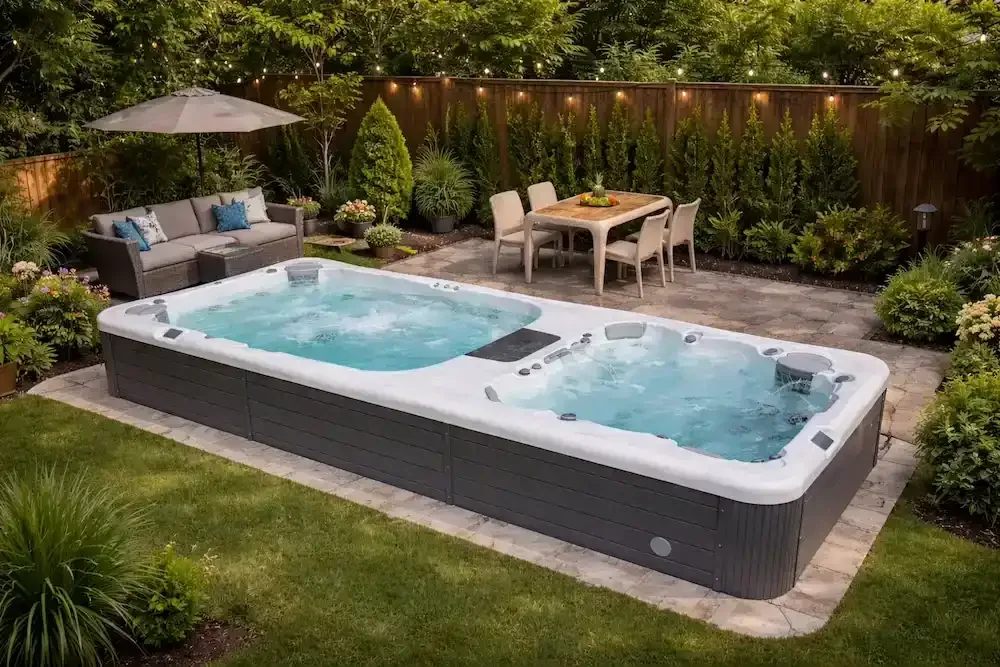
In this guide, we’ll cover how homeowners with limited space can still enjoy their very own backyard oasis. That includes:
- Swim spas turning 20 feet into fitness centers
- Plunge pools for cooling off without yard domination
- Fast-installing fiberglass options skipping months of construction
Ready to turn that “too small” backyard into your favorite space? Let’s explore what works in North Carolina.
Table of Contents
TL;DR: Key Takeaways
- Best for most small NC yards: Swim spas (15-20 feet) offer fitness, relaxation, and year-round use without 6-month installation.
- Budget-friendly: Above-ground pools start around $3,000, install in days.
- Premium quick-install: Fiberglass pools fit 10×20 spaces, complete in 1-2 days.
Why North Carolina’s Small Backyards Work Better for Swimming Pools
If you’re working with a small space in North Carolina, we might have more good news for you than you think.
North Carolina’s Climate Advantage
While Minnesota homeowners drain pools by September, you’re swimming in March. NC’s mild winters mean 8-10 months of realistic pool use annually with heating. That means your investment works harder than in colder states where pools sit dormant half the year.
The moderate climate also means less winterization hassle. Many fiberglass and swim spa owners skip full drain-and-cover routines, saving hundreds on seasonal maintenance and opening costs.
Lower Operating Costs Matter
A standard 20×40 swimming pool holds roughly 18,000 gallons of water, which takes significant time, energy, and money to heat, treat, and maintain. In contrast, a compact pool or swim spa typically holds just 2,000 to 4,000 gallons, dramatically reducing ongoing operating demands.
That difference in water volume translates directly into savings. Traditional pools often cost between $3,000 and $6,000 per year to maintain, while smaller alternatives average closer to $500 to $1,500 annually. Over the course of 10 years, homeowners can save anywhere from $25,000 to $45,000 simply by choosing a right-sized option for their backyard.
With less water to manage, chemical usage also drops significantly. Smaller pools require fewer chemicals, less frequent testing, and are less prone to drastic chemical imbalances, making maintenance easier, more predictable, and more affordable.
Multi-Functional Yard Space
Small pools create zones rather than dominating space. You get a swim and soak area, plus room for dining, fire pit, kids’ play equipment. Large pools force everything else to the margins: A 16×32 pool in a 40×60 yard leaves minimal deck space and zero room for anything else.
Compact pools also integrate better with landscaping. You can create visual interest with plantings, use varied hardscaping materials, and build defined outdoor rooms. The pool becomes one element in a cohesive design rather than the only element.
Swim Spas: The Space-Saving Champion
Your best bet for a small yard? The swim spa.
What Makes Swim Spas Perfect for Tight NC Spaces
Swim spas offer the best of both worlds: the comfort of a hot tub and the fitness benefits of a lap pool, all in a compact footprint. Typically measuring just 15-20 feet long and 7-8 feet wide, they fit easily into spaces where a traditional pool simply won’t work. This smaller size is ideal for narrow side yards, corner lots, and urban backyards where installing a 30-foot pool isn’t realistic.
Strategically Placed Jets
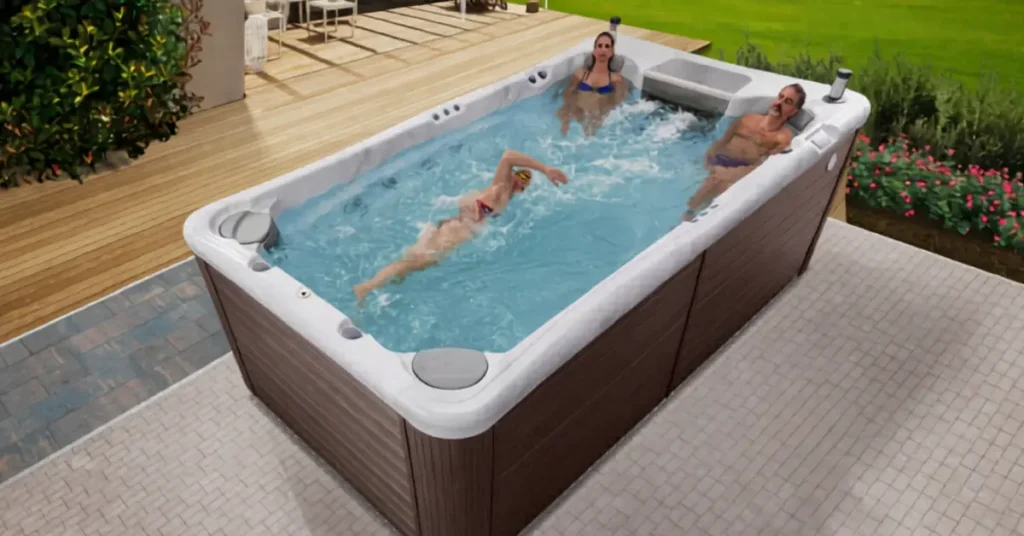
Instead of relying on long distances for laps, swim spas use adjustable counter-current jets that create a steady flow of water to swim against. You’re able to swim continuously in place, much like using a treadmill in water. Even within 15 feet of space, swimmers can enjoy a workout that rivals the experience of a full-length pool.
Dual-Zones
Many swim spas are also designed for dual use. One end features powerful swim jets for exercise, while the other includes hydrotherapy seating with massage jets for relaxation. That means you can start your day with a workout and end it with a soothing soak, all in the same unit.
Year-Round Control
Temperature control is another major advantage. Swim spas can be maintained at a comfortable 82 degrees year-round, while traditional pools often sit unused in early spring when water temperatures hover in the 50s. Thanks to insulated construction, keeping a swim spa warm through the seasons is both practical and cost-effective, allowing North Carolina homeowners to enjoy the water months before, and after, pool season typically begins.
Maintenance Advantages
Maintenance is also far simpler with a smaller water volume. Chemical adjustments happen faster and require fewer products, reducing both time and cost. Many modern swim spas include compact, high-efficiency filtration systems and automated cleaning cycles, making routine care easier and more manageable than maintaining a full-size pool.
Stand Out: The Wellis Beach Club with Premium Dual-Zone Design
The Wellis Beach Club Premium stands out for NC backyards. At 19’8″ x 7’9″, it fits tight spaces with three counter-current jets (versus typical two) for superior water flow consistency.
That third jet makes real differences for serious swimmers. Two-jet systems work fine for recreational swimming, but the third jet creates more uniform water flow across the swim zone. Less turbulence, better stroke technique, more consistent training.
Key features of the Wellis Beach Club Premium Include:
- Two integrated sunbeds (one surface-level, one submerged 4 inches)
- Dedicated hydrotherapy seating with targeted massage jets
- WiFi SmartTouch controls for remote operation
- W-EC circulation pumps (low consumption, quiet operation)
- WellisGuard™ water purification system
- 1-2 days installation for special configurations
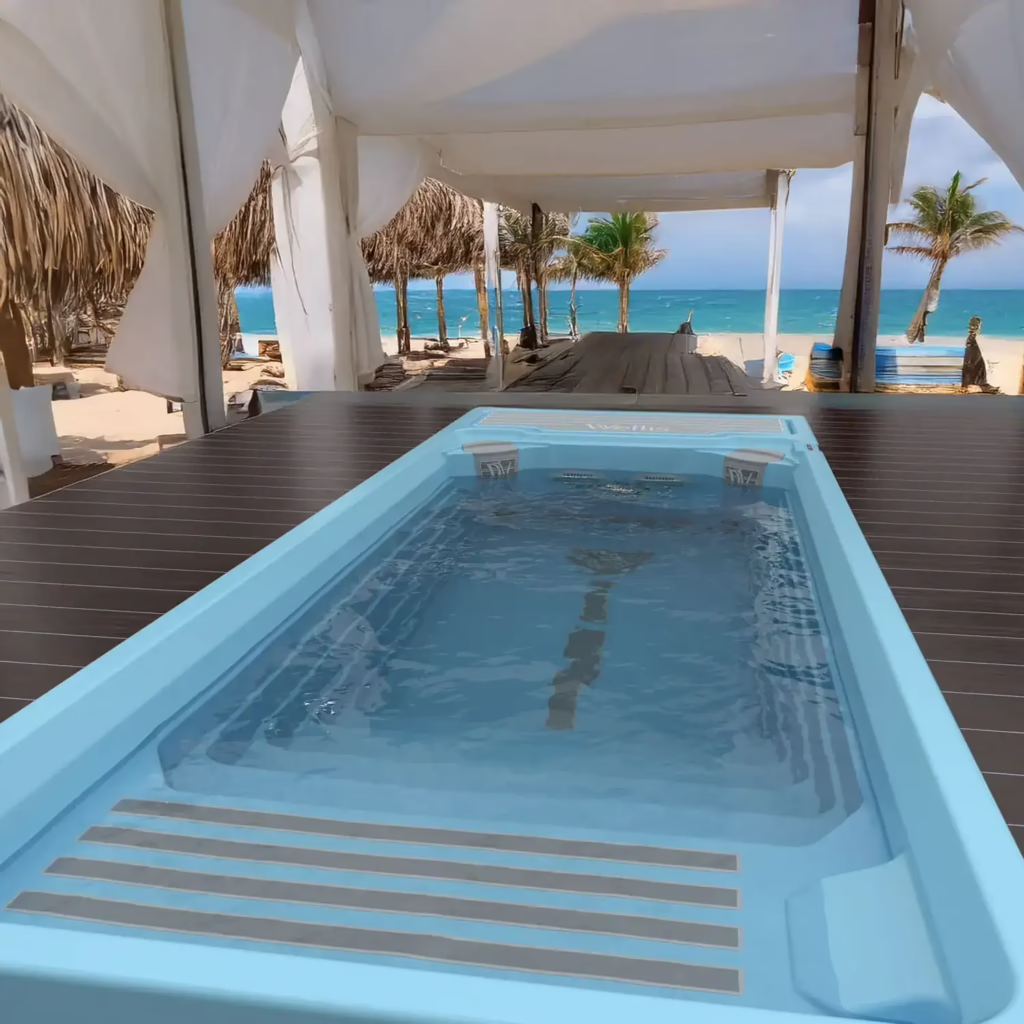
The dual-zone design lets you transition from swim workout to spa relaxation without leaving the water.
The submerged sunbed creates unique underwater lounging impossible in traditional pools or hot tubs. Energy efficiency matters in our climate where summer electric bills already hurt. The W-EC pumps consume significantly less power than standard pool pumps while running quieter.
For more details, check out: Why the Wellis Spa Beach Club is Becoming So Popular.
Swim Spa vs. Traditional Pool
| Feature | Swim Spa | Traditional Pool |
|---|---|---|
| Installation Time | 1-2 days | 8-16 weeks (concrete) |
| Space Required | 15-20 feet | 30-40+ feet minimum |
| Year-Round Use | Yes (heated) | Expensive to heat |
| Winterization | Not needed | Required |
| Operating Cost (Annual) | $600-$1,200 | $2,500-$5,000+ |
| Initial Investment | $25,000-$40,000 | $45,000-$85,000+ |
| Daily Maintenance | 5-10 minutes | 30-45 minutes |
What swim spas don’t do well: host 15 kids for a pool party. If your primary goal is maximum swimming space for large groups, traditional pools win. But for couples, small families, or fitness-focused homeowners? Swim spas dominate on every practical metric.
Plunge Pools: Maximum Refreshment, Minimum Footprint
Plunge pools are compact cooling solutions, typically 10×16 feet or smaller, 4-5 feet deep. Not designed for laps, but perfect for quick cooling on 95-degree days or social gatherings where you can stand in cool water with drinks.
From a practical standpoint, plunge pools are faster and more affordable to install than traditional pools. Most fiberglass plunge pools can be installed in just 3 to 6 weeks, with total project costs typically ranging from $20,000 to $45,000 depending on design choices and site conditions.
Best Applications for Plunge Pools
The shallow depth makes these safer for families with young children. Deep enough for kids to swim and play, but shallow enough for adults to stand comfortably while supervising.
- Quick cooling after yard work or exercise
- Social conversation spots at gatherings
- Water aerobics and gentle exercise
- Safe swim space for young families
- Hydrotherapy and muscle recovery
NC Design Considerations for Plunge Pools
Thoughtful design plays an important role in how enjoyable a plunge pool will be throughout North Carolina’s long, hot summers.
Sun Exposure
Sun exposure, in particular, can make a bigger difference than many homeowners expect. While full sun helps warm the water naturally, it can quickly turn a small pool into bathwater by August. Incorporating partial shade from mature trees, a pergola, or strategic landscaping helps prevent overheating and keeps the water cool and refreshing.
High Quality Materials and Accents
Because plunge pools have a smaller footprint, the surrounding details matter even more. High-quality decking materials such as composite or natural stone enhance both appearance and durability in tight spaces. Features like bubblers add movement and soothing sound, while LED lighting extends usability well into the evening hours, turning a compact pool area into an inviting outdoor retreat.
Fiberglass Pools: Fast Installation, Low Maintenance
Fiberglass pools, while closer to traditional pools, still offer some advantages for small yards.
Quick Installation
Unlike concrete pools that are built on-site over several months, fiberglass pools arrive pre-manufactured and are craned into a prepared excavation. This allows installation to be completed in as little as 1-2 days, compared to 12 to 16 weeks, or longer, for concrete. In North Carolina, where weather delays and scheduling setbacks are common, that faster timeline can make a significant difference.
Easier Maintenance
The smooth gel coat surface of a fiberglass pool is also less porous than concrete, which helps resist algae growth and reduces chemical demand. Over a 10-year period, maintenance costs for fiberglass typically range from $3,750 to $6,500, compared to $15,000 to $27,000 for concrete pools. That $10,000+ difference in upkeep is a major consideration for many homeowners.
Better for the Climate
Fiberglass is also better suited to North Carolina’s clay-heavy soil. As the ground expands and contracts with moisture changes, fiberglass shells have the flexibility to move slightly without damage, while rigid concrete structures are more prone to cracking. This resilience helps minimize long-term repair costs.
It’s no surprise that the market has shifted in response. Fiberglass pools now represent 46.1% of global swimming pool market share, showing massive homeowner preference
Popular Small-Space Shapes for Fiberglass Pools
Fiberglass pools come in a variety of shapes designed to maximize usable space in compact yards:
- Rectangular pools (such as 10×20) maximize swim area and fit well in narrow lots
- Freeform designs create additional patio and lounging space around the perimeter
- Roman or courtyard styles offer classic aesthetics in footprints under 20 feet
- L-shaped pools are ideal for corner installations and uniquely shaped yards
NC Costs and Timeline
In North Carolina, realistic pricing for a basic fiberglass pool package starts around $45,000. This typically includes a 10×20 pool, excavation, plumbing, and filtration equipment. More premium installations ranging from $60,000 to $85,000 may include upgraded equipment, higher-end decking materials, and features like tanning ledges.
Installation: 1-2 days.
Warranties: 10+ years on shells, 3-5 years on equipment.
Check Epic’s in-ground options for local pricing.
Other Options for Small Backyards
Above-Ground Pools: Budget-Friendly Backyard Fun
Today’s above-ground pools are far more durable and attractive than many homeowners expect. Modern resin frames resist rust and corrosion in North Carolina’s humid climate, and thicker vinyl liners now last 7–10 years instead of the 3–5 years they did in the past. When paired with partial deck integration, the overall look can feel much more like a permanent backyard feature than a temporary setup.
Cost: $3,000–$15,000 (most fall between $6,000–$10,000)
Installation: 1–3 days
Pros: Fast installation, portability, easy winterization, and an affordable way to test pool ownership
Cons: Seasonal use, shorter lifespan (10–15 years), and minimal impact on property value
Placement and design make all the difference. Position the pool where you would naturally build a patio, then build a composite deck around it that can handle North Carolina’s weather. Setting the deck at pool wall height creates a flush, smooth entry that dramatically improves the appearance.
View Epic’s above-ground options.
Semi-Inground Pools: Best of Both Worlds
Semi-inground pools are installed partially below grade, typically half to two-thirds in the ground, which makes them an excellent solution for many North Carolina backyards, especially sloped lots where full excavation can become expensive.
Cost: $20,000–$40,000 (compared to $45,000–$85,000 for a full in-ground pool)
This option makes particular sense for:
- Sloped yards that follow the natural grade
- Rocky soil common in Wake and Orange counties
- Budget-conscious projects
- Properties with difficult equipment access
Because less digging is required, homeowners often save on rock removal, material hauling, and labor. With thoughtful deck construction, a semi-inground pool can achieve a clean, built-in look without the full cost of traditional excavation.
See Epic’s semi-inground options.
Planning Your Small Backyard Pool Project
Before you start your small backyard pool project, you’ll want a solid plan in place. Here’s what to keep in mind.
Measuring Your Space
When planning a pool for a small backyard, the biggest mistake homeowners make is measuring only the pool itself. The pool is just one part of the total footprint. What really determines whether the project feels comfortable or cramped is everything that must fit around it.
Our best advice? Start with the pool dimensions, then build outward.
- You’ll need space for an equipment pad, typically at least 4×6 feet, for the pump, filter, and heater. This area should be accessible for service and placed where noise won’t disrupt seating or relaxation areas.
- Next, factor in setbacks from property lines, which often range from 5–10 feet depending on the city and zoning. These requirements can significantly shrink your usable area, especially in established Raleigh, Durham, and Chapel Hill neighborhoods with tighter lot sizes.
- Just as important is deck and walking space. A good rule of thumb is that usable deck space should equal or exceed the pool’s footprint. Without it, even a small pool can feel crowded and difficult to navigate. You’ll want clear walking paths, room for seating, and safe entry and exit points.
- Don’t forget about access paths for installation and future maintenance. Equipment, materials, and service professionals will need a way to reach the pool area without damaging fencing, landscaping, or hardscapes.
Finally, check local ordinances before locking in your design. Raleigh, Durham, and Chapel Hill each have their own permitting requirements, and many neighborhoods add HOA restrictions that affect placement, fencing, and visibility. Verifying these details early prevents costly redesigns later.
Budget Planning for NC
| Pool Type | Total Investment | Installation Time | Lifespan |
|---|---|---|---|
| Above-Ground | $3,000-$15,000 | 1-3 days | 7-15 years |
| Semi-Inground | $20,000-$40,000 | 1-2 days | 15-20 years |
| Swim Spa | $25,000-$40,000 | 1-2 days | 20-25 years |
| Fiberglass In-Ground | $45,000-$85,000 | 1-2 days | 25-30+ years |
| Concrete In-Ground | $65,000-$150,000+ | 1-2 days | 30-50 years |
Don’t forget about the hidden costs! That includes permits ($200-$800), electrical work ($1,500-$3,500), landscaping repair ($1,000-$5,000), and required fencing ($1,500-$5,000).
Epic offers financing subject to credit approval. Request pricing for specific estimates.
Working with Local Pool Builders
When hiring local contractors, do your research. Use this checklist before making your final choice:
Questions to ask contractors:
- How many installations completed past year?
- Can I visit 2-3 completed local projects?
- What’s included in quoted price versus add-ons?
- Who handles permit applications?
- What’s warranty coverage?
- Typical timeline from contract to completion?
Seeing completed projects matters more than brochures. Visit actual backyards, talk to homeowners about timeline accuracy and costs..
Maximizing Small Pool Impact
In a small backyard, design matters just as much as the pool itself. The right landscaping, lighting, and layout choices can make a compact space feel intentional, open, and inviting rather than tight or crowded.
Landscaping Ideas That Save Space
Think vertically instead of horizontally. Wall-mounted planters, trellises, and vertical gardens add greenery and visual interest without taking up valuable ground space around the pool.
Strategic lighting also plays a big role in how large the space feels after dark. Underwater LED lights, soft landscape accents, and subtle pathway lighting create depth and dimension, making the backyard feel larger and more polished.
For privacy, skip bulky structures and opt for solutions that work with the space. Lattice panels ($200–$500) provide screening without heaviness. Planted hedges ($800–$2,000) create a natural barrier that softens the space. Custom fencing ($2,000–$6,000) can blend privacy with design when planned carefully.
For surfaces, invest in quality hardscaping. Materials like composite decking and natural stone hold up well in North Carolina’s humidity and improve the overall appearance of a small pool area.
Multi-Purpose Design Features
In a limited footprint, every feature should do more than one job.
- Built-in seating eliminates the need for bulky patio furniture while still creating comfortable gathering areas.
- Combination pool and spa features give you two experiences in one space.
- A small 2–3 foot waterfall adds sound and movement without sacrificing square footage.
- Fire features extend the usability of the space beyond swimming season, turning the pool area into a year-round backyard destination.
Common Mistakes to Avoid
Designing a pool for a small backyard requires restraint and careful planning. A few common missteps can make the space feel crowded, impractical, or disappointing once the project is complete.
Making Your Decision
- Best for fitness-focused homeowners: Swim spa, specifically Wellis Beach Club Premium. Serious exercise, hydrotherapy, year-round use, space efficiency.
- Best for families with young kids: Plunge pool or small fiberglass with shallow depth. Safety matters here, and a 4-foot deep pool like this lets kids swim while parents stand comfortably.
- Best for tight budgets: Above-ground with partial deck integration, a setup that usually runs less than $10,000.
- Best for quick installation: Fiberglass or swim spa. Both install 1-2 days. Want to swim this summer and it’s April? These are your best options.
- Best for challenging yards: Semi-inground. Sloped lots, rocky soil, tight access all favor semi-inground.
- Best overall value for most NC homeowners: Swim spa. Combination of fitness, relaxation, year-round usability, space efficiency, reasonable costs makes swim spas the sweet spot for Research Triangle backyards.
Your small backyard isn’t too small. Modern compact solutions deliver refreshment, exercise, and relaxation without requiring estate-sized property. Check Epic’s project gallery to see what’s possible in spaces like yours!
Frequently Asked Questions
What’s the smallest pool size worth installing in a North Carolina backyard?
The most practical minimum size for your pool depends on goals. For cooling and relaxation, a 10×12 plunge pool works. For swimming or exercise, go minimum 12×24 for traditional pools or 15 feet for swim spas with counter-current jets. Anything smaller than 10×10 functions more like a large hot tub.
How much does it cost to maintain a small pool in NC?
Annual maintenance for small pools (under 500 sq ft) runs $800-$2,000 in NC, including chemicals, electricity, basic maintenance. Larger traditional pools cost $2,500-$5,000+ annually. Swim spas and plunge pools fall on the lower end due to smaller water volume and better insulation. These costs assume you handle basic maintenance yourself; you’re looking at a bit more if you opt for professional services.
Can I use a pool year-round in North Carolina’s climate?
Yes, with proper heating. NC’s mild winters make year-round use possible, especially with swim spas and heated pools. A heat pump adds around $50-$100 of additional monthly costs during winter for small pools, while traditional large pools cost significantly more ($200-$400 monthly), making year-round use less economical. Most NC pool owners realistically use pools March through October.
Do small pools add value to NC homes?
Yes! Pools typically add 5-7% to home values in North Carolina, varying by neighborhood and price point. In homes under $300,000, pools sometimes add minimal value. In homes above $500,000, especially in Raleigh-Durham suburbs, well-maintained pools generally add value equivalent to 50-70% of installation cost.
What permits do I need for a pool in the Research Triangle?
All in-ground and most semi-inground pools require building permits in Raleigh, Durham, Chapel Hill, which will cost anywhere from $200 to $800. You’ll need electrical permits for dedicated circuits ($150-$300) as well, and many municipalities require fence permits for safety barriers ($100-$200). Above-ground pools sometimes avoid permits if they are under a certain depth (typically 24 inches). Epic handles permit applications as part of standard service.
Ready to start planning? Contact Epic Swimming Pools for a free consultation. Serving Raleigh, Durham, Chapel Hill, Cary, and surrounding North Carolina communities.