
1-2 days to install. 5-min daily maintenance. Year-round swimming. Find out why the Beach Club…
The Best Heated Swimming Pool Options in NC
Compare the best heated pool options for year-round use in NC.
You’re standing in your backyard on a crisp November morning in Raleigh, coffee in hand, watching steam rise off your neighbor’s pool. While everyone else has covered their pools for the season, they’re still swimming. That’s the power of heated pools in North Carolina, where our mild winters (averaging 45-55°F) create the perfect opportunity to stretch a 4-month pool season into year-round enjoyment.
Here’s what makes NC special for heated pools: we don’t face the brutal winters of northern states, but we’re not sweating it out year-round like Florida either. That sweet spot means you can swim in January without breaking the bank on heating costs, in addition to enjoying your pool in the summer. According to recent industry data, the swimming pool construction market is growing at roughly 3% annually, with energy-efficient heating systems driving much of that demand.
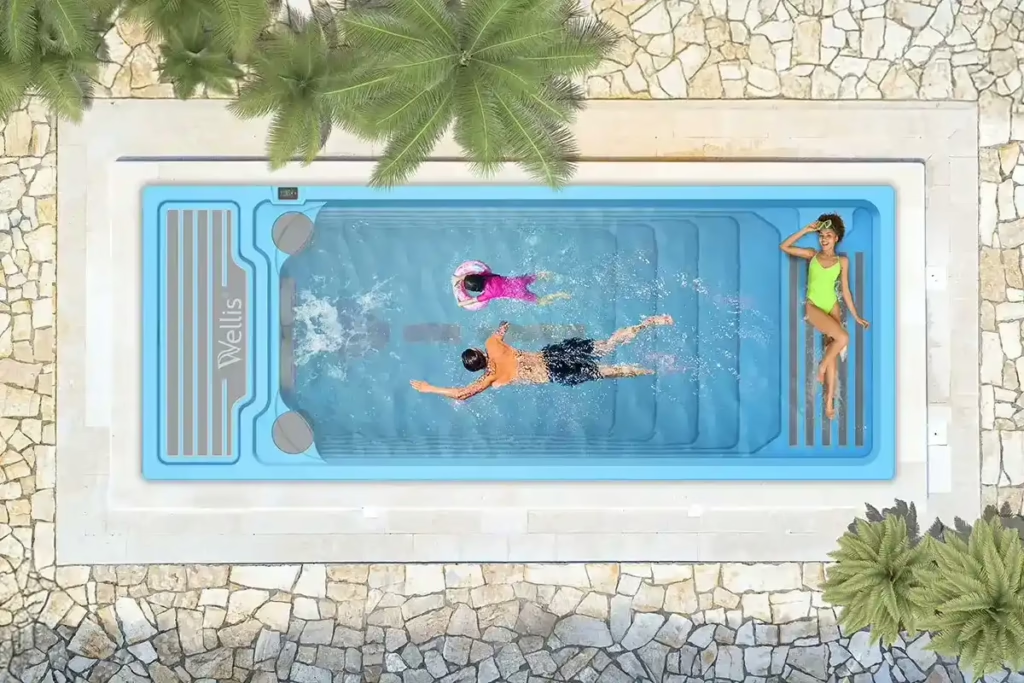
This guide breaks down everything you need to know about the best heated swimming pool options in NC:
- The different types of heated pools and swim spas available (and which ones actually make sense for North Carolina’s climate)
- Real-world heating system comparisons with honest cost breakdowns
- How to choose the right option based on your budget, space, and how often you’ll actually use it
Whether you’re buying your first pool or replacing an old one that sits unused half the year, let’s find the heated option that’ll have you swimming while your neighbors are stuck indoors.
Key Takeaways
- North Carolina’s mild winters make heated pools a smart investment, extending your swim season from 4 months to 8-12 months.
- Swim spas with built-in heating ($34,999+) offer the fastest installation and lowest operating costs ($1-3 daily), while traditional inground pools with heat pumps provide more space but higher operational expenses ($3-5+ daily).
- The best choice depends on your budget, available space, and whether you prioritize fitness or family entertainment.
What Are Your Heated Pool Options in North Carolina?
When most people think “heated pool,” they picture a regular pool with some kind of heater attached. This isn’t untrue, but the landscape has changed quite a bit in recent years.
Let me break down your main categories.
Swim Spas: The All-in-One Solution Everyone’s Talking About
Swim spas have exploded in popularity across the Triangle area, and for good reason. These aren’t your grandpa’s hot tubs. Think of them as compact pools (typically 8-19 feet long) with powerful jets that create a current you swim against, plus built-in heating systems that keep the water warm year-round.
The big difference? Everything’s integrated from day one. You’re not adding a heater to an existing pool. The heating, filtration, and insulation are designed to work together, which means better efficiency and lower operating costs.
Most swim spas cost between $1-3 per day to run, even during winter months. Compare that to heating a traditional pool, and you’ll see why they’re gaining traction.
Inground Pools with Heating Systems
Traditional inground pools can absolutely be heated for year-round use in NC. You’ve got three main types:
- Fiberglass pools install the fastest (usually 2-4 weeks) and hold heat better than other materials because of their smooth, non-porous surface. They’re pre-manufactured shells that get dropped into your excavated hole, which speeds up the whole process.
- Concrete or gunite pools offer unlimited customization. Want a kidney shape with a built-in spa? No problem. But installation takes 3-6 months, and they’re typically the most expensive option.
- Vinyl liner pools sit in the middle, budget-wise. Lower initial cost than concrete, but you’ll need to replace that liner every 7-10 years.
All three can be equipped with heating systems. The key is choosing the right heater type for your usage patterns (we’ll get to that shortly).
Semi-Inground and Above-Ground Options
Semi-inground pools work great if you’ve got sloped terrain or want the look of an inground pool without the full excavation costs. They’re partially buried, which provides some natural insulation and a more upscale appearance than fully above-ground models.
Above-ground pools are the most budget-friendly initial investment ($3,000-15,000), but they lose heat faster due to limited insulation. You can heat them, but your operating costs will be higher relative to the water volume.
Why the Wellis Beach Club is North Carolina’s Favorite Heated Swim Spa
Let me tell you about something we’ve seen transform backyards across Raleigh, Durham, and Chapel Hill. The Wellis Beach Club isn’t just another swim spa. It’s what happens when European engineering meets North Carolina’s specific climate needs.
We’ve been selling these through our Epic Hot Tubs & Swim Spas locations, and the customer feedback has been remarkable. People use words like “life-changing” and “the glue of our family,” which sounds like marketing speak until you understand what they’re actually getting.
What Makes the Beach Club Different?
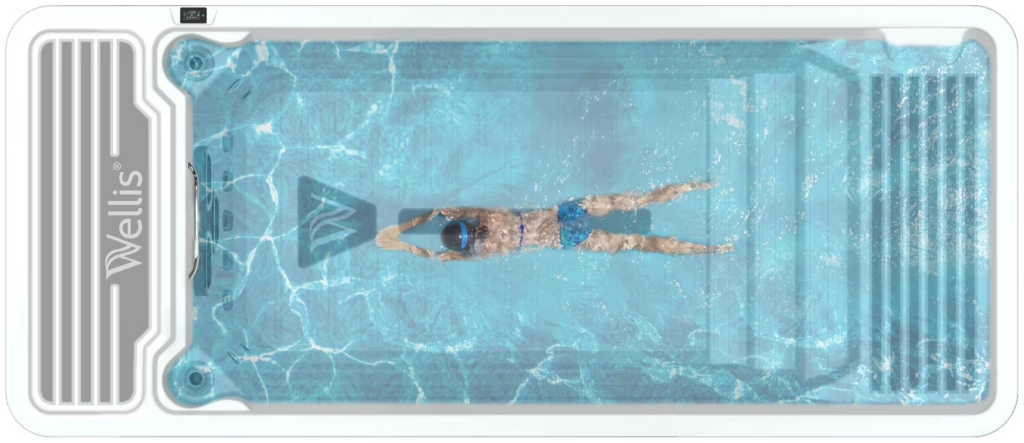
First off, size. At 19’8″ × 7’9″ × 4’10”, it’s large enough for serious swimming but compact enough to fit most residential properties. That 1,902-gallon capacity hits a sweet spot: big enough to feel like a real pool, small enough that heating costs don’t spiral out of control.
The dual sunbed configuration is perfect for relaxing: One lounger sits above water for traditional relaxation, while the other is positioned 4 inches below the surface, creating this unique underwater lounging experience that’s somewhere between floating and sitting.
But here’s what really matters for NC homeowners: the heating and insulation system.
The Beach Club comes with a 4 kW heater that warms water quickly without excessive energy draw. The energy-saving W-EC circulation pump runs quietly and efficiently. Add the optional LIFE Scandinavian insulation, and you’ve got a system that maintains comfortable temperatures even during those occasional January cold snaps we get in the Triangle.
The WellisGuard™ System keeps water clear with significantly fewer chemicals than traditional pools. Less maintenance, healthier water, happier skin. You know, all the things that matter when you’re actually using the thing regularly.
Two Models: Deluxe vs. Premium
The Beach Club Deluxe starts at $34,999 and gives you everything most families need: 2 powerful counter-current jets, the Easy4 control system, and all the core features. It’s the smart choice if you want quality without the bells and whistles.
The Beach Club Premium adds a third counter-current jet for stronger water flow (serious swimmers notice the difference), plus SmartTouch WiFi controls. That means you can adjust temperature, jets, and lighting from your phone. Pre-heat before you get home from work? Done.
Both models come with Wellis’s 10-year shell warranty and 3-year engineering warranty, which tells you something about the build quality.
Installation takes 3-5 days from delivery. Not months, days.
Beach Club Comparison
| Feature | Beach Club Deluxe | Beach Club Premium |
| Price | $34,999 | Call for pricing |
| Counter-Current Jets | 2 × W Riverjet | 3 × W Riverjet |
| Control System | Easy4 (manual) | SmartTouch + WiFi |
| Dimensions | 19’8″ × 7’9″ × 4’10” | 19’8″ × 7’9″ × 4’10” |
| Water Capacity | 1,902 gallons | 1,902 gallons |
| Installation Time | 3-5 days | 3-5 days |
| Daily Operating Cost | $1-3 | $1-3 |
| Best For | Families, recreational swimming | Serious swimmers, tech enthusiasts |
How Do Different Pool Heating Systems Actually Compare?
Every heating system makes trade-offs between upfront cost, operating expenses, and performance. There’s no “best” option, just the best option for your situation.
Gas Heaters: Fast Heat, Higher Bills
Gas heaters (running on natural gas or propane) are the sprinters of pool heating. They heat water fast, work in any weather, and don’t care if it’s 30°F outside. According to industry comparisons, gas heaters enable true year-round swimming even in colder climates.
The upfront cost is reasonable: $1,300-5,400 for equipment and installation. But operational costs run $3-5+ per day when in regular use. Over a winter season, that adds up.
Gas heaters make sense if you use your pool occasionally (weekends, special events) rather than daily. Heat it up Friday afternoon, enjoy it all weekend, turn it off Monday. That usage pattern keeps costs manageable.
The downside? Lifespan averages only 5 years, and you’ll need a gas line installed if you don’t already have one.
Electric Heat Pumps: The Efficiency Champion
Heat pumps don’t generate heat; they transfer it from the air to your pool water. Think of them as reverse air conditioners. This makes them incredibly efficient, with some models achieving 70-90% energy savings compared to gas heaters.
Operating costs typically run $1-3 daily, even with regular use. That’s where the savings pile up over years of ownership.
The catch? Performance drops when air temperatures fall below 50°F. In Raleigh’s mild winters, that’s not a dealbreaker, but it’s something to consider. They also take longer to heat water initially.
Heat pumps cost $2,500-9,000 upfront but last 10-15 years. For daily swimmers who want year-round access, the math usually works out in their favor.
Solar Heating: Free Energy, Weather Dependent
Solar systems use panels (usually mounted on your roof) to capture the sun’s energy and transfer it to pool water. The operational cost? Basically zero beyond your existing pump’s electricity.
Initial installation runs $4,000-10,000, but there are no fuel costs afterward. Solar panels last 15+ years with minimal maintenance.
The limitation is obvious: they need sunshine. On cloudy winter days, performance drops significantly. And you’ll need roof or yard space equivalent to 75-100% of your pool’s surface area.
Solar makes tremendous sense for NC homeowners with south-facing roofs who plan to stay in their homes long-term. The ROI takes a few years, but then you’re essentially heating for free.
Heating Systems Comparison
| Heating Type | Upfront Cost | Daily Operating Cost | Lifespan | Best For |
| Gas Heater | $1,300-5,400 | $3-5+ | 5 years | Weekend/occasional use |
| Electric Heat Pump | $2,500-9,000 | $1-3 | 10-15 years | Daily swimmers, mild climates |
| Solar Heating | $4,000-10,000 | ~$0 (pump only) | 15+ years | Long-term homeowners, sunny exposure |
| Swim Spa (built-in) | $25,000-50,000 | $1-3 | 10-20 years | Year-round use, smaller spaces |
What Will This Actually Cost You?
Let’s talk about real numbers, because “it depends” doesn’t help you make a decision.
Initial Investment by Pool Type
For a complete heated swimming solution in North Carolina, here’s what you’re looking at:
- Swim spas like the Wellis Beach Club range from $25,000-50,000. Heating is included. Installation is included. You’re getting a turnkey solution that’s ready to use within a week of delivery.
- Inground fiberglass pools with heating systems typically run $45,000-85,000 total. That includes the pool shell, excavation, equipment, and a heat pump or gas heater.
- Concrete/gunite pools with heating start around $50,000 and can easily exceed $100,000 for larger or more customized designs.
- Semi-inground pools with heating fall in the $20,000-40,000 range, making them a middle-ground option.
- Above-ground pools with heating are the most affordable at $3,000-15,000, though heating costs run higher due to poor insulation.
Operating Costs: The Numbers That Actually Matter
This is where swim spas shine. Our customers report $30-90 monthly operating costs year-round, which includes heating, filtration, and chemicals.
Traditional heated pools? Budget $90-150+ monthly if you’re using a gas heater regularly, or $30-90 with an efficient heat pump. Recent pool operating cost analysis confirms these ranges hold true across different climates.
Solar drops ongoing costs to nearly nothing, but remember that higher upfront investment.
Long-Term Maintenance: The Hidden Costs
Over 10 years, fiberglass pools cost roughly $3,750-6,500 in maintenance. Concrete pools? More like $15,000-27,000, because that porous surface requires more chemicals, more frequent resurfacing, and more intensive cleaning.
Swim spas with advanced filtration systems like the WellisGuard™ require fewer chemicals and less frequent water changes. Smaller water volume means lower costs across the board.
How to Choose the Right Heated Pool for Your Situation
Honestly, this comes down to three questions.
What’s Your Space Situation?
Small backyards (under 1,000 sq ft) almost always point toward swim spas. You get full functionality in a 20-foot footprint, leaving room for other outdoor living features.
Medium yards (1,000-2,500 sq ft) can accommodate semi-inground or small inground pools. You’ve got options here.
Large properties (2,500+ sq ft) can support full-size inground pools with decking, landscaping, and all the extras.
How Will You Actually Use It?
Be honest with yourself. If you’re envisioning daily morning swims for exercise, a swim spa or lap pool with strong heating makes sense. The counter-current jets let you swim continuously without turning around.
If you’re picturing summer pool parties with 20 people, you need a traditional inground pool. Swim spas accommodate 4-6 people comfortably, but they’re not party pools.
For rehabilitation, hydrotherapy, or low-impact exercise, heated swim spas are purpose-built for these applications. The combination of warmth and adjustable jets supports recovery better than a standard pool.
What’s Your Realistic Budget?
- Under $15,000: Above-ground pool with basic heating (seasonal use)
- $15,000-40,000: Quality swim spa or small inground pool (our recommendation for most first-time buyers)
- $40,000+: Premium swim spa or full inground pool with advanced features
Don’t forget to factor in operating costs. A $35,000 swim spa that costs $50/month to run beats a $50,000 pool that costs $150/month over time.
Choosing by Priority
| Your Priority | Best Option | Why It Works |
| Daily fitness/swimming | Swim spa with 2-3 jets | Counter-current for continuous swimming, lower operating costs |
| Family entertainment | Medium inground pool (15×30) | Space for multiple swimmers, diving, games |
| Year-round use | Swim spa or pool with heat pump | Built-in heating, superior insulation, NC climate compatibility |
| Budget priority | Above-ground with solar heating | Lowest upfront cost, free heating energy |
| Quick installation | Swim spa (3-5 days) | Pre-fabricated, minimal site work required |
| Small yard | Swim spa (20-foot footprint) | Full pool experience in compact space |
What About Permits and Installation in North Carolina?
Quick heads-up: NC requires permits for most pool installations. Your contractor handles this, but timeline matters.
Across counties like Wake, Durham, Orange, and Mecklenburg, zoning rules often dictate how close a pool can be to property lines, septic systems, and existing structures. Setback requirements alone can influence where your pool is allowed to go, especially in smaller or established neighborhoods. Some municipalities and HOAs also have visibility and fencing rules that must be followed.
At the state level, the North Carolina Department of Environmental Quality (NCDEQ) oversees certain water and environmental considerations, particularly when drainage or backwash could affect surrounding property. While this rarely complicates residential projects, it’s another reason permits and site planning matter.
One notable difference is how swim spas are classified. In many North Carolina municipalities, swim spas fall under the same regulations as hot tubs rather than full swimming pools. This usually means fewer zoning restrictions, simpler permitting, and a much faster path to installation. It’s one reason many homeowners are up and running within a week instead of waiting through a longer construction cycle.
For traditional pool projects, permit approval commonly takes 1–2 weeks, sometimes longer during busy building seasons in spring and early summer. Factoring this into your schedule helps prevent frustration and keeps expectations aligned as you plan your heated pool installation.
Making It Work Year-Round in North Carolina
Swimming in December sounds great until you realize you need to actually maintain that heated pool. Here’s what works based on what we’ve seen.
Temperature Sweet Spots
- For exercise and swimming: 78-80°F feels comfortable without being too warm. You can actually work out without overheating.
- For relaxation and hydrotherapy: 98-104°F mimics hot tub temperatures. Perfect for cool evenings.
- Energy-saving tip: Drop the temperature 5°F when you’re not using the pool. Modern digital controls make this easy, and it cuts operating costs noticeably.
Seasonal Adjustments
Fall means leaf management becomes critical. Pool covers aren’t optional anymore; they prevent debris and retain heat. Some swim spa owners report covering their unit reduces heating costs by 30-40%.
Winter in NC is mild, but that doesn’t mean you should take it lightly. Monitor your heater’s performance during cold snaps. Quality systems handle 30°F nights without issue, but older equipment might struggle.
Spring reopening is dramatically easier with heated pools because you never fully closed them. No draining, no winterizing chemicals, no multi-day startup process.
In summer, you might actually want to cool the water down rather than heat it up. Some systems can do both.
Why Work with Epic Swimming Pools?
Look, you can buy a pool or swim spa from lots of places. Here’s why North Carolina homeowners keep coming to us.
We’re the sister company to Epic Hot Tubs & Swim Spas, which has been serving the Raleigh area for years. That means we understand Triangle-area climate, local regulations, and what actually works in NC backyards.
Our team knows the difference between “heated pool” as a concept and “heated pool that makes sense for your specific property and budget.” We’ve installed enough of them to know which combinations work and which ones leave customers frustrated.
Free in-home consultations mean we look at your actual space, talk through your actual needs, and provide transparent pricing. No hidden fees, no bait-and-switch tactics.
We offer the full range: Wellis Beach Club swim spas, fiberglass inground pools, semi-inground solutions, and above-ground options. Plus all the heating systems we’ve discussed.
Financing is available (subject to credit approval), and those 10-year warranties on premium products like the Wellis Beach Club give you long-term peace of mind.
Frequently Asked Questions
Can you really swim year-round in a heated pool in North Carolina?
Yes, absolutely. NC’s mild winters (averaging 45-55°F) make year-round heated swimming feasible and affordable. Swim spas with integrated heating systems handle cold weather without excessive energy costs. Traditional pools with quality heat pumps or gas heaters work just as well, though operating costs run higher. Most heated pool owners in the Triangle area swim 8-12 months annually.
What’s the best heating system for North Carolina’s climate?
Electric heat pumps offer the best balance of efficiency and performance for NC’s mild winters. They operate effectively when temperatures stay above 50°F (which covers most of our winter) and cost $1-3 daily to run. For occasional use, gas heaters heat faster but cost more long-term. Solar works great if you have proper roof exposure and don’t mind weather-dependent performance.
How much does it cost to heat a pool during winter in North Carolina?
Traditional pools with gas heaters run $90-150 monthly during winter. Heat pumps drop that to $30-90 monthly. Swim spas with built-in insulation and heating typically cost $30-90 monthly year-round. Solar heating adds minimal cost beyond your existing pump’s electricity. These numbers assume regular use; occasional heating costs less.
Is a swim spa better than a heated inground pool?
It depends on your priorities. Swim spas win for operating costs ($1-3 daily vs. $3-5+), installation speed (3-5 days vs. weeks/months), and small-space compatibility. They’re purpose-built for fitness and year-round use. Traditional pools offer more space for family gatherings and entertaining. For most first-time buyers prioritizing year-round swimming, swim spas provide better value.
How long does heated pool installation take in North Carolina?
Swim spas install in 3-5 days from delivery. Fiberglass inground pools take 2-4 weeks including excavation, heating system installation, and startup. Concrete pools require 3-6 months for full construction. Heating system installation alone (adding to existing pools) takes 1-3 days depending on complexity. Permit processing adds 1-2 weeks to traditional pool projects.
Your Next Step to Year-Round Swimming
North Carolina’s climate gives us something most of the country doesn’t get: the ability to swim year-round without breaking the bank on heating. Whether that’s a Wellis Beach Club swim spa keeping you fit through winter or a traditional heated inground pool anchoring family gatherings, the option exists. If you’re ready to explore what makes sense for your property, request pricing or contact our team for a free consultation. We’ll look at your specific situation and provide honest recommendations based on what we’ve learned from hundreds of North Carolina installations.