
Looking for the fastest way to install a pool? This guide compares above-ground, semi-inground, and…
Why Are Doughboy Pools So Much More Affordable Than Concrete or Fiberglass?
Learn why Doughboy pools cost less than concrete or fiberglass pools while still offering durable construction, flexible installation, and a beautiful backyard swimming experience.
Concrete and fiberglass pools cost more because they require heavy excavation, months of construction, multiple subcontractors, complex permits, and expensive site repair. Doughboy above-ground pools skip most of that. You get a durable, American-made pool with heavy-gauge steel or resin construction, solid warranty coverage, and installation measured in days, at a fraction of the price. The savings come from how they are built and installed, not from cutting corners on quality.
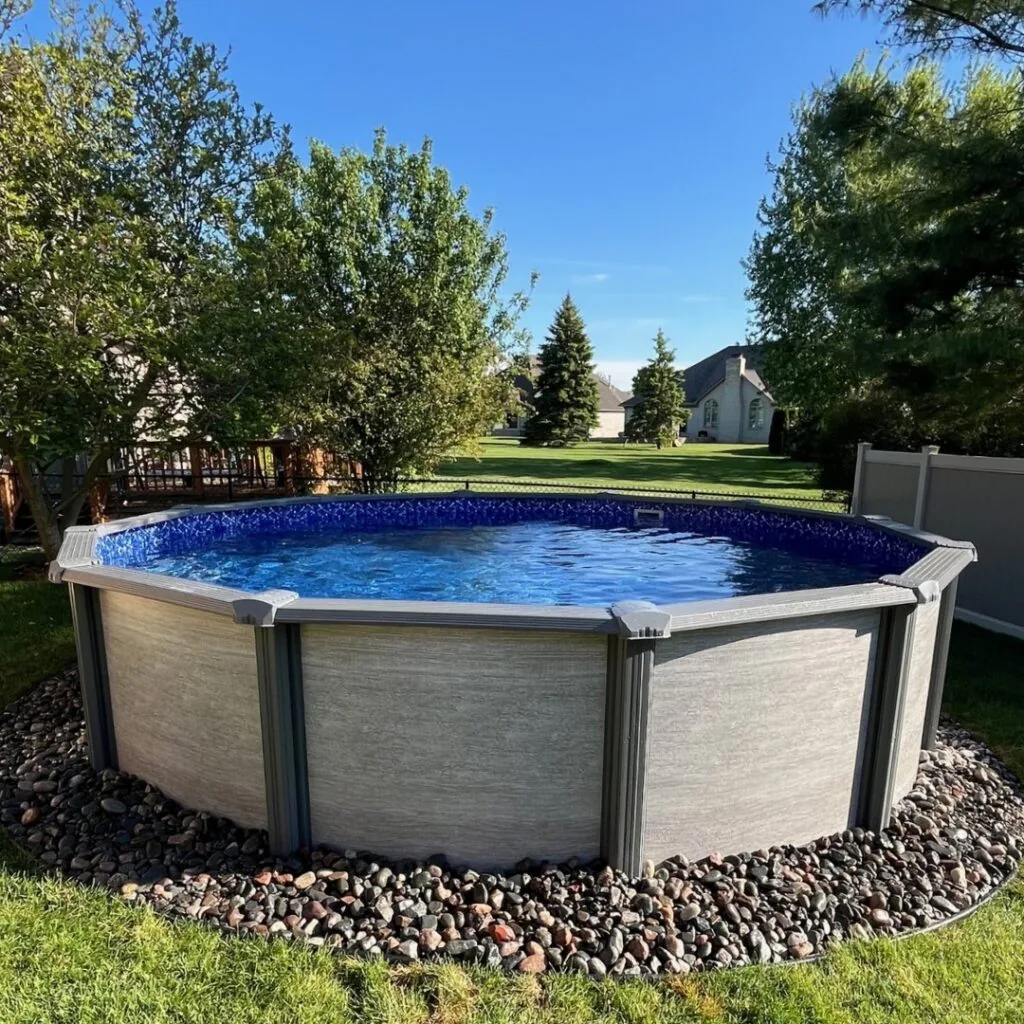
Table of Contents
If you have ever asked for a quote on a concrete or fiberglass in-ground pool, you already know how the conversation tends to go. The number that comes back sits somewhere between $65,000 and well over $100,000 once permits, electrical work, decking, and landscaping repair are included. For most North Carolina homeowners, that figure ends the pool conversation before it really starts.
Doughboy above-ground pools typically cost between $3,000 and $15,000 installed, depending on the model, size, and site conditions. That is a wide gap, and it deserves a plain, honest explanation.
The price difference is not a sign that one pool is a “real pool” and the other is not. It comes down to what the construction process physically requires. This post walks through exactly where the savings come from, what you actually get with a Doughboy pool, and why the math often works out better than most people expect.
What Makes Concrete and Fiberglass Pools So Expensive?
Concrete and fiberglass in-ground pools require significant excavation, heavy equipment, multiple subcontractors, months of construction, complex permitting, and substantial finishing work. The pool shell is only one piece of the total cost. Labor, site damage, and timeline all push the final number higher.
Here is what drives the price on a traditional in-ground build:
Excavation. Digging a hole deep and wide enough for a full-size pool requires heavy equipment and trained operators. In North Carolina, clay-heavy soils can complicate this further, adding time and cost to the dig.
Multiple subcontractors. A concrete pool project typically involves excavators, gunite or concrete crews, plumbers, electricians, and finish workers. Each trade adds its own labor cost to the total.
Permitting and inspections. In Wake County, Mecklenburg County, and most NC municipalities, in-ground pools require building permits, electrical inspections, and fencing that meets barrier safety requirements. Permit approval can take several weeks during busy seasons.
Concrete curing. A gunite or concrete pool cannot be filled right after the shell is formed. The structure needs time to cure before plastering, tiling, and finishing can happen. This alone can push the total build timeline to two to four months or longer.
Site repair. After excavation equipment has moved through your yard, there is often significant landscaping and grading work to address. According to HomeGuide, landscaping repair after pool installation can add $1,000 to $5,000 to the total project cost.
The table below shows how pool types compare across the factors that matter most when you are deciding:
| Pool Type | Typical Upfront Cost | Installation Timeline | Excavation Required | Site Disruption |
|---|---|---|---|---|
| Doughboy above-ground | $3,000 to $15,000 | 1 to 3 days | None | Minimal |
| Semi-inground | $20,000 to $40,000 | 1 to 2 days (varies by site) | Partial | Low to moderate |
| Fiberglass in-ground | $45,000 to $85,000+ | Several weeks to months | Yes | High |
| Concrete in-ground | $65,000 to $150,000+ | 2 to 4 months or more | Yes, major excavation | Very high |
Costs and timelines vary by model, site conditions, electrical requirements, permits, and local labor rates. Request a quote based on your yard for an accurate number.
Epic Swimming Pools Note: In the Triangle and Charlotte areas, clay-heavy soil is one of the most common factors that makes in-ground pool excavation more expensive and unpredictable than homeowners expect. Clay can slow the dig, complicate drainage, and affect how the site settles once the work is done. If your in-ground quote came in higher than a national average you saw online, soil conditions may be part of the reason.
Why Do Doughboy Above-Ground Pools Cost So Much Less?
Doughboy above-ground pools are less expensive because they do not require excavation, heavy site machinery, or the long construction process that drives up in-ground pool costs. A small installation crew can typically have a Doughboy pool ready to fill in one to three days. That means far less labor, far less yard disruption, and a much simpler path from order to water.
The savings are structural, not a sign of a lesser product. Here is what stays off the bill with an above-ground pool:
- No excavation or earth-moving equipment
- No concrete, gunite, or fiberglass shell and raw materials
- No cure time before the pool can be filled
- Less complex plumbing and electrical coordination
- Less landscaping repair after installation day
- A simpler permitting process in many NC municipalities (rules vary by county and HOA, so confirm local requirements before finalizing placement)
For North Carolina homeowners with smaller suburban lots, this means less risk of disrupting existing landscaping, fencing, or utility lines during the process. If your yard has limited access or a sloped layout, above-ground and semi-inground options are often easier to work with than a full excavation project. Our guide to swimming pool options for small backyards in NC covers how compact pool options fit different yard types.
Expert Tip from Epic Swimming Pools: Before we recommend a specific model, one of the first things we assess during a consultation is yard access: gate width, slope, and whether the installation area is reachable without crossing finished landscaping or a tight side yard. This one step often shapes which pool size and format makes the most practical sense for your property, and it helps avoid surprises on installation day.
Does a Lower Price Mean Lower Quality? Not With Doughboy.
This is the question most homeowners carry into the conversation. If a Doughboy pool costs a fraction of what a fiberglass or concrete build runs, something must be compromised, right?
Not in the ways that matter for a well-built, family-ready backyard pool.
Doughboy is the oldest above-ground pool manufacturer in the world, and the only one that controls every step of the production process in-house. Every component, from the pool frame to the liner, is manufactured at their 660,000-square-foot factory in West Helena, Arkansas.
A few specifics worth knowing about how Doughboy pools are made:
Steel gauge. Doughboy vertical end caps use 18-gauge galvanized steel, approximately 50% heavier than what most competing brands use in their pools.
Wall coating. The steel walls go through a 7-step coating process that includes a Zinc Clad hot-dipped galvanized finish and an interior epoxy coating for corrosion resistance. Doughboy walls carry more corrugation per inch than most other brands, which adds structural strength across the wall surface.
Liner construction. Doughboy liners are made using their proprietary Therma-Seal technology, which produces a flexible and durable liner. Liner seams carry a 100% lifetime warranty, with the rest of the liner backed by a 20 to 30 year warranty depending on the model.
Resin options. For North Carolina’s humid climate, the resin models in the Doughboy lineup, such as the Autumn Breeze, Desert Spring, and Pearl River, use corrosion-resistant rails and verticals that hold up well through warm, wet summers.
The cost difference between a Doughboy pool and a concrete or fiberglass build comes from the construction process, not the build quality of the pool itself. According to Doughboy’s own quality and value overview, every pool weighs at least 30% more than comparable competing brands, and the company does not rotate liner or equipment manufacturers to chase cheaper deals.
From the Epic Swimming Pools Team: When choosing between a steel and resin Doughboy model, consider how much direct sun and consistent moisture your pool area gets through the year. In North Carolina’s humid summers, resin rails and verticals tend to hold their appearance longer than steel when exposed to pool water and seasonal weather over many years. Both material options are built to a high standard, but the resin lineup is worth a closer look if long-term appearance and corrosion resistance are important to you.
How Much Can You Actually Save?
The gap between a Doughboy above-ground pool and a traditional in-ground build is significant, and it shows up in the upfront cost and in what you pay year after year. According to Angi’s 2026 pool installation data, concrete pools typically run $65,000 to $120,000, and fiberglass in-ground pools range from $45,000 to $100,000 or more installed. Doughboy above-ground pools sit in an entirely different range.
The table below compares pool types across both upfront cost and long-term ownership costs, so you can see the full picture:
| Pool Type | Typical Upfront Cost | Annual Operating Cost | Resurfacing | Liner Replacement |
|---|---|---|---|---|
| Doughboy above-ground | $3,000 to $15,000 | Lower (smaller water volume) | None | Every 7 to 12 years |
| Semi-inground | $20,000 to $40,000 | Low to moderate | None | Every 7 to 12 years |
| Fiberglass in-ground | $45,000 to $85,000+ | Moderate | Occasional gel coat repair | None |
| Concrete in-ground | $65,000 to $150,000+ | Higher (chemicals, heating, surface care) | Every 10 to 15 years ($5,000+) | None |
Cost ranges sourced from Epic Swimming Pools’ own cost research and publicly available estimates. Verify current pricing before making a purchase decision. Request a quote based on your specific project.
That upfront gap represents $40,000 to over $100,000 in savings depending on which pool types you are comparing. Our pool cost guide for North Carolina homeowners breaks down what long-term ownership really costs across pool types if you want to go deeper.
What Are the Ongoing Costs After You Buy?
Upfront cost is only part of the picture. Annual ownership costs matter too, and above-ground pools tend to hold an advantage here as well.
Water volume. A typical Doughboy above-ground pool holds less water than a full-size in-ground pool. Less water means fewer chemicals per treatment, lower heating costs, and simpler water management overall. Angi estimates that annual chemical costs for a standard pool run $300 to $800 per year, and a smaller above-ground pool will generally land at the lower end of that range.
Equipment simplicity. Above-ground pump, filter, and skimmer systems are easy to access, straightforward to service, and less expensive to replace than the buried plumbing systems common in concrete or fiberglass builds. Fewer hidden components means fewer surprise repair bills.
Liner replacement. Doughboy liners do need replacement over time, typically every 7 to 12 years depending on use, water chemistry, and care routine. This is a planned cost, not a surprise, and it is manageable compared to the $5,000 to $15,000 or more that concrete pool owners face for full resurfacing every decade or so.
No resurfacing. Concrete pools require acid washing and full resurfacing every 10 to 15 years. Fiberglass pools are lower maintenance overall but may need gel coat repair over time. A Doughboy above-ground pool does not carry this cost category at all.
Which Doughboy Models Does Epic Swimming Pools Carry?
Epic Swimming Pools carries the full Doughboy lineup in both steel and resin construction. Models come in round and oval shapes across a wide range of sizes, so you can match the pool to your yard rather than forcing a footprint that does not fit.
Steel frame models are built with Doughboy’s heavy-gauge galvanized construction and offer a durable, practical option at a lower price point. Available models include the Summerville, Silver Lake, Copper Canyon, and Palm Shore.
Resin frame models use corrosion-resistant rails and verticals, a good choice for North Carolina’s humid climate. Available models include the Autumn Breeze, Saratoga, Pearl River, Desert Spring, Cypress Ridge, and Silver Ridge.
If you want a more built-in look without a full in-ground project, the Palm Shore is one of the few Doughboy models designed for semi-inground installation. Recessing the pool partially into the ground can give your backyard a more custom, integrated feel at a significantly lower cost than a concrete or fiberglass build.
Browse all above-ground pool options at Epic Swimming Pools to compare models, materials, shapes, and sizes.
The Bottom Line
The price difference between a Doughboy pool and a concrete or fiberglass in-ground pool comes from the construction process, not the pool itself. Doughboy builds with heavy-gauge steel, quality liners, and strict in-house manufacturing standards. What you skip is the excavation, the subcontractor chain, the months-long build, and the site repair that push traditional pool prices into five or six figures.
For North Carolina homeowners who want a durable, family-ready pool that is ready this season and fits a practical budget, a Doughboy is worth a serious look.
Request pricing or call us at 919-443-6663 to talk through the options for your yard and timeline.
Frequently Asked Questions
How much does a Doughboy above-ground pool cost installed?
Doughboy above-ground pools typically range from $3,000 to $15,000 depending on the model, size, shape, and installation requirements. Final cost depends on site preparation, electrical work, and any extras like decking or fencing. Request a quote based on your specific yard for an accurate number.
How long does a Doughboy pool last compared to a concrete pool?
A well-maintained Doughboy pool can last 15 to 20 years or more. The liner will need replacement every 7 to 12 years, but the structural components carry strong warranty coverage depending on the model. Concrete pools can last longer with proper upkeep, but they require costly resurfacing every 10 to 15 years and more intensive ongoing maintenance than most homeowners expect.
Is it harder to maintain a Doughboy pool than a fiberglass pool?
Not necessarily. Doughboy pools hold less water than most in-ground fiberglass pools, which can reduce chemical use and make routine care simpler. The main maintenance task specific to above-ground pools is liner care and eventual liner replacement. Fiberglass pools resist algae well due to their smooth surface, but they still require regular water testing and cleaning just like any pool.
Can a Doughboy pool be installed semi-inground in North Carolina?
Some Doughboy models, including the Palm Shore, are designed to be partially recessed into the ground for a more built-in look. This works well for sloped yards or homeowners who want a more permanent feel at a lower cost than a full in-ground project. Permitting and installation requirements vary by county and HOA, so confirm local rules before finalizing placement.
Will an above-ground Doughboy pool look good in my North Carolina backyard?
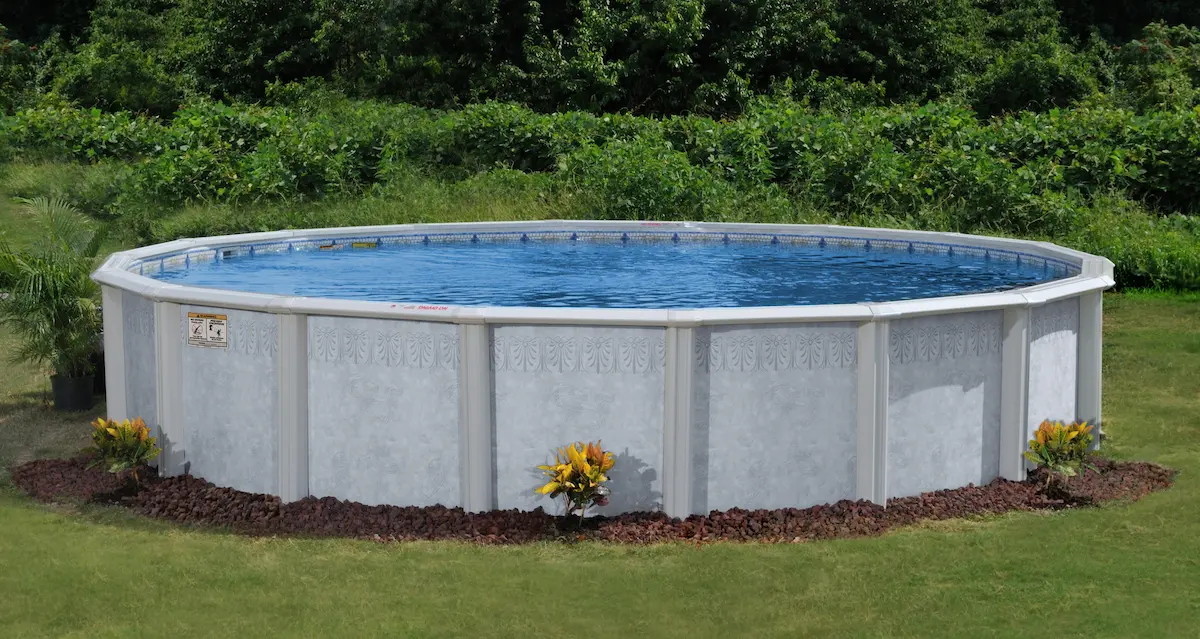
Modern Doughboy pools come in a wide range of styles, including curved resin models, marble-pattern walls, woodgrain finishes, and two-tone steel designs. With the right deck, landscaping, and accessories, an above-ground pool can fit naturally into most backyard settings. The semi-inground option adds a more custom, integrated look by partially recessing the pool for a finished, ground-level appearance.