
Most residential pools in North Carolina need a permit before construction begins, especially if they…
Pool Deck Materials in North Carolina: What You Should Know
Compare popular pool deck materials for comfort, traction, drainage, maintenance, and long-term performance in North Carolina backyards.
The deck around your pool affects comfort, safety, drainage, and how much upkeep you sign up for, not just how the backyard looks in photos. Poured concrete, concrete pavers, and natural stone such as travertine are common choices for North Carolina pool projects, along with porcelain and wood or composite decking for some elevated designs. No surface is slip-proof or guaranteed to stay cool, so compare real samples, ask what your quote includes, and match the material to your pool type, sun exposure, and maintenance tolerance.
Most homeowners spend weeks picking a pool shape, size, and installation type. Then the deck gets decided in a rush, sometimes as an afterthought once the pool itself is settled. That is a mistake. The deck is the surface you and your family actually touch every time you use the pool. It is what your feet feel on a hot July afternoon, what drains the splash-out after a pool party, and what a contractor has to dig up if something needs repair years down the road.
Choosing among pool deck materials in North Carolina means weighing more than color and texture. Wet traction, surface heat, drainage, and how the deck ties into your specific pool type all matter. This guide walks through the most common options, what each one solves, and the questions worth asking before you approve a deck as part of your pool scope.
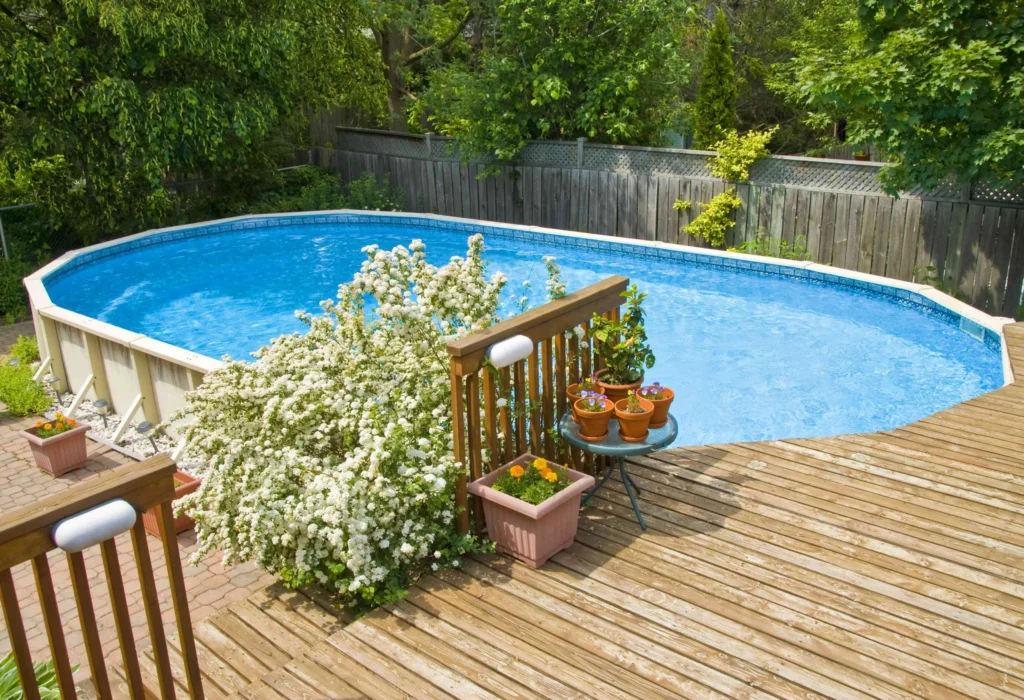
Table of Contents
Why the Pool Deck Material Affects More Than Appearance
The material under your feet shapes how the pool actually gets used day to day. It affects how safely you move around wet edges, how the yard handles rain and splash-out, how hot the surface gets in direct sun, and how easily a damaged section gets fixed later.
Treat “concrete,” “stone,” or “pavers” as broad categories, not single products. Within each category, the finish, color, sealer, and installation quality can change how the material performs almost as much as the material itself.
Expert Tip from Epic Swimming Pools: When homeowners come in comparing pool types, deck material rarely comes up first, but it should. We encourage buyers to ask about deck options early in the planning conversation, not after the pool shape and size are already locked in. It is easier to coordinate coping, drainage, and access when the deck is part of the original discussion.
Wet Traction, Drainage, and Daily Use
No pool deck surface is slip-proof, regardless of what a product label says. Traction depends on surface texture, slope, algae, sunscreen residue, standing water, and how well the surface is maintained over time.
Drainage is a system decision, not a material guarantee. A deck needs the right slope, drain placement, and coordination with pool coping and surrounding landscaping to actually move water away from the pool and any nearby structures. North Carolina’s rules for public swimming pool decks require slip-resistant, impervious surfaces with positive drainage, a good illustration that wet traction and water movement are recognized design concerns, even though that specific rule applies to public pools rather than residential backyards.
Heat, Maintenance, and Repairability
Surface temperature depends on color, direct sun exposure, shade, moisture, and the material itself. A dark finish in full sun can feel very different underfoot than a lighter finish in the same material family, so treat any “stays cool” claim with some skepticism until you have touched the actual product outdoors.
Repair approach also varies by system. Poured concrete is one continuous surface, so a crack or stain in one section can remain visible after a patch repair. Modular systems like pavers can sometimes have individual units lifted and reset, though the whole system can still settle or develop joint issues if the base was not built correctly. None of these tradeoffs make one category universally better. They just mean the right answer depends on what you are trying to solve.
Three Common Pool Deck Material Categories in North Carolina
These three categories show up often in North Carolina pool projects. That reflects what contractors commonly offer and what buyers commonly ask about, not a measured statewide ranking of what most homeowners choose.
Poured Concrete
Poured concrete creates a continuous surface that can follow curves and custom pool shapes without visible seams. It also comes in several finish options, including broom-finished, stamped, textured, and exposed aggregate, which the Portland Cement Association identifies as a finish suited to pool decks and other exterior horizontal surfaces because of its texture and wear resistance.
The tradeoff is that concrete is one connected slab. If a section cracks, settles, or stains, a repair may remain visible rather than blending in the way a swapped-out paver would. Traction and heat both depend heavily on the exact finish and sealer chosen, and joints, base preparation, and drainage planning matter for how well the surface holds up over time.
Concrete Pavers
Concrete pavers create a modular surface built from individual units instead of one continuous pour. That opens up more pattern and color choices, and it means a damaged section can sometimes be addressed by lifting and resetting individual pieces rather than patching a slab.
Long-term performance still comes down to the base, bedding, joint material, and edge restraint. A poorly built base can lead to settlement, spreading, or shifting units over time regardless of how good the pavers themselves are. Darker paver colors can also get hot in direct sun, and joints need periodic maintenance to stay in good shape.
Travertine and Other Natural Stone
Travertine and other natural stone pavers are a common premium choice around North Carolina pools, prized for natural color variation and a modular format similar to concrete pavers. Not every travertine product performs the same way. The Natural Stone Institute’s guidance on ASTM standards points to the importance of checking the exact stone, finish, and exterior-use testing rather than assuming all natural stone behaves identically.
Porosity, strength, wet-area traction, and stain resistance can all vary between stone products, so ask your contractor for the specific product and finish being proposed, not just the material category. Natural variation in color and pattern is part of the appeal, but it also means replacement pieces down the road may not match perfectly.
Other Materials That May Fit Certain Pool Designs
Porcelain Pavers
Porcelain pavers offer a consistent, engineered appearance with a wide range of stone-look designs. As with natural stone, the exact exterior-rated product matters. Indoor porcelain tile is not interchangeable with an exterior pool-deck paver, and thickness, substrate, and edge details all affect how the material holds up around water.
Wood and Composite Decking
Wood and composite decking come into play mainly for elevated structures, such as decks built around an above-ground pool or a semi-inground pool with a partial framed edge. In these cases, the structural framing, fasteners, and local code requirements matter as much as the surface boards themselves.
Composite products vary by manufacturer. Trex’s heat resistance guidance notes that select products can be used around pools with periodic cleaning, but also makes clear that color, sun exposure, and product technology all affect how hot a composite board gets. Even boards marketed for lower heat buildup can still become hot in direct North Carolina sun, so check the exact product’s heat, traction, and warranty details before assuming any composite deck will feel comfortable underfoot in July.
Epic Swimming Pools Note: In the Raleigh, Sanford, and Charlotte neighborhoods we work in, deck layout often has to work around barrier and gate requirements before materials get ordered. Raleigh’s guidance for installing a pool or spa is a useful example of how local rules affect where steps, gates, and permanent structures can go. Rules vary by city, county, and HOA, so confirm requirements for your specific address before finalizing the deck plan.
How to Compare Deck Materials for Your Backyard
Use this checklist to compare options against your specific project rather than a generic ranking:
- Pool type and finished elevation (in-ground, semi-inground, or above-ground)
- Sun and shade pattern across the deck area
- Wet traction and how easy the surface is to clean
- Drainage and yard grade
- How repairs would be handled if the surface cracks, stains, or shifts
- How much sealing, joint care, or board maintenance you are willing to do
- How the material transitions to pool coping
- Barrier, gate, stair, and access plan
- What is included and excluded in your project scope
- Physical samples, product specifications, and warranty terms
Questions to Ask Before Approving the Deck Scope
A low deck allowance in a quote can look very different once you add the items that are commonly priced separately. Before signing off, ask:
- Who designs and installs the deck?
- What base preparation is included?
- How will drainage be handled?
- Which exact finish or product is specified, not just the material category?
- Is pool coping included in the deck scope?
- Are steps, railings, fencing, and gates part of this quote?
- Who handles sealing or final cleaning after installation?
- What should you expect regarding movement, cracking, settlement, or staining over time?
- What warranties come from the material manufacturer, the installer, and the pool contractor separately?
From the Epic Swimming Pools Team: Ask to see and touch actual deck samples outside, in real sun and shade, before you decide. A sample viewed indoors or on a screen rarely tells you how a color or finish will actually feel underfoot on a 95-degree North Carolina afternoon.
The table below summarizes how these categories compare at a glance.
| Material | Best fit | Main advantage | Main tradeoff |
|---|---|---|---|
| Poured concrete | Curved or custom perimeters | Flexible shape, several finish options | Repairs can stay visible; heat and traction depend on finish |
| Concrete pavers | Modular design, pattern flexibility | Individual units can sometimes be reset | Base and joint maintenance still required |
| Travertine or natural stone | Premium natural look | Natural variation, modular format | Product quality varies; confirm exact stone and finish |
| Porcelain pavers | Consistent, engineered appearance | Broad design options | Must be an exterior-rated pool product |
| Wood or composite | Elevated decks on above-ground or semi-inground pools | Works with framed structures | Structural design, heat, and traction vary by product |
And this table covers what to confirm in the quote itself:
| Scope item | Why it matters |
|---|---|
| Demolition or site clearing | Can change cost and schedule |
| Base preparation | Affects long-term settlement and drainage |
| Coping | Connects the deck to the pool edge |
| Drainage | Manages water movement away from the pool and home |
| Steps and handrails | Affects access and code compliance |
| Fence and gate coordination | Ties into safety and local approval |
| Sealing or coating | Changes ongoing maintenance needs |
| Final grading and landscaping | Closes gaps in the overall project scope |
Choose the Material as Part of the Whole Pool Plan
The deck is not a finishing touch you add after the pool is decided. It is part of how the whole project performs, drains, and holds up over the years you spend using it. Poured concrete, concrete pavers, and travertine each solve different problems, and porcelain, wood, and composite decking fit specific situations rather than every yard.
You do not need to have every answer before reaching out. A site evaluation can help identify grade, access, drainage, and placement considerations before the deck design gets finalized, and comparing your pool type against the deck options above is a good starting point for that conversation. When you are ready to talk through your specific yard, request pool pricing and ask which deck work is included in the scope.
Frequently Asked Questions
What is the best pool deck material for North Carolina?
There is no single best material for every yard. The right choice depends on your pool type, budget, sun exposure, drainage needs, and how much maintenance you want to take on. Poured concrete, concrete pavers, and natural stone such as travertine are all common options, each with different tradeoffs around repair, heat, and upkeep.
Is travertine always cooler than concrete around a pool?
No. Surface heat depends on the exact product, color, finish, sun exposure, shade, and moisture, not the material category alone. A light-colored travertine and a light-colored concrete finish may perform similarly, while a dark version of either can get noticeably hotter. Compare real samples in direct sun before assuming one material will stay cooler.
Are pavers better than poured concrete for a pool deck?
Pavers offer modular repairability since individual units can sometimes be lifted and reset, while poured concrete offers a continuous surface without visible seams. Neither is universally better. The right choice depends on your budget, the shape of your pool area, and how you weigh repairability against a seamless look.
Can composite decking be used around a pool?
Some composite products are designed for use around water, particularly for elevated structures around above-ground or semi-inground pools. Confirm the exact product’s heat performance, wet traction, fastening requirements, and warranty before assuming any composite board will work for a pool deck.
Should decking be included in the original pool quote?
It is worth scoping early, even if a separate contractor ultimately handles the deck work. Elevation, coping, drainage, barriers, stairs, and access all interact with the deck design, so planning it alongside the pool avoids gaps or conflicts later in the project.
Do pool deck requirements differ by city or county in North Carolina?
Yes. Permit, barrier, structural, and drainage requirements vary by municipality, county, and HOA. Raleigh’s guidance is one example of a local process, but it does not apply statewide. Confirm requirements for your specific project address before finalizing your deck layout.