
Looking for the fastest way to install a pool? This guide compares above-ground, semi-inground, and…
Can You Install a Pool on a Sloped Yard? What NC Homeowners Need to Know
Learn how a sloped yard affects pool installation in North Carolina, including grading, retaining walls, drainage, permits, and the pool types that work best on uneven ground.
A sloped yard does not rule out a pool in North Carolina. It changes which pool type makes the most sense for your space. Gentle slopes can often be graded flat at a modest cost. Steeper grades are where semi-inground pools, swim spas, and compact in-ground options become the more practical path. The right answer depends on your slope severity, yard access, and how you plan to use the water. Call Epic Swimming Pools at 919-443-6663 to talk through what your yard can support.
A lot of North Carolina homeowners walk their backyard, notice the drop from one end to the other, and quietly write off the idea of a pool. The slope feels like a dealbreaker before they ever talk to anyone. In most cases, it is not.
A sloped yard does change the planning conversation. It affects which pool type fits the space, what site preparation is involved, and in some cases what the project will cost. But slope rarely ends the conversation entirely. Many NC homeowners with graded lots, hilly backyards, and uneven terrain have found a pool option that works.
This guide explains how slope affects your choices, which pool types tend to work best in different situations, and what to realistically expect from site prep and permitting in North Carolina.
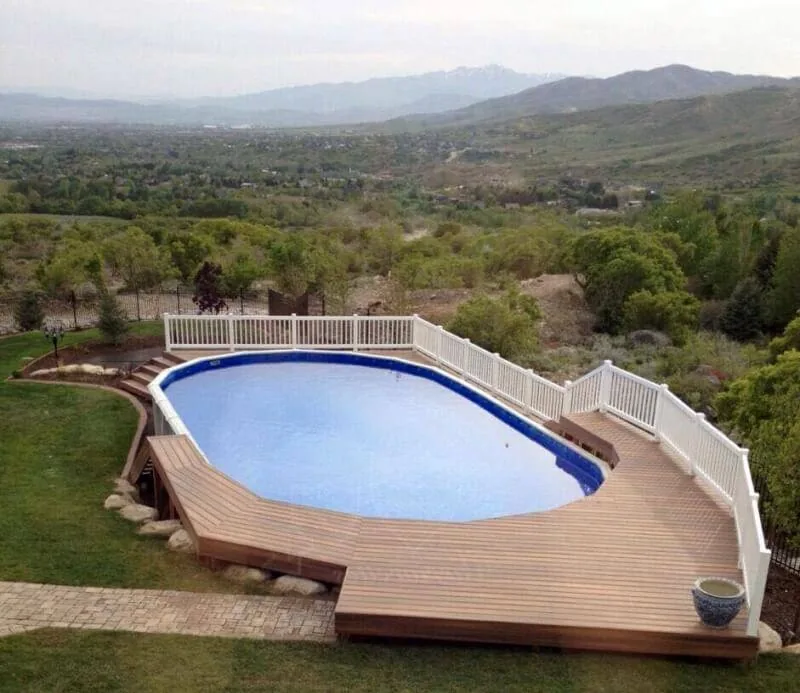
Table of Contents
Can You Install a Pool on a Sloped Yard?
Yes, in most cases. A slope changes the site preparation requirements and often points toward a specific pool type, but it does not automatically rule out a backyard pool. The key variables are how steep the grade is, what access your yard has for equipment and delivery, and which installation method makes sense for the terrain.
Most pool installations on sloped ground come down to one of three approaches: grading the area flat, building retaining walls to create a level zone, or using a pool design that works with the slope rather than against it. Semi-inground swimming pools and swim spas are often the most flexible options on sloped terrain because they can be partially set into the grade without requiring extensive excavation.
The first step is not choosing a pool model. It is understanding how much slope you are working with and what that means for each option.
Expert Tip from Epic Swimming Pools: During a site evaluation, the first things our team looks at on a sloped yard are the degree of grade, where the high and low points are relative to the planned pool placement, how equipment and delivery vehicles can access the space, and whether there are drainage patterns that could affect the installation. Those four factors shape the conversation more than the slope number alone.
How Much Slope Changes Your Options
The degree of slope is the deciding factor in how much site preparation is needed. Gentle slopes can often be addressed with basic grading. Steeper grades require more work, and in some cases a different pool type altogether.
For most above-ground pools, the installation site needs to be level within about one inch across the footprint. A yard with a slight, consistent grade can usually be cut or filled to meet that standard. Angi’s 2026 cost data puts yard leveling for an above-ground pool between $200 and $850, depending on pool size and slope severity. That is a manageable addition to a project.
For slopes that drop more than six to eight inches across the pool footprint, grading alone may not be enough. This is where two other approaches come into play.
Grading and Leveling for Gentle Slopes
Grading involves cutting down the high side of the yard, adding fill to the low side, or both, to create a flat and compacted base. It is the most straightforward approach for mild grades and works well for above-ground Doughboy pools and some semi-inground configurations. HomeGuide estimates residential regrading costs between $770 and $3,000 for most projects, with the final number depending on your lot, the amount of material being moved, and equipment access.
Retaining Walls for Steeper Grades
When a yard has a steeper drop, a retaining wall creates a level platform for an in-ground pool to sit in. River Pools estimates that retaining walls for pool installations typically range from $7,000 to $20,000 or more, depending on height, material, and length. That added cost is worth factoring into any in-ground project budget before comparing pool types.
The good news for many NC homeowners is that semi-inground and swim spa options can often avoid the retaining wall conversation entirely by working with the existing grade rather than forcing it flat.
Which Pool Types Work Best on a Sloped Yard?
Not every pool type handles a slope the same way. Here is how the main options compare based on slope severity, site prep complexity, and relative cost.
| Pool Type | Best Slope Fit | Site Prep Complexity | Relative Cost |
|---|---|---|---|
| Above-ground (Doughboy) | Gentle slopes | Lower | Lower |
| Semi-inground | Moderate to steep | Moderate | Mid-range |
| Swim spa | Moderate to steep | Moderate | Mid-range |
| In-ground with retaining wall | Any grade, with added cost | Higher | Higher |
Above-ground swimming pools are the most budget-friendly starting point, but they need a level base to stay structurally sound. They work well for gentle grades that can be corrected with minor grading. On steeper slopes, they are generally not the right fit.
Semi-inground swimming pools are where sloped yards really open up. Because part of the pool sits above grade, the installation can be adjusted to follow the natural contour of the land. This is one of the main reasons semi-inground options are a strong choice on sloped lots in North Carolina. They tend to require less added excavation and less structural work than a fully in-ground build on the same site.
Swim spas, including the Wellis Beach Club Deluxe and Beach Club Premium, can also be installed semi-inground on sloped terrain. According to installation guidance from Master Spas, the base needs to be level within about half an inch across an eight-foot run. A semi-inground placement on a slope allows the grade to support part of the unit while still meeting that requirement. This makes a swim spa a practical, compact-footprint solution for yards where a traditional pool layout would be difficult.
In-ground swimming pools remain an option on sloped land, but they typically call for more site preparation and, on steeper grades, structural retaining walls. That added scope affects both cost and timeline. The in-ground path can absolutely work. It just pays to compare the full project cost against a semi-inground or swim spa option before committing.
Epic Swimming Pools Note: In most Raleigh and Charlotte-area neighborhoods we work in, clay-heavy soil is a real factor during site prep. Clay does not drain as freely as sandy or loamy soil, which means grading and drainage planning on sloped lots needs extra attention. Water that collects at the base of a slope after a heavy rain can affect the installation zone and the long-term stability of the base. This is especially worth discussing for Triangle and Charlotte-area backyards where summer rain events are frequent.
What Does Site Preparation Actually Cost on a Sloped NC Yard?
Site prep costs on a sloped yard depend on the slope severity, pool type, yard access, and soil conditions. For most above-ground installations on a gentle slope, leveling typically runs $200 to $850 based on current estimates from Angi. For more significant slope correction through terracing, HomeGuide puts typical costs between $2,100 and $9,300. Retaining walls for in-ground builds can add $7,000 to $20,000 or more depending on scale and materials, according to River Pools.
Semi-inground and swim spa installations on moderate slopes often require less added site prep expense than a full in-ground build. Because they are designed to work with existing terrain, the excavation and structural work is generally more limited.
A few other costs worth building into your budget for any sloped-yard project in North Carolina:
- Electrical work: typically $1,500 to $3,500 depending on the distance from your panel and local code requirements
- Required fencing: often $1,500 to $5,000 depending on type and scope
- Permits: generally $200 to $800 for residential pool permits in NC
These figures are planning guides, not final quotes. Your actual costs depend on your specific yard, access, product selection, and local requirements. The fastest way to get a real number is a consultation where someone can look at your slope and give you a realistic scope.
For a full breakdown of pool ownership costs in NC, including ongoing expenses beyond installation, that guide covers what homeowners tend to miss when budgeting.
Permits, HOA Rules, and Drainage for Sloped Yards in NC
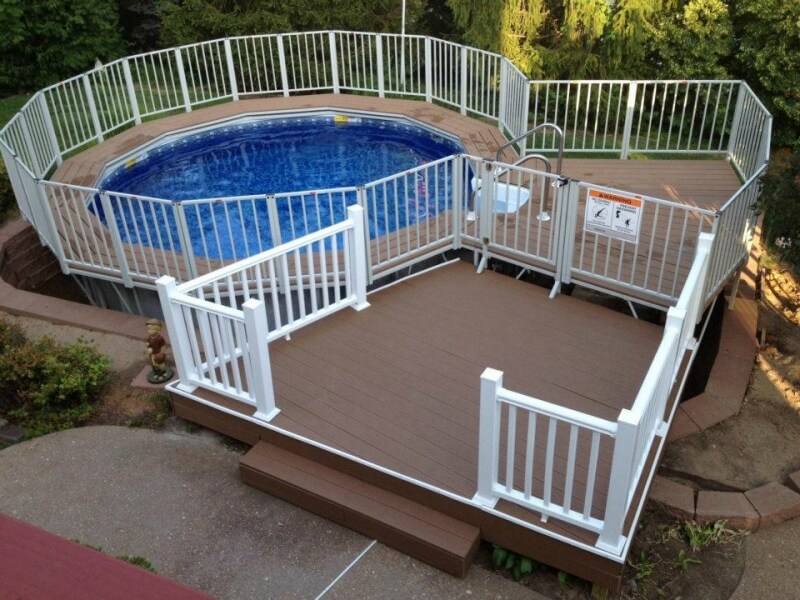
North Carolina requires permits for most pool installations. According to Wake County’s permitting guidance, permits are required for in-ground pools and above-ground pools deeper than 24 inches. Electrical permits are also needed when a pool includes lighting, pumps, or other electrical equipment.
The permit process in NC typically requires a site plan showing the pool location, setbacks from property lines and structures, and surrounding decking or hardscaping. On a sloped yard, the site plan may also need to account for how drainage will be managed and how the installation affects stormwater movement on the property. Rules vary by city, county, and installation type. Confirming local requirements early in the process saves time and prevents surprises. Prestige Pools NC has a useful overview of state-level regulations as a starting point.
HOAs add another layer. Many NC communities require HOA review and approval before installation begins. That process often addresses fencing, visibility, setbacks, drainage, and equipment placement. On a sloped yard, drainage questions can come up more frequently. It is worth reviewing your HOA guidelines before settling on a specific pool type or placement.
From the Epic Swimming Pools Team: One detail worth asking about: depending on your municipality, a swim spa installation may fall under hot tub or personal spa permitting regulations rather than full swimming pool regulations. That is not guaranteed and varies by locality and installation type. But it is a question worth raising during your site consultation, because the permit category can affect your timeline and scope. Our team can help you understand what applies in your area.
What to Think Through Before You Call
A sloped yard is a real factor in pool planning. It is not a reason to stop looking.
Gentle slopes can often be graded flat at a manageable cost. Moderate to steep slopes tend to favor semi-inground pools and swim spas, both of which are designed to work with terrain rather than requiring it to be completely level. Full in-ground builds are possible on sloped land but typically involve more site prep expense. And in North Carolina, clay soil, drainage patterns, permitting rules, and HOA requirements are all part of the picture regardless of which pool type you choose.
You do not need to have every detail figured out before you reach out. A site evaluation is the fastest way to understand what your yard can realistically support and which options make the most sense for your space and budget.
Call Epic Swimming Pools at 919-443-6663 or request pricing online and our team will help you understand what is possible for your North Carolina backyard.
Frequently Asked Questions
Can you put an above-ground pool on a sloped yard?
In some cases, yes. Above-ground pools require the installation site to be level within about one inch, so mild slopes that can be corrected with basic grading are workable. Steeper slopes are more challenging for above-ground installations and may make a semi-inground pool or swim spa a more practical fit. If your yard has a significant grade, a site evaluation will help clarify what options are realistic for your specific space.
What is a semi-inground pool and why does it work well on slopes?
A semi-inground pool is partially set into the ground and partially above grade. Because the installation does not require a completely flat site, it can be adjusted to follow the natural slope of the land to a degree. This makes semi-inground pools a strong fit for yards with moderate to steep grades where a fully in-ground build would require significant retaining walls or extensive excavation. They also tend to cost less than a full in-ground project on the same terrain.
How much does it cost to prep a sloped yard for a pool in NC?
It depends on the slope severity, pool type, and yard access. Leveling for an above-ground pool on a gentle slope typically runs $200 to $850. Terracing or significant regrading for a larger project can cost $2,100 to $9,300. Retaining walls for in-ground builds can add $7,000 to $20,000 or more depending on height and material. Semi-inground and swim spa installations often require less added site prep cost than full in-ground builds on the same terrain. These are planning ranges and not final quotes. Your specific yard conditions will affect the final number.
Do sloped yards always need retaining walls for a pool?
Not always. Retaining walls are most commonly needed for in-ground pools on steeper slopes where the excavated area needs structural support to prevent soil movement. Gentle slopes may only need grading. Semi-inground pools and swim spas can often avoid retaining walls entirely because they work with the grade rather than requiring a fully level site. The specific answer depends on your yard and which pool type you select.
Will a sloped yard affect my HOA approval or permit process in NC?
It can. NC requires permits for most pool installations, and the required site plan will need to account for drainage on a sloped lot. HOAs in many NC communities also review drainage, fencing, setbacks, and equipment placement, and a sloped yard can raise additional questions during that review. Rules vary by city, county, and HOA, so checking local requirements before finalizing your pool placement or product choice is always a smart early step.