
Looking for the fastest way to install a pool? This guide compares above-ground, semi-inground, and…
How Much Water Is in a Swimming Pool? (And What That Volume Really Costs You)
Learn how much water your swimming pool holds, how pool volume is calculated, and what that water can really cost for filling, maintenance, and long-term care.
Most inground pools hold between 15,000 and 30,000 gallons of water, depending on their size and shape, and you can calculate yours in minutes with three simple formulas. But the gallon count is really just the starting point: that volume sets your chemical costs, heating bills, and annual maintenance budget for the life of the pool.
This guide covers the math, shows what those gallons actually cost, and explores how fiberglass pools and swim spas deliver the same backyard experience on far less water.
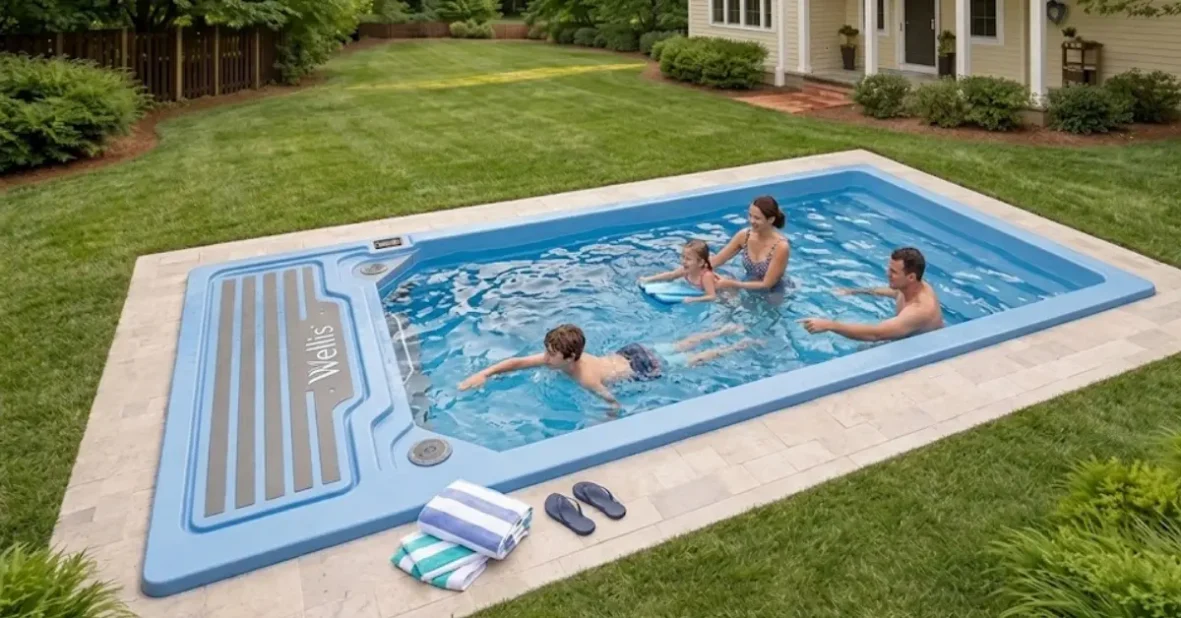
Table of Contents
Most homeowners never think about how much water is in their pool until the first chemical delivery arrives or the first October heating bill lands in their inbox.
That number, often somewhere north of 15,000 gallons, is the foundation of every maintenance decision you’ll make. It determines how much chlorine you add after a heavy rain, how long your pump needs to run each day, how much it costs to bring the water up to temperature on a chilly evening, and what you’ll spend to keep everything balanced through a full season. Volume isn’t just a number to know. It’s a number that costs you money every single week.
How Much Water Is in a Swimming Pool?
A standard inground pool holds between 15,000 and 30,000 gallons of water, depending on its size and shape. That gallon count drives every maintenance calculation you’ll make as a pool owner, from how much sanitizer to add after a storm to what size pump and filter you need to keep the water clear.
Here’s a quick reference for the most common residential pool shapes and sizes:
| Pool Type | Dimensions | Avg. Depth | Approx. Gallons |
| Small rectangular | 12×24 ft | 4.5 ft | ~9,700 |
| Standard rectangular | 16×32 ft | 5 ft | ~19,200 |
| Large rectangular | 20×40 ft | 5.5 ft | ~33,000 |
| Round | 18 ft diameter | 4.5 ft | ~8,600 |
| Semi in-ground | 12×24 ft | 4 ft | ~8,600 |
| Swim spa (small) | 12 ft model | N/A | ~1,500 |
| Swim spa (large) | 19 ft model | N/A | ~2,800 |
How to Calculate Your Pool’s Water Volume
You don’t need a professional to figure out how many gallons your pool holds. Here are three formulas that cover the most common residential shapes.
Formula for Calculating the Volume of a Rectangular Pool
Rectangular pool: Length x Width x Average Depth x 7.48 = Gallons
For a 16×32-foot pool with a 3.5-foot shallow end and a 6.5-foot deep end, the average depth is 5 feet. The math: 16 x 32 x 5 x 7.48 = 19,149 gallons.
Formula for Calculating the Volume of a Round Pool
Round pool: 3.14 x Radius² x Average Depth x 7.48 = Gallons
For an 18-foot diameter pool with a 4.5-foot average depth (9-foot radius): 3.14 x 81 x 4.5 x 7.48 = 8,565 gallons.
Formula for Calculating the Volume of an Oval Pool
Oval pool: Length x Width x 0.45 x Average Depth x 7.48 = Gallons
For a 24-foot-long oval pool with a width of 15 feet and an average depth of 5 feet: 24 x 15 x 0.45 x 5 x 7.48 =6,058.8 gallons.
The 0.45 factor accounts for the oval’s smaller surface area compared to a full rectangle of the same dimensions. Free online pool volume calculators can run these numbers instantly if you’d prefer to skip the arithmetic.
Formula for Calculating the Volume of an Irregularly Shaped Pool
For irregularly shaped pools, kidney, L-shaped, or freeform, divide the pool into two or more recognizable sections, calculate each one separately, and add the totals together. This is the standard approach used across both residential and commercial pool construction.
Why Your Pool’s Gallon Count Matters More Than You Think
Your pool’s volume is the single biggest driver of your annual maintenance costs, not just for chemicals, but for energy, pump runtime, and long-term wear on your equipment. Most homeowners focus on what a pool costs to build, but it’s what it costs to own that actually determines whether it was a smart investment.
When you dose your pool with shock or algaecide, you’re treating a fixed number of gallons. A 30,000-gallon pool needs proportionally more of everything than a 15,000-gallon pool, every time, all season long. The same principle applies to heating: the larger the water mass, the more energy it takes to raise and hold its temperature. Your filter also needs to turn over the full volume at least once per day to keep the water clear, which means longer daily pump cycles and a higher monthly electricity bill on larger pools.
Understanding your volume before you build changes the conversation from “what pool do I want?” to “what pool can I realistically afford to own for the next 20 years?”
What 20,000 Gallons Actually Costs to Maintain
The total annual cost to maintain a standard inground pool runs between $1,200 and $3,000, depending on pool type, local climate, and usage. That figure covers chemicals, heating, filtration, and routine service, and water volume drives every one of those line items.
Here’s how those numbers stack up across common pool and spa types:
| Pool Type | Annual Chemical Cost | Heating (monthly) | Est. Annual Total |
| Concrete/plaster pool | $700-$850 | $200-$400 | $2,100-$5,650 |
| Vinyl liner pool | $400-$650 | $200-$400 | $1,800-$3,850 |
| Fiberglass inground pool | $150-$200 | $150-$300 | $1,150-$2,600 |
| Swim spa | $50-$100 | $30-$90 | $480-$1,180 |
A larger pool costs more to run. That’s not an argument against building a big pool, it’s just the math you need in front of you before you make the decision.
Cost-Saving Alternatives to Traditional Inground Pools
Now that you know how much water volume can cost, you might be wondering: How can I get that cost down? Luckily, there are plenty of more budget-friendly options that won’t make you skimp on all the perks of a pool.
Fiberglass Pools: Reduce Your Water-Related Costs
Fiberglass pools require significantly fewer chemicals than concrete or vinyl liner pools. The reason? Surface science. Concrete pool surfaces are rough and porous: those tiny pores give algae somewhere to take hold, which means you’re constantly fighting it with sanitizer, shock, and algaecide. Fiberglass’s gelcoat surface is smooth and non-porous, so algae have no foothold.
The savings are real and consistent. According to Angi’s comparison of fiberglass and concrete pools, fiberglass pool owners typically spend $150 to $200 per year on chemicals, compared to $700 or more for a concrete pool of comparable size. Over a ten-year ownership period, that gap alone adds up to more than $5,000, a meaningful return from a material choice made once at installation.
Beyond chemicals, fiberglass pools don’t require resurfacing. According to Fixr’s pool resurfacing cost data, concrete pools need acid washing and replastering every 7 to 15 years, which adds thousands in recurring costs that fiberglass owners don’t face. Less chemical spend, no resurfacing bills, lower pump runtime. The savings stack up from every direction.
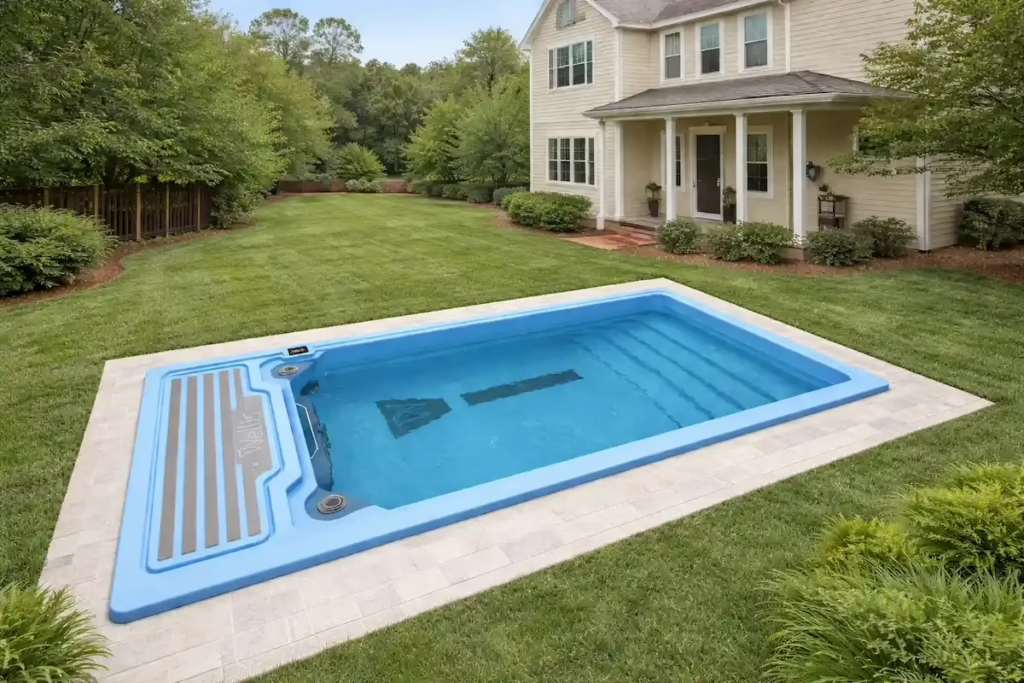
Our in-ground fiberglass pool options cover a range of shapes and sizes built for Raleigh-area homes. If you’re weighing which type makes the most sense for your yard and budget, that’s a good place to start the comparison.
Swim Spa: Smaller but Mightier
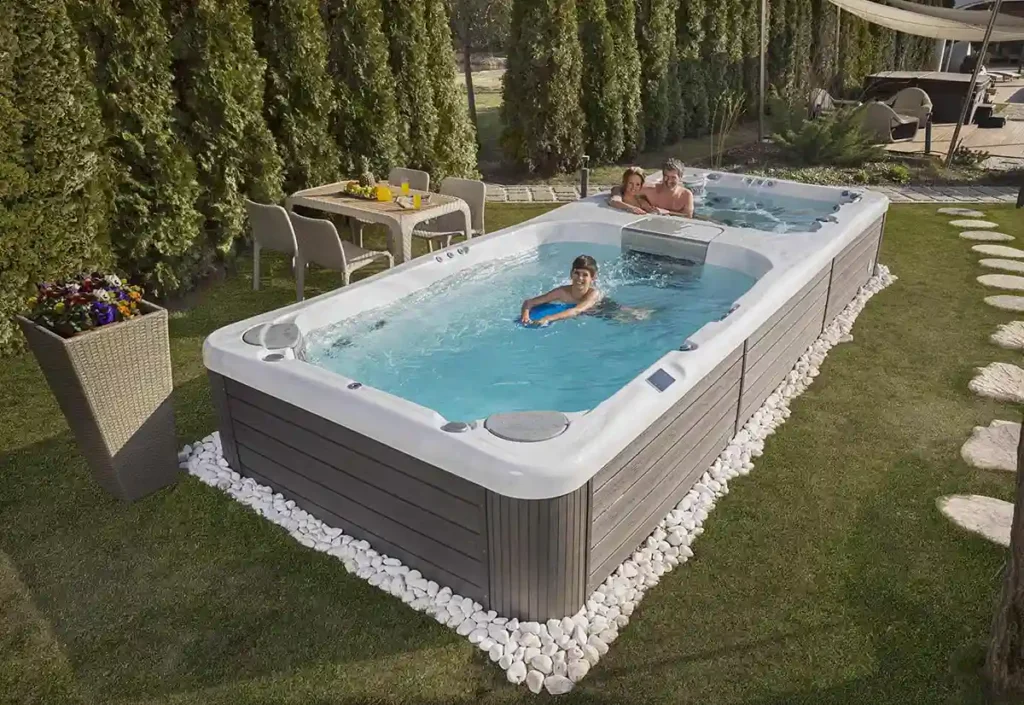
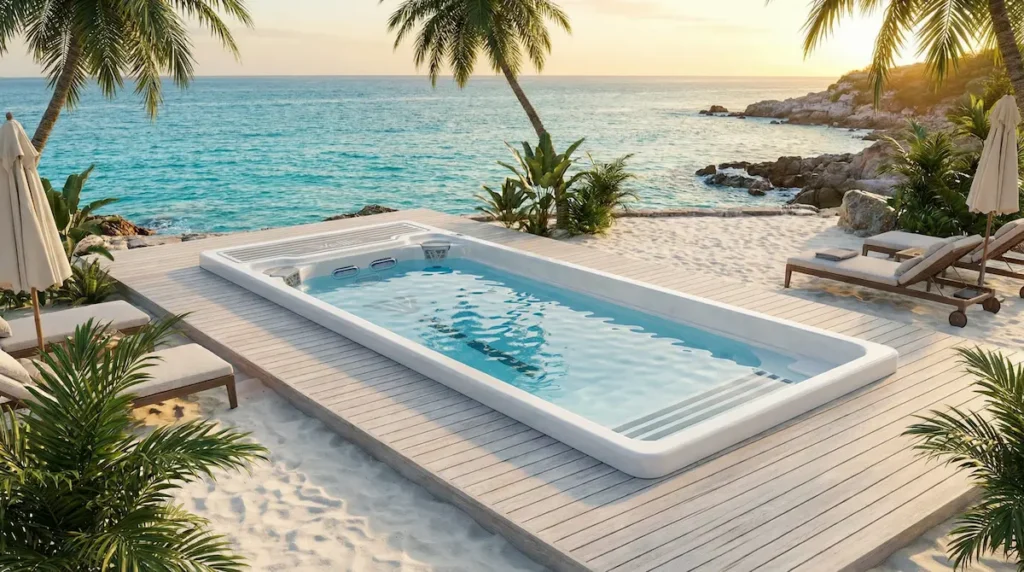
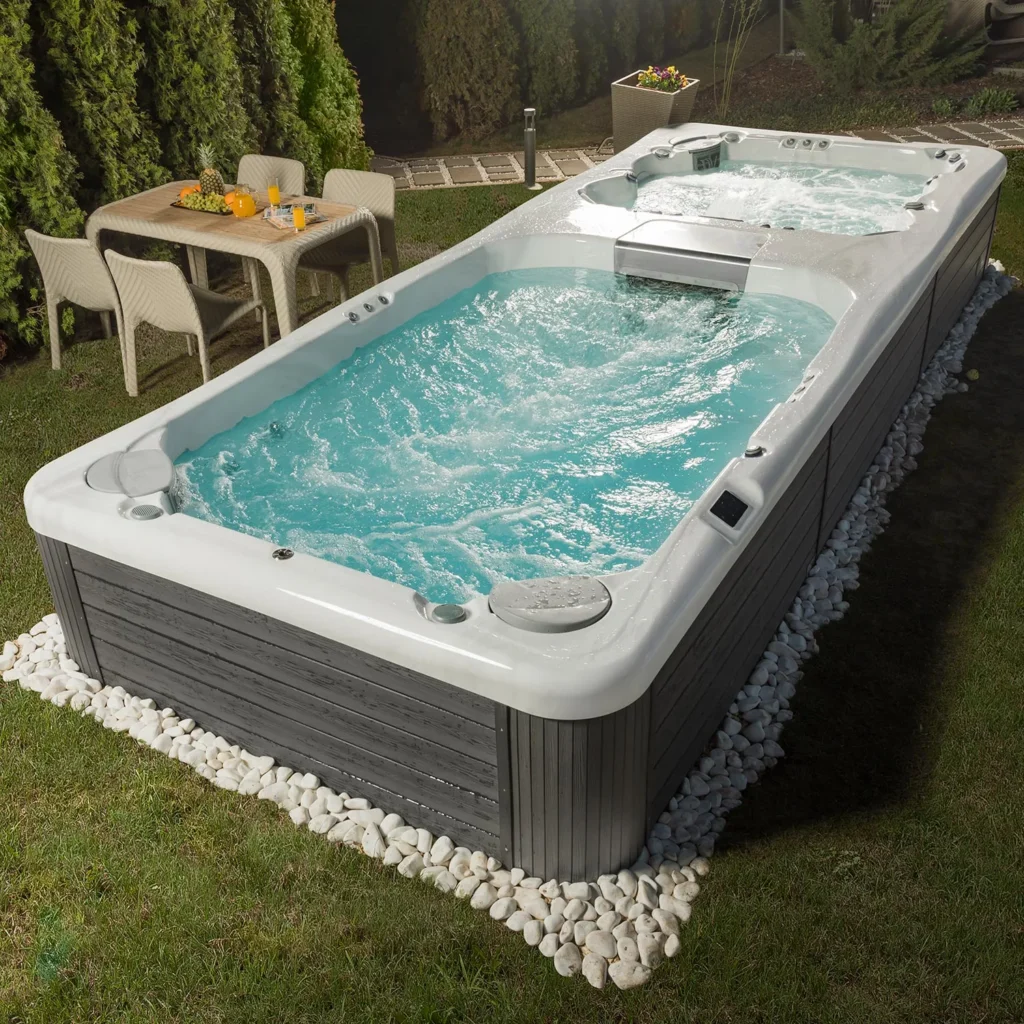
A swim spa holds between 1,450 and 2,500 gallons of water, roughly 10 to 15 times less than a standard inground pool. That smaller volume isn’t a compromise. It’s what makes the system genuinely efficient. Less water to heat, less water to treat, less time spent keeping it balanced.
Most models in the 12 to 14-foot range hold between 1,500 and 2,000 gallons, while larger 17 to 19-foot models hold around 2,500 gallons. Compare that to a standard 16×32-foot inground pool at 19,200 gallons and the difference is stark.
For heating, swim spas typically cost $1 to $3 per day to run year-round. As the U.S. Department of Energy notes on pool and spa energy efficiency, the combination of a smaller water volume and a well-insulated shell dramatically reduces the energy needed to reach and hold temperature. Filtration is also faster: a swim spa’s pressurized system can turn over the full water volume in minutes, compared to 12 to 18 hours for a full-size pool. That means cleaner water, maintained with less chemical input, on a fraction of the energy.
For homeowners who want year-round swimming and hydrotherapy without the full maintenance commitment of an inground pool, a swim spa delivers a lot of value in a compact footprint.
Semi In-Ground Pools: A Flexible Middle Ground
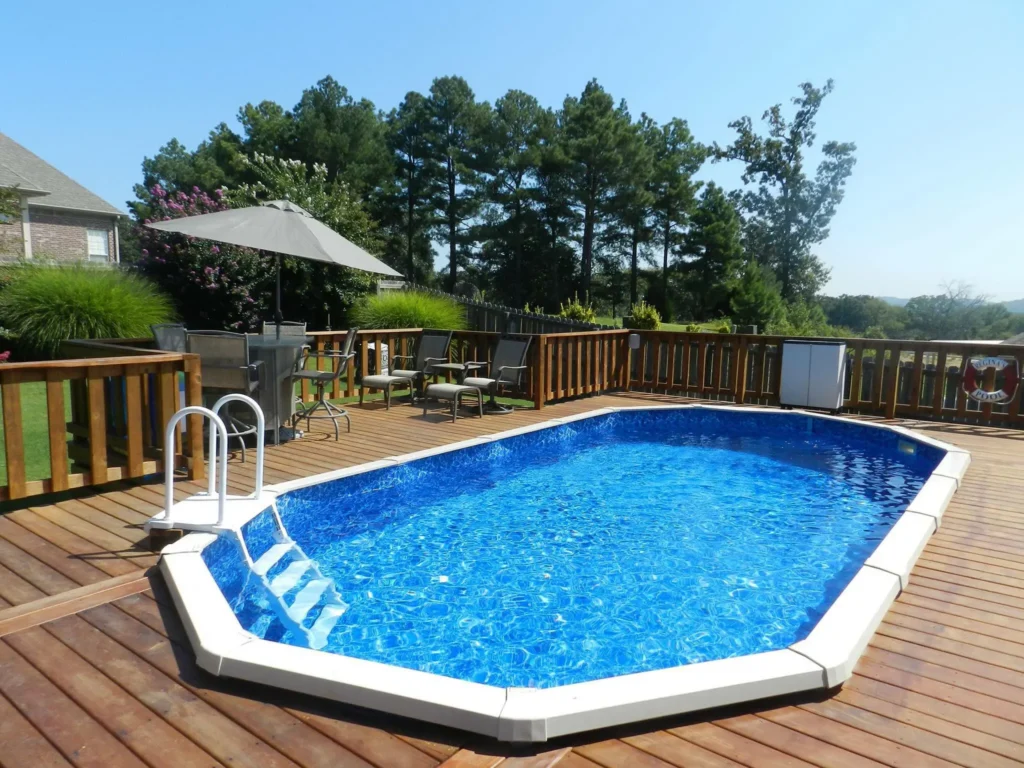
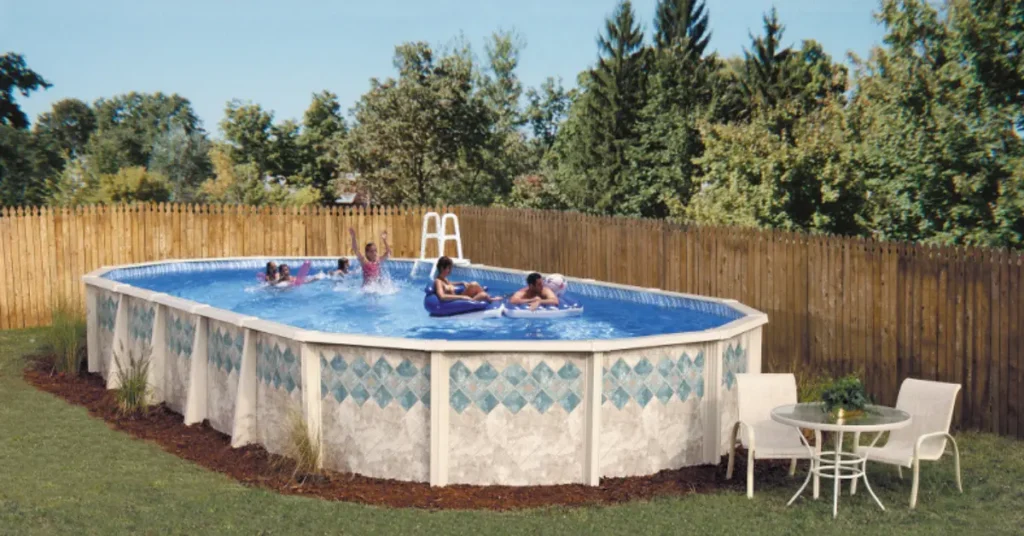
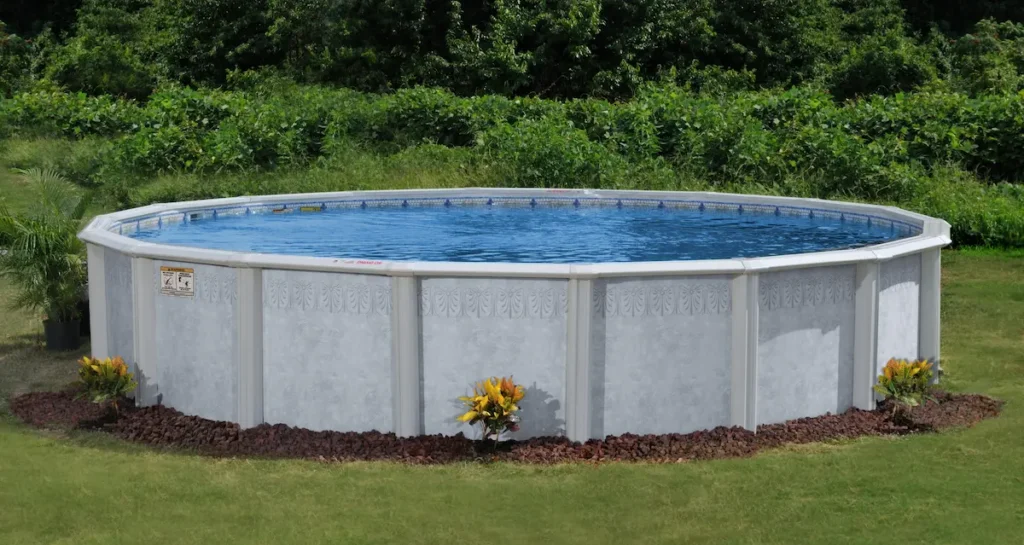
If a full inground build feels like more than your yard or budget calls for, a semi in-ground pool splits the difference. Most semi-in-ground options hold between 7,000 and 12,000 gallons, significantly less than a full inground pool, which translates directly into lower chemical costs, lower heating costs, and a lighter maintenance schedule overall.
They also work well on properties where a full excavation isn’t practical. Sloped lots, smaller backyards, and tighter budgets are all situations where a semi-in-ground pool makes a lot of sense. You still get the backyard retreat experience, scaled to fit your actual life rather than your wishlist.
Finding the Right Pool for Your Home
The right pool isn’t the biggest one. It’s the one that fits how you actually use your backyard.
An Inground Pool Is the Right Option If You:
- Want space for entertaining, swimming laps, or hosting family and friends
- Plan to use your pool as a central feature of your backyard
- Prefer a fully customized look and layout
- Are comfortable with higher water volume (15,000–30,000 gallons) and the ongoing maintenance that comes with it
- Want long-term durability, especially with a fiberglass option that keeps chemical and upkeep costs lower
A Swim Spa Is the Right Option If You:
- Want year-round use for fitness, relaxation, or hydrotherapy
- Prefer minimal maintenance and lower operating costs
- Have limited backyard space but still want a high-performance swimming experience
- Like the idea of dramatically lower water volume (typically 1,500–2,500 gallons)
- Value efficiency, less water to heat, clean, and balance
A Semi In-Ground Pool Is the Right Option If You:
- Need a flexible solution for a smaller yard or a sloped property
- Want the pool experience without the cost or complexity of a full inground installation
- Prefer a lower water volume (typically 7,000–12,000 gallons) and reduced maintenance demands
- Are looking for a more budget-friendly way to upgrade your outdoor space
- Still want a clean, integrated look that blends with your landscape
Take a look at our pool products to see the full range of what’s possible in the Raleigh area. When you’re ready to talk numbers, request a pricing consultation and we’ll help you match the right option to your yard, your lifestyle, and your budget.
The Bottom Line
Most inground pools hold between 15,000 and 30,000 gallons, and you can calculate yours in five minutes with the formulas above. What that number reveals is just as important as the number itself. A fiberglass pool at 19,000 gallons costs significantly less to maintain than a concrete pool at the same size. A swim spa at 2,000 gallons costs a fraction of either.
The smartest pool decision isn’t always about going bigger. It’s about building something you’ll genuinely enjoy owning, not just a pool you can afford to build.
If you’re planning a new pool in the Raleigh area, our team at Epic Swimming Pools is ready to walk you through every option and help you build something worth diving into.
Frequently Asked Questions
How many gallons of water does a 12×24 pool hold?
A 12×24-foot pool with a 4.5-foot average depth holds approximately 9,700 gallons. Using the rectangular formula: 12 x 24 x 4.5 x 7.48 = 9,693 gallons. If your pool has a shallower average depth of 4 feet, the total drops to around 8,600 gallons.
How do I calculate pool volume for an irregular-shaped pool?
Divide the pool into two or more regular shapes: rectangles, ovals, or circles. Calculate the volume of each section using the appropriate formula, then add the totals together. This works well for L-shaped and kidney pools. For very complex freeform designs, your pool contractor can provide an exact volume figure based on the build plans.
How often does a pool need to be drained and refilled?
Most inground pools should be fully drained and refilled every 5 to 7 years, or sooner if total dissolved solids build up to the point where chemical balancing becomes difficult. Partial water replacement, typically 25 to 30 percent of the total volume, is sometimes done more frequently to refresh the water chemistry without losing the full volume.
Does a bigger pool always cost more to maintain?
Generally, yes, but pool type matters as much as size. A large fiberglass pool at 25,000 gallons can cost less to maintain annually than a smaller concrete pool at 15,000 gallons, because the non-porous surface dramatically reduces chemical demand. Volume and surface material work together to determine what you actually spend.
How much water does a swim spa use compared to a regular pool?
A swim spa holds between 1,500 and 2,500 gallons, roughly 10 to 15 times less than a standard inground pool at 15,000 to 30,000 gallons. That smaller volume means dramatically lower chemical costs, faster filtration cycles, and heating bills of just $1 to $3 per day year-round, making a swim spa one of the most water-efficient ways to have a swimming and relaxation option at home.