
Discover the real costs of building your dream inground swimming pool in North Carolina, depending…
How Often Should You Change Swimming Pool Water? Cost, Timeline & Smarter Options for 2026
Learn how often to change pool water, what it costs, and when smarter maintenance options can save you time and money.
Most traditional in-ground pools need a full drain and refill every 3 to 5 years. If you don’t, chemical byproducts can build up over time, making it so that eventually no treatment can fix the water balance.
Draining 20,000 gallons or more in a traditional pool is expensive, disruptive, and hard on the environment, but modern fiberglass pools and swim spas dramatically cut that burden by introducing perks like non-porous surfaces, lower chemical demand, and far smaller water volumes.
Most pool owners never think about their water until something goes wrong: A green tinge that won’t clear. Chlorine that stops doing its job. Water that looks clean but leaves your skin itchy and your eyes red. By the time you reach that point, chemical buildup has taken over, and no amount of shock or treatment will fix it.
The question of how often you should change swimming pool water doesn’t have a single universal answer. It just depends on how your pool is built, how often it’s used, where you live, and how well the water has been maintained. Our guide walks you through the full picture to make it simple. Below, we’ll cover the standard timeline, what forces the issue, what a drain and refill actually costs, and why the right pool choice changes the equation entirely.
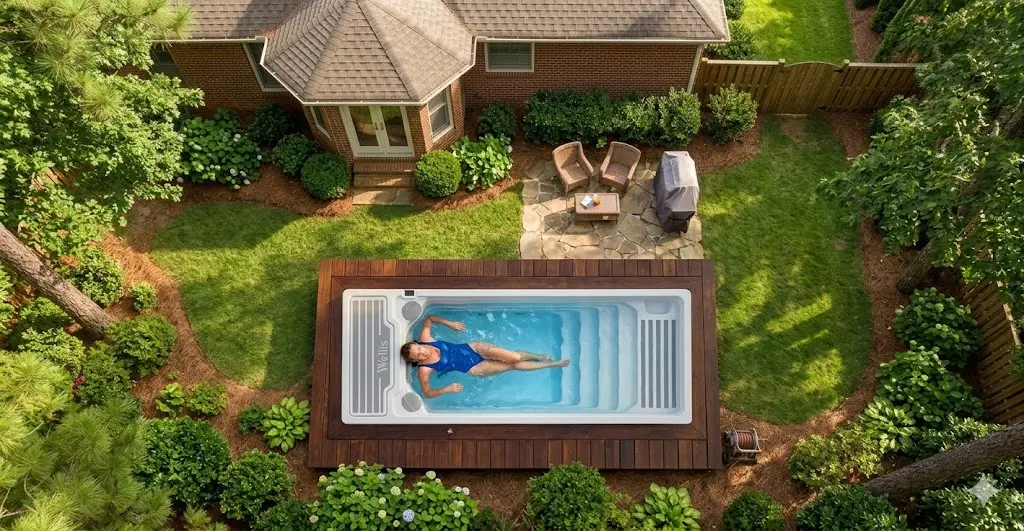
Table of Contents
How Often Should You Change Swimming Pool Water?
For most traditional in-ground pools, the standard recommendation is a full drain and refill every 3 to 5 years. Pools in hot climates, with heavy use, or poor maintenance routines may need it closer to every 2 to 3 years. A lightly used, well-maintained pool in a cooler region might even stretch toward 7 years. But the chemistry, not the calendar, is what ultimately forces the decision.
Several factors can shrink or lengthen this timeline. According to AquaMobile Swim School, covered or indoor pools in drier climates tend to extend the cycle, while outdoor pools in high-heat regions often hit the 3-year mark before the water even looks problematic.
| Factor | Effect on Water Change Timeline |
| High bather load (sweat, sunscreen, body oils) | Speeds up TDS accumulation, shortens cycle |
| Hard tap water (high mineral content) | Raises TDS from day one, shortens cycle |
| Heavy chemical use | Each product leaves dissolved byproducts |
| Hot climate / high evaporation | Concentrates solids faster as water evaporates |
| Light use, covered pool | Slows buildup, extends the cycle |
| Regular partial water top-offs | Dilutes TDS, helps stretch the timeline |
What Is TDS, and Why Does It Force a Water Change?
TDS stands for Total Dissolved Solids, and it means the combined measurement of everything dissolved in your pool water: minerals, chemical byproducts, metals, salts, and organic matter from swimmers. Once TDS gets too high, your water becomes chemically unstable, which is bad news. Chlorine stops working efficiently, scaling builds up on surfaces and equipment, and the water can irritate skin and eyes.
So, where should your TDS fall? The critical number, as Pool Training Academy, explains, is below 2,500 ppm for a freshwater pool. Once it climbs to even 1,500 ppm above your baseline reading, though, it’s best to replace water. And no chemical treatment can remove dissolved solids. The only fix is dilution with fresh water.
| TDS Level (ppm) | What It Means for Your Pool |
| 0–500 | Freshly filled, ideal starting point |
| 500–1,500 | Normal range for a well-maintained pool |
| 1,500–2,500 | Borderline, increasingly difficult to balance |
| Above 2,500 | Partial or full water replacement needed |
The Cyanuric Acid Problem
Cyanuric acid (CYA) is a pool stabilizer that protects chlorine from breaking down in sunlight. It’s genuinely useful, but there’s a catch: it accumulates every time you add stabilized chlorine tablets. Once CYA climbs above 80 to 100 ppm, it actually reduces the effectiveness of your chlorine. And like TDS, the only way to bring it down is to drain some or all of the water.
Signs Your Pool Water Is Done
While the TDS and CYA numbers are reliable tells for how your pool water is doing, there are some other signs that shouldn’t go unnoticed.
- Chlorine demand that never gets satisfied
- Constant pH drift despite regular dosing
- Cloudy water that won’t clear no matter what you add
- Scaling or white deposits on walls, fittings, and returns
- A strong chemical odor even when chlorine levels test correctly
What Does It Actually Cost to Drain and Refill a Pool?
This is where the reality of traditional pool ownership gets expensive. A standard backyard pool holds between 15,000 and 25,000 gallons. HomeGuide puts municipal water costs at $4 to $10 per 1,000 gallons. That means the water alone for a 20,000-gallon refill runs $80 to $200. Then add draining, cleaning, and rebalancing, and the total climbs quickly.
According to Angi, professional drain and refill services typically run $225 to $900, depending on pool size, location, and whether surface cleaning or repairs are involved. Chemical restart costs stack on top of that.
| Expense | DIY Estimate | Professional Estimate |
| Water (20,000 gal at $4–$10/1,000) | $80–$200 | $80–$200 |
| Submersible pump rental | $50–$150 | Included |
| Labor | Your time (8–14 hours) | $150–$500 |
| Chemical restart | $100–$200 | $100–$200 |
| Total | $230–$550 | $330–$900 |
Beyond the money, there’s also the cost of time. Draining a large pool takes 8 to 14 hours with a submersible pump. Then, you’ll need to wait for the shell to dry and inspect the surface before refilling, which can take another 1 to 2 days. Then several more days of chemical balancing before the pool is swim-ready. For most families, the pool is out of commission for a full week or more.
Why Draining a Pool Is Harder on the Environment Than Most People Think
Dumping 20,000 gallons of chemically treated water isn’t just wasteful, it can cause real environmental harm.
Pool water contains chlorine, bromine, algaecides, stabilizers, and chemical byproducts that are toxic to fish and aquatic life. When that water enters stormwater systems, it can reach streams, rivers, and local water bodies, disrupting ecosystems and contributing to harmful algal blooms. To combat this, local governments, including Fairfax County’s Public Works department, require pool owners to pre-treat water before discharge. That means letting chlorine dissipate for 7 to 10 days, or neutralizing it with sodium thiosulfate before a single drop leaves the property.
FS Landscaping points out that pools are already among the largest residential water consumers, and a full drainage event compounds that impact significantly, especially in drought-prone regions. Draining too fast also creates erosion risk, with recommended flow rates capped at no more than 25 gallons per minute into storm drains or streams.
How Fiberglass Pools Keep Water Cleaner for Longer
So, how do you lower the amount of personal, environmental, and financial costs that go into draining and refilling a pool? By doing it less often. That’s where the fiberglass pool comes in.
Fiberglass pools take longer to reach TDS levels that require a full water change, and that comes down to the surface itself. A fiberglass pool shell is coated in a smooth, non-porous gelcoat that doesn’t interact with water chemistry the way concrete or plaster does.
Concrete pools are naturally alkaline. They constantly leach calcium and other minerals into the water, actively driving up TDS and demanding more chemical intervention. Fiberglass stays chemically neutral. According to Neave Group, fiberglass pool owners typically use 25 to 35% less chlorine annually than concrete pool owners.
The smooth surface also resists algae attachment, which cuts down on algaecides and shock treatments. Less chemical input means slower TDS accumulation, which means your water stays manageable for longer.
| Feature | Fiberglass Pool | Concrete Pool |
| Surface type | Non-porous gelcoat | Porous plaster or aggregate |
| Algae resistance | High | Low to moderate |
| Annual chemical use | 25–35% less than concrete | Baseline |
| TDS accumulation rate | Slower | Faster |
| Surface effect on pH | Chemically neutral | Raises alkalinity over time |
| Typical water life before change | Longer | Standard 3–5 years |
Epic Swimming Pools installs fiberglass in-ground pools and semi in-ground options designed to work with your water chemistry, not against it. Fewer chemicals going in means less buildup over time, and when a water change does eventually come around, you’re starting from a more stable baseline.
Swim Spas: When Water Replacement Becomes a 20-Minute Job
Now, take everything you’ve just read about traditional pool water changes and shrink it by 90%. That’s what a swim spa can do.
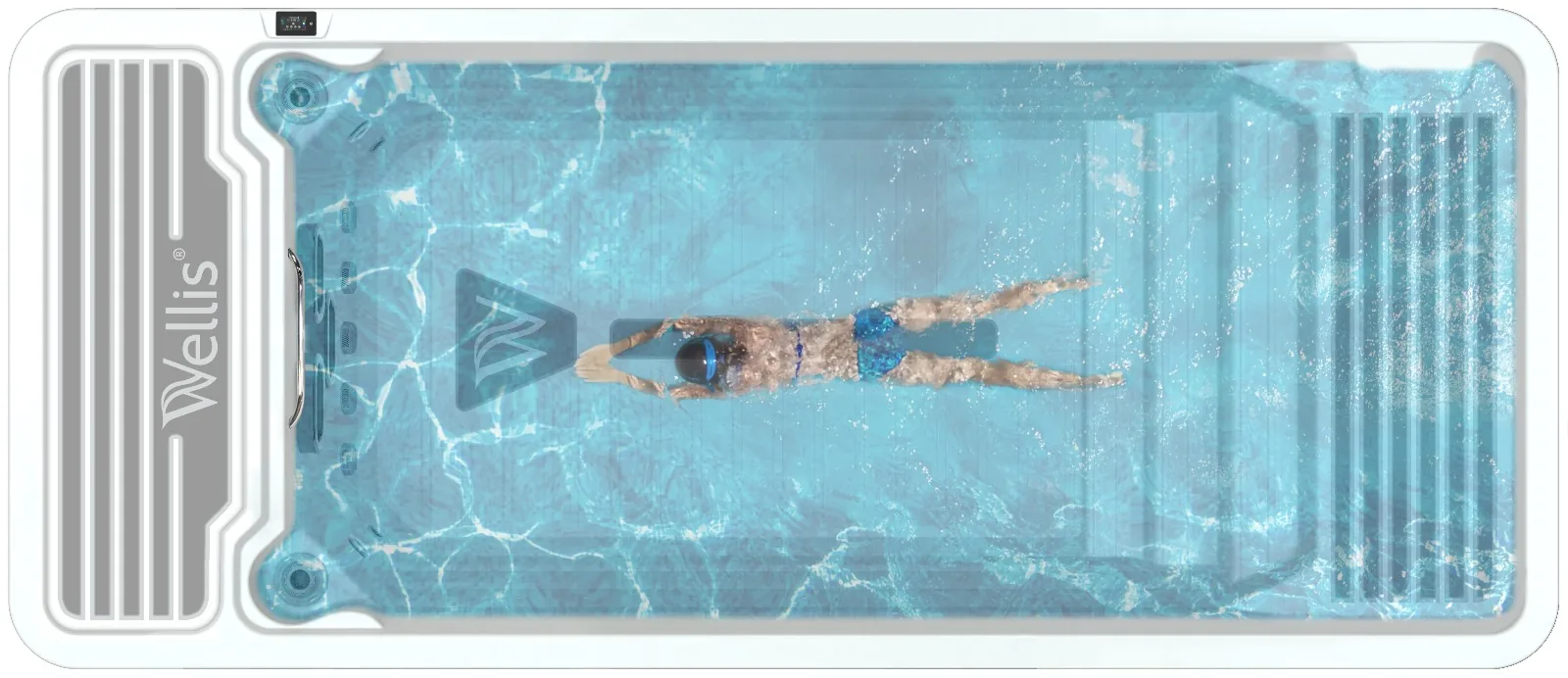
A swim spa holds between 1,500 and 2,500 gallons. A traditional in-ground pool holds 15,000 to 25,000. That volume difference completely changes the maintenance picture. Our detailed guide on swim spa water changes explains that most swim spas need a full water change every 3 to 4 months, but refilling one costs roughly $8 to $20 using a garden hose and takes about 30 to 45 minutes. That means you’re back in the water the same day.
| Factor | Traditional Pool | Swim Spa |
| Water volume | 15,000–25,000 gal | 1,500–2,500 gal |
| Full change frequency | Every 3–5 years | Every 3–4 months |
| Refill cost (water only) | $80–$200 | $8–$20 |
| Refill time | 10–15 hours | 30–45 minutes |
| Downtime during change | 5–7 days | Same day |
| Chemical restart complexity | High | Low |
Smaller volume means TDS builds up more slowly per gallon, and efficient circulation keeps the water in better balance day to day. When it does need refreshing, there’s no drama attached. If you’re weighing your options between the two, our swim spa vs pool comparison covers the full picture on cost, maintenance, and lifestyle fit.
The Bottom Line
Changing your pool water isn’t just a maintenance task. It’s a signal that your water care system has hit its limit. Traditional pools give you 3 to 5 years before that happens, then hand you a significant bill and a week without your backyard.
The smarter path is choosing a pool that keeps water in balance longer. The non-porous surface of a fiberglass shell slows TDS accumulation. Proper circulation stabilizes chemistry. And if a swim spa fits your lifestyle, water replacement stops being a stressful event and becomes a simple part of the routine.
Ready to build a pool that works harder so you don’t have to? Request a quote and talk to our team at Epic Swimming Pools today about fiberglass in-ground pool options that make ownership easier from day one.
Frequently Asked Questions
How often do you need to change pool water in a hot climate?
In hot climates, higher evaporation concentrates TDS and dissolved solids faster. Most pools in warmer regions land closer to the 3-year mark rather than 5 years. Heavy sun exposure also increases chlorine demand, which adds more chemical byproducts to the water over time. If you live somewhere with scorching summers and high pool usage, plan for the shorter end of the timeline.
What TDS level means it’s time to drain my pool?
Most pool care professionals recommend considering a partial or full water change when TDS climbs 1,500 ppm above your baseline reading, or once it exceeds 2,500 ppm in a freshwater pool. At that point, chemical treatments lose effectiveness, and water balance becomes increasingly difficult to maintain, regardless of what you add.
Can you drain a swimming pool yourself, or do you need a professional?
You can drain a pool yourself with a submersible pump, which rents for $50 to $150. The key considerations are draining slowly enough to avoid erosion (no more than 25 gallons per minute into storm drains), neutralizing chlorine before discharge, and monitoring groundwater pressure to prevent an empty shell from floating. For large pools, many homeowners find the professional route simpler once those requirements are factored in.
How much water does a swim spa use compared to a regular pool?
A typical swim spa holds 1,500 to 2,500 gallons compared to 15,000 to 25,000 gallons for a standard in-ground pool. That’s roughly 90% less water per fill. While swim spas need water changes more frequently (every 3 to 4 months), the total annual water consumption is still far lower than a traditional pool that gets fully drained every few years.
What are the signs that pool water needs to be replaced?
The clearest signs are an unquenchable chlorine demand, persistent cloudiness that won’t respond to treatment, constant pH drift, visible scaling on surfaces and equipment, and an unusually strong chemical smell even when chlorine levels test correctly. Any of those symptoms together usually point to TDS or cyanuric acid buildup that only fresh water will resolve.