
Small backyards don’t mean giving up on a pool. Compare the best swimming pool options…
How to Maintain a Swimming Pool (And Why the Right Pool Makes It Far Easier)
Keep your pool crystal clear, balanced, and ready to enjoy with simple, routine maintenance.
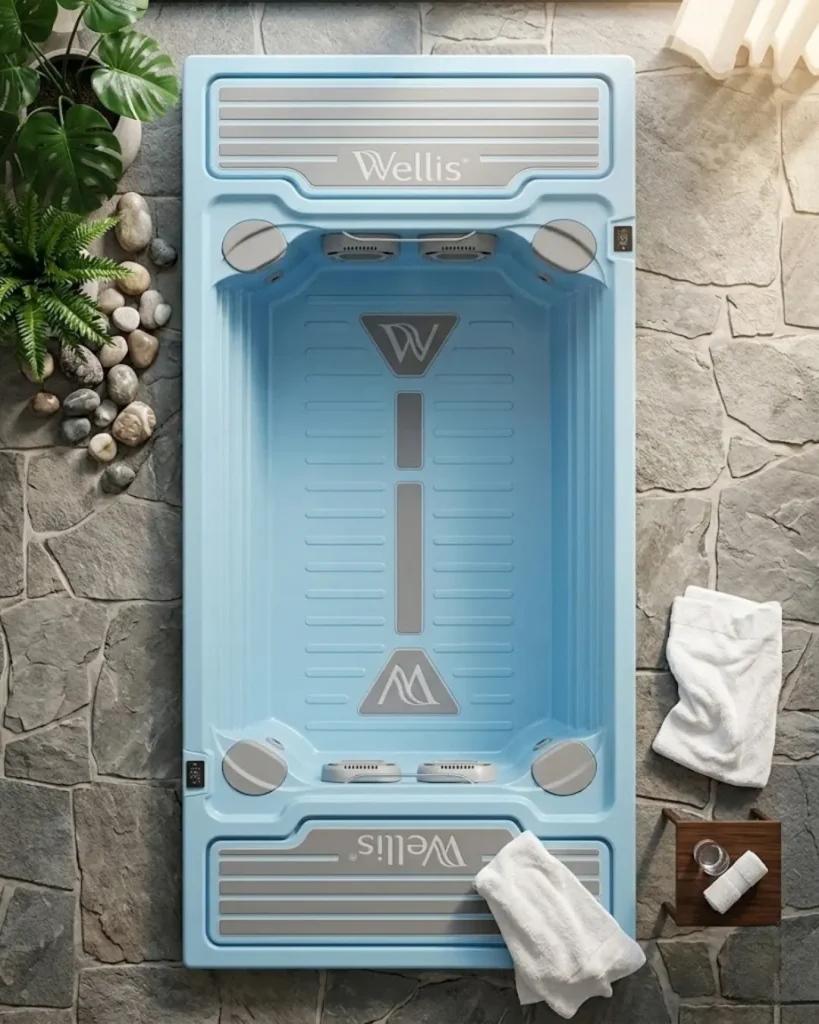
Maintaining a swimming pool means weekly skimming, vacuuming, filter backwashing, and consistent chemical balancing: a routine that costs the average homeowner $960 to $1,800 a year and 3 to 4 hours every week during swim season. But not all pools demand the same effort. Fiberglass pools and compact swim spas like the Wellis Beach Club naturally resist algae, use far fewer chemicals, and turn a weekend chore list into a quick weekly check-in.
The promise of a backyard pool is simple and sought after: Cool water on a hot afternoon, family memories, evenings that stretch past sunset. What’s less advertised? The maintenance side of the picture. A standard 20,000-gallon concrete or vinyl inground pool needs consistent, hands-on attention to stay clean, safe, and swimmable. Miss a week and the consequences show up fast in the form of cloudy water, the start of an algae bloom, and a filter that’s working harder than it should.
This guide gives you an honest, practical breakdown of everything traditional pool maintenance involves. From the chemistry and the cleaning routines to the filter work and what the time and cost actually add up to.
Once you see the full picture, we’ll look at why the type of pool you own determines most of your maintenance burden. We’ll also look at what it looks like when a pool is designed to work with you instead of against you.
Table of Contents
What Does Pool Maintenance Actually Involve?
Pool maintenance covers four core areas: water chemistry, surface cleaning, filtration, and seasonal care. For a standard 20,000-gallon inground pool, most homeowners spend 3 to 4 hours per week on DIY upkeep during swim season, with that figure climbing on any week something goes off-balance.
Here’s a closer look at the four categories:
- Water chemistry: Testing pH, alkalinity, and chlorine levels; adding chemicals to keep water safe and balanced
- Surface cleaning: Daily skimming, weekly brushing of walls and floor, vacuuming the pool bottom
- Filtration: Monitoring the pressure gauge, backwashing or cleaning the filter, checking water circulation
- Seasonal tasks: Opening in spring, closing in autumn, mid-season shock treatments, and equipment inspections
These four areas feed into each other. Poor water chemistry accelerates algae growth. Skipped brushing on a concrete pool lets algae root into the porous surface. A clogged filter drops water circulation, which makes chemical treatments far less effective. When one falls behind, the others get harder.
How Do You Balance Pool Water Chemistry?
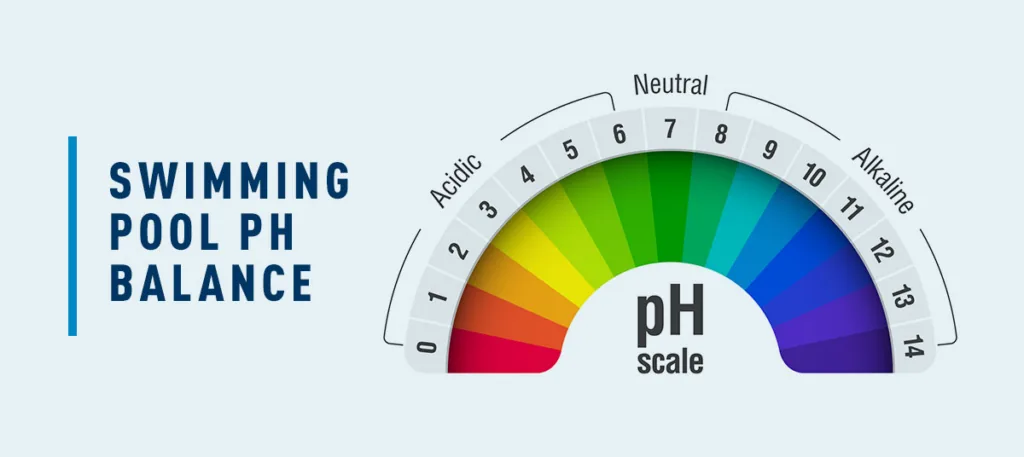
Balancing pool water means keeping pH between 7.2 and 7.8, total alkalinity between 80 and 120 ppm, and free chlorine between 1 and 3 ppm. Always adjust alkalinity first. It acts as a chemical buffer that stabilizes pH, so getting it right makes every other adjustment easier and longer-lasting.
Test your water two to three times per week during summer, and at least once a week in cooler months. Use test strips for quick daily checks and a liquid test kit for more precise readings before making chemical adjustments.
| Parameter | Ideal Range | If Too Low | If Too High | How to Fix |
| pH | 7.2 – 7.8 | Corrodes equipment, stings eyes | Cloudy water, reduced chlorine effectiveness | Low: add soda ash / High: add muriatic acid |
| Total Alkalinity | 80 – 120 ppm | pH swings wildly after rain or chemicals | Scale buildup, pH locks high | Low: add sodium bicarbonate / High: add muriatic acid |
| Free Chlorine | 1 – 3 ppm | Bacteria and algae multiply rapidly | Skin and eye irritation | Low: add chlorine / High: dilute or wait it out |
| Cyanuric Acid | 30 – 50 ppm | Chlorine burns off within hours of sun exposure | Chlorine loses effectiveness (chlorine lock) | Low: add stabilizer / High: partially drain and refill |
pH and Total Alkalinity
pH measures how acidic or basic your water is. Water below pH 7.2 is too acidic, meaning it corrodes metal fittings, damages pool liners, stings swimmers’ eyes, and eats through plaster surfaces faster than you’d expect. Water above pH 7.8 is too alkaline, which causes cloudy water, scale buildup on surfaces and equipment, and sharply reduced chlorine effectiveness.
Total alkalinity works as a stabilizer for pH. Keeping it in the 80 to 120 ppm range keeps your pH steady even after heavy rain, a big pool party, or a round of chemical additions.
Add sodium bicarbonate to raise alkalinity; use muriatic acid or sodium bisulfate to bring it down. Always add chemicals to water, never the other way around.
Chlorine, Stabilizer, and Shock
Chlorine is your primary sanitizer. It kills bacteria, breaks down contaminants, and prevents algae from getting a foothold. Free chlorine should stay between 1 and 3 ppm. Drop that, and bacteria can multiply rapidly. Push above 5 ppm, and the water becomes irritating to the skin and eyes.
Cyanuric acid (also called pool stabilizer or conditioner) protects chlorine from being broken down by UV light. Without it, outdoor pools can lose the vast majority of their chlorine within just a few hours of direct sun exposure. The target range for stabilizer is 30 to 50 ppm.
Shock treatment adds a concentrated dose of chlorine to break down chloramines (the byproduct of chlorine reacting with sweat and organic matter), kill early-stage algae, and reset the water after heavy use or a storm.
Most pools need shocking every one to two weeks during peak swim season.
Skimming, Brushing, and Vacuuming: The Weekly Reality
Physical cleaning is where pool owners feel the time commitment the most. It’s unavoidable, and for concrete pools, particularly, it’s genuinely labour-intensive.
Skimming means clearing leaves, insects, pollen, and other debris from the water surface before they sink and begin to decompose. Decomposing organic matter raises phosphate levels in the water, which directly feeds algae growth. In warmer months, most pool owners skim daily.
Brushing is where traditional pool owners carry an extra burden that fiberglass owners largely avoid. Concrete, gunite, and plaster surfaces are inherently porous and rough. Algae spores (including black algae, the most stubborn variety) anchor themselves in the microscopic pores of those surfaces and begin to grow. Brushing every wall, step, tight corner, and crevice each week is the only way to prevent algae from taking hold. Skip a week or two, and you’ll often find green or black patches waiting for you.
Vacuuming removes debris from the pool floor that the filter misses. Robotic pool vacuums have made this easier, but they still need maintenance: basket cleaning, unclogging, and scheduled runs to cover the full pool floor properly.
A complete skim, brush, and vacuum session on a 20,000-gallon inground pool takes around 1.5 to 2 hours. Over a six-month swim season, that’s 36 to 52 hours of physical cleaning alone, before you factor in water chemistry or filter work.
How Do You Backwash a Pool Filter?
Backwashing reverses the flow of water through a sand or DE (diatomaceous earth) filter to flush out the trapped debris inside. The trigger is your pressure gauge: backwash when it reads 8 to 10 psi above your clean baseline, which is the reading you note right after installing fresh filter media.
For a Sand Filter
Start by turning off the pump, setting the multiport valve to “backwash,” running until the sight glass shows clear water (usually around 2 minutes), then switching to “rinse” for 30 seconds before returning the valve to “filter.” DE filters need fresh diatomaceous earth powder added after backwashing to recoat the internal grids.
For a Cartridge Filter
Cartridge filters work differently. They don’t backwash at all. Remove the cartridge every 2 to 6 weeks, rinse it thoroughly with a hose, and do a deeper soak in filter cleaner periodically to break down built-up oils and minerals.
A neglected filter reduces water circulation, forces your pump to work harder, shortens the life of your equipment, and lets contaminants stay in the water longer. It’s one of those tasks that’s easy to postpone until something expensive fails.
Why Concrete Pools Fight a Harder Battle Against Algae
Here’s something most pool guides don’t spell out clearly: the surface material your pool is built from is one of the biggest factors in how much time and money you actually spend on maintenance.
Concrete and gunite pools have inherently porous surfaces. Those pores give algae spores the perfect place to anchor, grow, and resist chemical treatment. Black algae is the most persistent offender: it embeds its roots deep into concrete and forms a waxy, protective outer layer that chlorine struggles to penetrate even at high concentrations. Even with consistent chemical treatment and weekly brushing, black algae on concrete often requires acid washing every 3 to 5 years to fully clear.
The financial reality reflects this. Concrete pool owners can expect to spend around $25,000 over ten years when maintenance, repairs, and eventual replastering are factored in. Replastering alone (which most concrete pools need every 10 to 15 years) runs $10,000 or more per project. Annual pool chemical costs average $500 to $800 for a standard inground pool, with concrete pools typically landing at the higher end of that range.
All of this raises a straightforward question: what if the pool itself was built to fight less?
What Makes a Pool Genuinely Low-Maintenance?
A truly low-maintenance pool has three things going for it: a non-porous surface that resists algae and bacteria without constant chemical intervention, an integrated water care system that handles much of the sanitization automatically, and a water volume compact enough that chemical adjustments are fast, precise, and cheap.
Traditional large concrete pools struggle on all three counts. Fiberglass pools and compact swim spas deliver on all three, which is why the gap in time, cost, and weekly frustration between owning one versus the other is as wide as it is.
| Concrete/Gunite Pool | Fiberglass Pool | Wellis Swim Spa | |
| Surface type | Porous plaster or gunite | Smooth non-porous gel coat | Non-porous acrylic shell |
| Algae resistance | Low | High | High |
| Weekly cleaning time | 3 – 4 hours | 1 – 2 hours | Under 1 hour |
| Annual chemical cost | $600 – $800 | $175 – $400 | Lower (smaller volume) |
| 10-year maintenance cost | ~$25,000 | Significantly less | Lowest |
| Resurfacing required | Yes, every 10 – 15 years | No | No |
| Water care system | Manual | Manual or optional add-on | Integrated WellisGuard™ |
How Wellis Fiberglass Pools and Swim Spas Change the Picture
Wellis in-ground fiberglass pools feature a smooth, non-porous gel coat surface. Algae and bacteria can’t penetrate it the way they do with concrete, so there’s no weekly scrubbing marathon to keep the surface clear, no acid washing cycle every few years, and no replastering project on the horizon. The surface handles a lot of the passive maintenance work for you.
Paired with a modern integrated water care system, our in-ground fiberglass pools stay chemically balanced with a fraction of the input a concrete pool demands. Less chemical use means lower running costs, fewer trips to the pool store, less time adjusting and retesting, and water that’s noticeably gentler on skin and eyes.
For homeowners who want year-round aquatic wellness without the footprint (or the upkeep) of a full 20,000-gallon pool, Wellis swim spas take low-maintenance pool ownership even further. The Beach Club Premium swim spa holds far less water than a standard inground pool, which means chemical balancing is faster, cheaper, and easier to dial in precisely. Less water to heat also means lower energy costs year-round, a real advantage if you’re planning to use it through North Carolina’s autumn and winter months.
The Beach Club Premium includes an integrated WellisGuard™ water care system that monitors and maintains water quality automatically. You’re not testing water at seven in the morning before anyone’s had coffee. You’re glancing at the touchscreen panel or checking the WiFi-connected app, confirming everything is balanced, and getting in.
If you’ve been going back and forth on a swim spa vs. a traditional pool and trying to work out which fits your lifestyle better, the maintenance picture is one of the most practical things to consider.
What Kind of Pool Owner Do You Want to Be?
The pool you choose determines most of your maintenance load. Wellis fiberglass pools and swim spas are built so that pool day stays about swimming and relaxing, not chores.
Come see them in person at our showrooms in Raleigh and Charlotte, or browse our swim spas online to explore the full Wellis range.
Frequently Asked Questions
How often should you clean a swimming pool?
For a traditional inground pool, skim the surface daily, test water chemistry two to three times per week, and brush and vacuum weekly. Backwash the filter every one to four weeks, depending on how heavily the pool is used. Keeping a consistent routine prevents algae buildup, extends equipment life, and keeps chemical costs predictable throughout the season.
What chemicals do you need to maintain a pool?
The core chemicals are chlorine (sanitizer), pH increaser (soda ash), pH decreaser (muriatic acid), alkalinity increaser (sodium bicarbonate), cyanuric acid (UV stabilizer), and pool shock. Many pool owners also use algaecide as a preventive measure. Concrete pool owners tend to use more of each than fiberglass owners because porous surfaces absorb chemicals faster and are more prone to persistent algae.
How much does it cost to maintain a pool per year?
If you own a concrete or gunite pool, algae keeps returning because the porous surface gives spores somewhere deep to anchor and regrow, particularly black algae, which embeds its roots into the concrete and resists surface-level chemical treatment. Regular brushing and shock treatments slow it down, but the underlying surface makes algae a recurring problem rather than a one-time fix. Non-porous fiberglass and gel coat surfaces don’t share this issue.
Is a swim spa easier to maintain than a traditional pool?
Yes, considerably. A swim spa holds a fraction of the water volume of a standard 20,000-gallon inground pool, which makes chemical balancing faster and cheaper. Models like the Wellis Beach Club also include integrated water care systems that automate much of the sanitization work, turning daily maintenance into a quick check rather than a multi-hour session.
Request a Swimming Pool Project Consultation
Please call (919) 443-6663 or fill out our form below