
Discover the real costs of building your dream inground swimming pool in North Carolina, depending…
How to Build a Quality Swimming Pool at an Affordable Price?
Learn how to build a high-quality swimming pool at an affordable price with smart planning, materials, and installation choices.
Let’s start with some good news: You can build a basic backyard pool for as little as $500 using something called a galvanized stock tank or a drop-in vinyl kit. The real cost, though, shows up in year two and beyond: rust, liner replacements, constant chemical use, and a setup that sits dormant every winter. Looking for a way to avoid those long-term regrets without shelling out a fortune? This guide walks through the most popular budget builds step by step, then shows you the long-term numbers so you can decide what actually makes sense for your backyard and your wallet.
What Are the Most Affordable Ways to Build a Swimming Pool?
The three most popular budget pool options are stock tank pools ($500 to $5,000), above-ground frame pools ($300 to $3,000), and DIY vinyl drop-in kits ($3,000 to $15,000). Each can be set up without a contractor, but they differ in size, durability, and how long they hold up before you’re back at square one.
| Stock Tank Pool | Above-Ground Frame Pool | DIY Vinyl Drop-In Kit | |
| Setup Cost | $500 – $5,000 | $300 – $3,000 | $3,000 – $15,000 |
| Setup Time | 1 – 2 days | 2 – 6 hours | 1 – 3 days |
| DIY Difficulty | Easy | Easy | Moderate |
| Typical Capacity | 700 – 1,800 gallons | 3,000 – 10,000 gallons | 5,000 – 15,000 gallons |
| Lifespan | 5 – 10 years | 7 – 15 years | 10 – 20 years |
| Permit Required | Rarely | Rarely | Sometimes |
| Looks Permanent | No | No | Somewhat |
| Year-Round Use (NC) | No | No | No |
Stock Tank Pools
It’s no surprise that stock tank pools went viral. The idea is simple: grab a galvanized livestock tank, add a pump and some chemicals, and you’re swimming by the weekend for under $2,000. Sizes run from 6-foot rounds holding about 700 gallons to 10-foot tanks that hold up to 1,800 gallons.
According to Angi, a basic setup with a tank, pump, and filter runs $800 to $1,500 total. A more built-out version with decking, shade structure, and landscaping can push $3,000 to $5,000. The appeal is real, and the payoff is instantaneous.
Above-Ground Frame Pools
Steel and resin frame pools from big-box stores are another very common entry point. Kits start around $300 for small round pools and climb toward $2,500 for larger oval models. Setup takes a few hours with two people.
These give you more room than a stock tank, which is useful for families, but they’re bulkier, harder to move once they’re up, and they tend to dominate the yard visually.
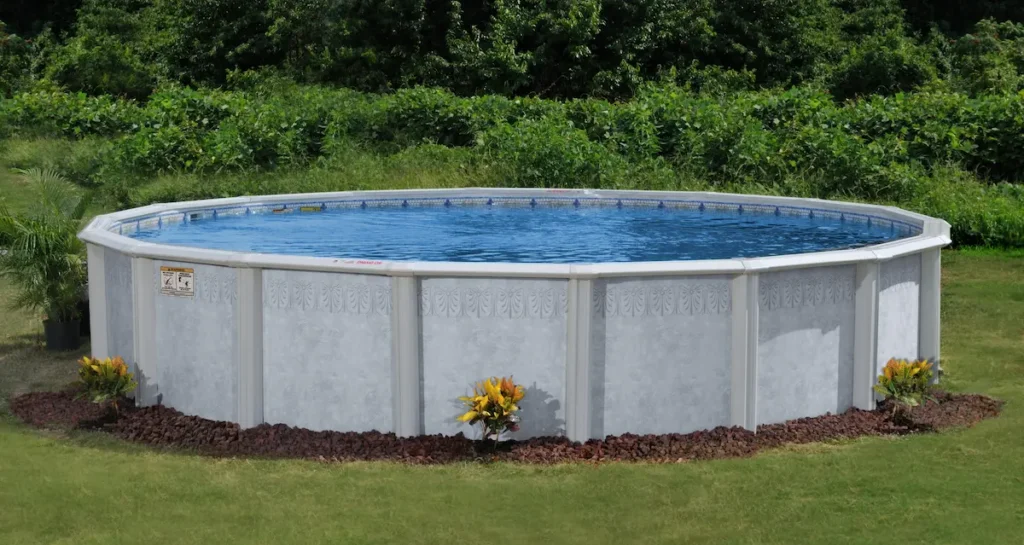
Table of Contents
DIY Vinyl Drop-In Kits
A step up from frame pools, these use steel or composite wall panels with a vinyl liner dropped inside. They look closer to a real pool and tend to last longer than a basic frame pool. They’re still not in-ground, though, and the liner is a recurring replacement cost that starts adding up quickly.
How Do You Build a Stock Tank Pool Step by Step?
Building a stock tank pool takes one to two days and requires no special skills or permits in most areas, so it’s become one of the most popular DIY options in 2026. Basically, you pick a flat spot, place the tank, drill fittings for a pump, drop in a liner, fill it, balance the chemicals, and maintain it weekly. Most people are swim-ready within 48 hours of starting.
Here’s what the process looks like in-depth:
Step 1: Choose Your Tank Size and Location
First, figure out how many people will use the pool at once. A 6-foot tank is fine for two adults, but an 8 or 10-foot model will work far better for families.
Keep in mind that the location must be completely flat; even a slight slope creates uneven pressure on the walls and makes the water line look crooked. HandBuilt.io recommends laying a base of compacted gravel or pavers before setting the tank to make this easier.
Step 2: Install a Pump and Filter
To install the pump and filter, you’ll drill one or two holes using a hole saw bit and waterproof bulkhead fittings. A basic pump and filter combo runs $100 to $200, and while it won’t match the filtration power of a full-size pool, it will keep water circulating enough to reduce algae when paired with regular chemical maintenance.
Step 3: Add a Liner
Galvanized steel reacts with chlorinated water over time, which means that without a liner, you’ll see rust staining and corrosion within the first season. A vinyl liner runs $200 to $400, protects the metal, and makes the interior much easier to clean. Most experienced DIYers say it’s worth the extra cost from the start.
Step 4: Balance the Water
Fill the tank and test the chemistry before anyone gets in. Aim for a pH between 7.2 and 7.8 and a consistent chlorine or bromine level.
Because stock tanks hold much less water than a standard pool, chemical swings happen fast; heavy rain or a warm weekend can throw things off within hours. Angi estimates ongoing chemical costs at $20 to $50 per month, depending on use and weather.
Step 5: Maintain It Weekly
Plan on testing the water two to three times per week and shocking it regularly. Most stock tank pool owners drain and refill completely one to two times per season because the small water volume makes it hard to fully recover from algae problems without starting fresh.
What Does an Affordable DIY Pool Really Cost Over Time?
A stock tank pool that costs $1,500 to set up often runs $4,000 to $7,000 or more over five years once you account for chemical costs, pump replacements, liner wear, and the near-certain full replacement before year 10. Above-ground frame pools face similar math. The metal corrodes, the liner degrades, and the clock starts ticking from day one.
Here’s how the three main budget builds compare to a fiberglass in-ground pool over 10 years:
| Stock Tank Pool | Above-Ground Frame Pool | Fiberglass In-Ground Pool | |
| Setup Cost | $500 – $5,000 | $300 – $3,000 | $45,000 – $85,000 |
| Typical Lifespan | 5 – 10 years | 7 – 15 years | 25 – 50 years |
| Annual Maintenance | $500 – $1,200 | $600 – $1,400 | Lower (no liner replacements or resurfacing) |
| Year-Round Use (NC) | No | No | Yes (with heating) |
| Adds Home Value | No | No | Yes |
Cost data sourced from Angi pool maintenance estimates and HomeGuide fiberglass pool costs.
The Hidden Maintenance Trap Nobody Warns You About
The upfront number looks great. What doesn’t appear in that number is everything that happens in years two, three, and five.
Quick Corrosion Time
Galvanized steel tanks are designed for livestock water, not chlorinated pool water. Even with a liner, the metal around fittings and any exposed edges corrodes faster than most people expect. When rust works through the tank wall, you’re not patching it. You’re replacing the entire tank.
Vinyl Liner Wear and Tear
Above-ground frame pools have their own recurring costs. The vinyl liner is the first thing to give out. UV exposure and chemical wear cause it to shrink, crack, and eventually leak. Liner replacement costs $350 to $1,500, depending on the pool size, and most above-ground liners last only five to seven years at best.
Winter Blues
Then there’s the North Carolina winter problem. You can’t leave a stock tank or above-ground pool filled through a hard freeze without damaging the pump, fittings, and liner. That means draining in October, storing the equipment, and setting everything back up in April. It’s a seasonal project that eats a weekend every year, for as long as you own the thing.
Plus, none of these setups add anything to your home’s resale value. Appraisers treat above-ground pools as personal property rather than a property improvement, so there’s no equity upside to consider.
Is a Fiberglass In-Ground Pool Actually More Affordable Than You Think?
This is a question we get fairly often in this conversation: If an above-ground pool doesn’t sound like the best option, is it possible for an in-ground fiberglass pool to be affordable? The comparison that trips people up most here is sticker price vs. total cost of ownership.
Fiberglass pools cost $45,000 to $85,000 to install, but their annual chemical costs run about $175 compared to $750 for a concrete pool, and they never need the acid washes or plaster resurfacing that add thousands to the concrete ownership tab every decade. They go in within about three weeks, last 25 to 50 years, and the smooth gel-coat surface resists algae far better than any porous surface.
A $2,000 stock tank pool that needs replacing after seven years, plus $700 a year in chemicals and parts, has quietly cost $12,000 to $15,000 by year 10. A fiberglass pool costs more to buy, but you’re not purchasing a new shell every decade, you’re not replacing liners, and you’re not draining everything every fall.
Angi confirms that concrete pools require plaster resurfacing every 10 to 15 years at $6,500 or more per 1,000 square feet. Fiberglass skips all of that. It also uses noticeably fewer chemicals per year because the non-porous surface doesn’t absorb water or feed algae growth the way concrete does. Angi puts the 10-year maintenance total for a concrete pool at around $25,000, while fiberglass owners spend a fraction of that over the same period.
For homeowners across Raleigh, Durham, and the wider Triangle area, Epic Swimming Pools installs pre-fabricated fiberglass in-ground pools that skip the months-long construction timeline of a concrete build. Most installs go from excavation to swim-ready in days. The full fiberglass pool cost breakdown shows exactly where that investment goes, and the benefits of fiberglass pools guide lays out a clear side-by-side against concrete and vinyl.
Why a Swim Spa Might Be the Smartest Move in This Price Range
If a full in-ground pool feels like too much space, too much upfront cost, or too big a commitment right now, a swim spa is worth a serious look.
Cost
Angi puts swim spa prices at $10,000 to $30,000 for the unit, with installation on top. Running costs land at roughly $1 to $3 per day, which works out to about $30 to $90 per month. That figure comes from our own swimspa running cost guide, and HomeServe confirms similar figures for comparable insulated units. Compare that to heating a full-size pool through a North Carolina spring and fall.
Year-Round Multipurpose Use
A swim spa includes adjustable resistance jets for lap swimming, therapeutic jets for recovery and relaxation, and water you can keep warm year-round. Unlike a stock tank or above-ground pool that sits empty every November, a swim spa runs every month of the year. That matters more than most people realize until they’re looking at a dead, drained pool in their backyard in January.
In-Ground Options
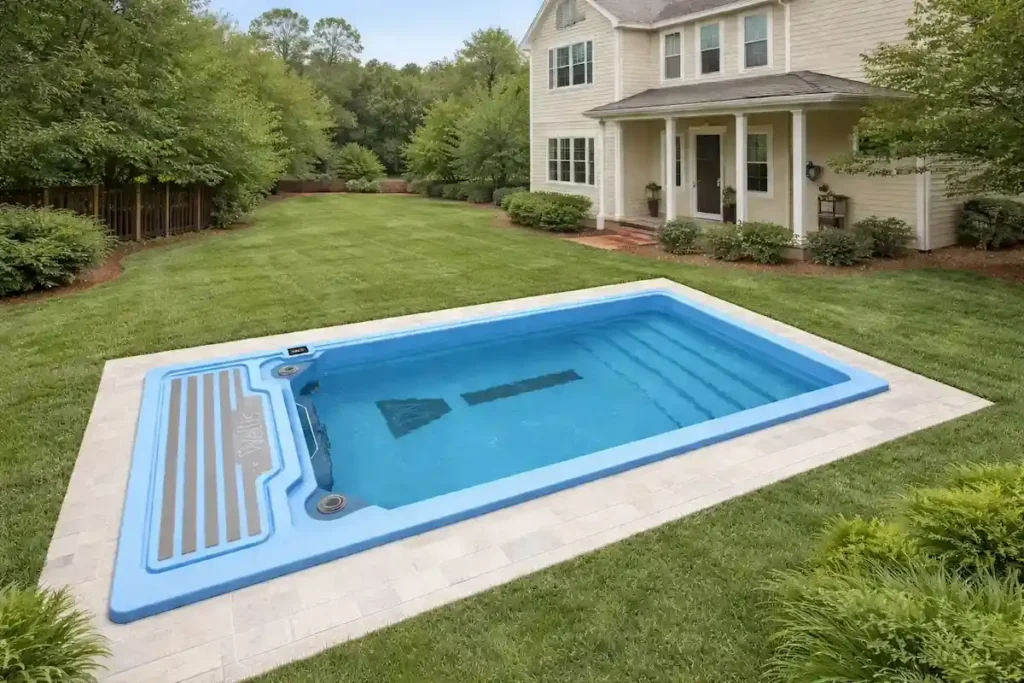
They also work installed in the ground just like a pool, which gives you a clean, permanent look at a fraction of what a full concrete build costs. For families who want swimming, fitness, and a year-round water feature without a six-figure price tag, a swim spa often delivers more usable hours per year than a seasonal above-ground alternative.
Our swim spa vs pool comparison covers nine key differences if you want the full breakdown.
How to Build an Affordable Swimming Pool in 2026
Building an affordable pool this summer is absolutely doable. A stock tank or above-ground setup can get you swimming for under $2,000, and it’ll hold up fine for a few seasons with consistent care.
But over five to ten years, the numbers tell a different story. Between liner replacements, pump failures, chemical costs, winter storage, and eventual full replacement, budget pool builds cost a lot more than their price tags suggest. And every winter, they sit unused while a permanent setup would keep running.
If you’re in North Carolina and want a year-round solution that adds real value to your property, a prefabricated fiberglass pool or swim spa is worth pricing out. The long-term math tends to surprise people in a good way.
Request pricing from our team or visit our NC swimming pool and swim spa showrooms to see the options in person.
Frequently Asked Questions
What is the most affordable inground pool you can build yourself?
The most affordable in-ground option is a DIY vinyl liner pool using steel or aluminum wall panels. Materials start around $10,000 to $15,000 if you handle most of the labor yourself, though excavation costs and local permit fees add to that total. Concrete and fiberglass in-ground pools typically require professional installation and start at $45,000 and up.
How long does a stock tank pool last?
A galvanized steel stock tank used as a pool typically lasts 5 to 10 years, depending on how well you manage water chemistry and whether you use a vinyl liner inside. Without a liner, chlorinated water speeds up corrosion and can cause rust-through in as little as three to five years. With consistent care and a good liner, you can push toward the higher end, but a full replacement is still likely within a decade.
What are the biggest problems with DIY backyard pools?
The most common issues are metal corrosion, difficulty keeping stable water chemistry in small water volumes, limited filtration capacity compared to permanent pools, and seasonal unusability during cold months. Above-ground pools also add no resale value to your home and can be challenging to insure under standard homeowners policies.
How does the long-term cost of a fiberglass pool compare to a stock tank pool?
A stock tank pool costs $500 to $5,000 upfront but typically runs $500 to $1,200 a year in maintenance, chemicals, and replacement parts. Over 10 years, that adds up to $5,000 to $17,000 or more, plus the cost of eventual full replacement. A fiberglass pool costs more to install but requires far less ongoing spend year over year, with no liner replacements, no acid washes, and no resurfacing for decades.
Can a swim spa be installed in the ground like a pool?
Yes! Swim spas can be fully or partially in-ground, and the finished look is nearly identical to a traditional pool. Installation requires excavation and proper drainage planning, but the result is a permanent, year-round water feature at a fraction of the cost of a full concrete pool build. Many homeowners across North Carolina choose in-ground swim spa installation for exactly that reason.