Do You Need a Permit for a Swimming Pool in North Carolina?
Learn what pool permits North Carolina homeowners need, including building permits, electrical permits, fencing rules, HOA approval, and what can affect your timeline.
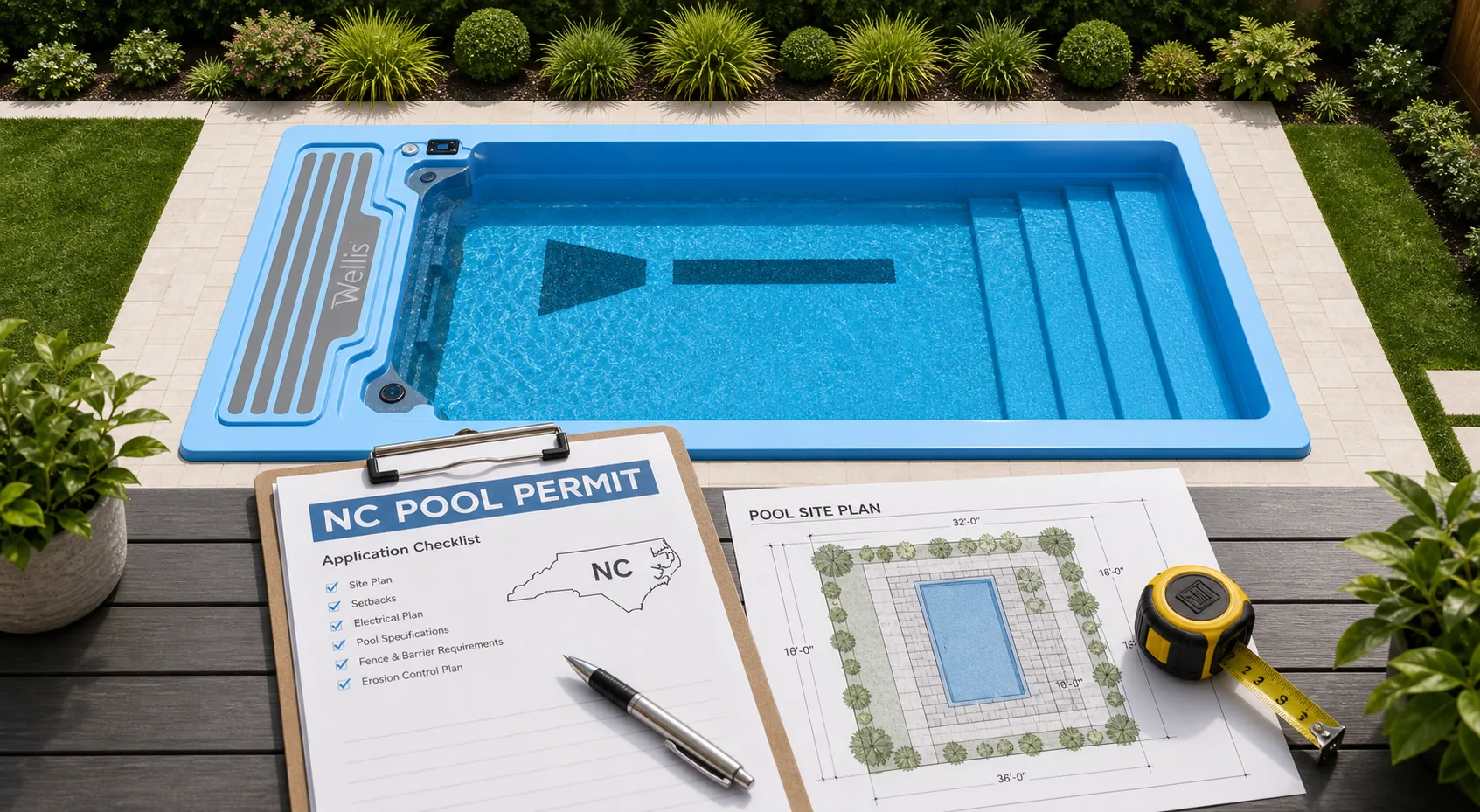
In North Carolina, most residential pools require a building permit and an electrical permit before installation begins. The rule applies to any pool or spa designed to hold more than 24 inches of water, which includes many above-ground pools, swim spas, and all in-ground systems. State code also requires a fence or barrier around the pool. Timelines and specific requirements vary by county and HOA. This guide walks through what most NC homeowners need to plan for.
The permit question is one of the first things that can stall a pool project, not because the answer is complicated, but because most homeowners do not know where to start. Do you need one? What kind? How long does it take? Can your HOA add more rules on top of what the county requires?
The short answer is yes, a permit is almost always required in North Carolina, whether you are installing an in-ground pool in Raleigh, an above-ground system in Sanford, or a swim spa in Charlotte. Skipping that step can result in failed inspections, forced removal, or problems when you sell the home.
The good news is the process is manageable once you know what it involves. This guide covers the baseline state requirements, the fencing rules every pool owner in NC needs to understand, how long the process typically takes, and what swim spa buyers should know before they assume the rules are different.
Table of Contents
Do You Need a Permit for a Pool in North Carolina?
In North Carolina, a permit is required for any pool, spa, or hot tub designed to hold more than 24 inches of water. That threshold covers the vast majority of permanent pool installations, including most above-ground pools and all in-ground systems. There are very few exceptions.
The permit requirement is not just a formality. It triggers inspections that verify the structure, the electrical connections, and the safety barriers are all installed to code. According to the City of Raleigh’s permitting guidance, swimming pools require both a building permit and an electrical permit at minimum. If the pool connects to your home’s water supply, a plumbing permit is typically required as well.
Portable and inflatable pools that stay below the 24-inch depth threshold are generally not subject to permit requirements. But anything permanent, semi-permanent, or capable of holding more than 24 inches of water almost always requires one.
Which Pool Types Require a Permit in North Carolina?
Almost all permanent pool installations in North Carolina require a permit when designed to hold more than 24 inches of water. That applies to in-ground pools, semi-inground pools, most above-ground pools, and most swim spas. The pool type you choose can affect the specific documentation and review process, but it rarely eliminates the permit requirement altogether.
Here is a breakdown by pool type:
In-ground swimming pools: Building and electrical permits required in all NC counties. A site plan showing location, dimensions, and setbacks from property lines is typically part of the application.
Semi-inground pools: Same building and electrical permit requirements as in-ground. The partial excavation and structural installation both trigger the permit process.
Above-ground pool options: Required if the pool can hold more than 24 inches of water. Most standard above-ground pools qualify. An electrical permit is also required for pump and lighting connections.
Swim spas and hot tubs: Generally required. How a swim spa is classified by your local building department can vary depending on installation type and municipality. More on that in a section below.
Epic Swimming Pools Note: One of the things homeowners are often surprised to learn during consultations is that above-ground pools are not automatically exempt from permits just because they are not in the ground. If the pool holds more than 24 inches of water and requires an electrical connection, a permit is required in virtually every NC county we work in. Knowing that before you shop saves real time in the planning phase.
What Permits Does a Pool in NC Actually Require?
At minimum, most NC pool installations require a building permit and an electrical permit. If the pool connects to your home’s water supply, a plumbing permit is typically needed as well.
The building permit covers the structural installation of the pool. The electrical permit covers the pump, filter, lighting, and any related wiring. A site plan showing pool location, surrounding decking, and setbacks is usually submitted as part of the building permit application.
Wake County handles permit applications through its county permit portal. Properties served by an onsite septic system also need to verify that the pool placement maintains required clearances from the wastewater system. In Mecklenburg County, homeowners need both a public health plan review from the county environmental health department and a building permit from the county land use agency. Those are two separate applications with two separate review processes.
Requirements can also vary by city. Some municipalities within a county add their own review steps or zoning checks. Contacting your local building department early, before finalizing product selection or pool placement, prevents surprises later in the process.
What Are the Fencing and Barrier Requirements in NC?
North Carolina’s residential building code requires a barrier around any residential pool deeper than 24 inches. These rules are set by NC Residential Code Appendix V and are designed to limit unsupervised access, especially for young children.
The core requirements are:
The top of the barrier must be at least 48 inches above grade, measured from the side of the fence that faces away from the pool.
The gap between the bottom of the fence and the ground cannot exceed 2 inches.
Openings in the fence must not allow a 4-inch sphere to pass through.
Gates must be self-closing and self-latching, with the latch positioned on the pool side and out of reach of small children.
HOA requirements can go further than state minimums. Many planned communities in the Raleigh area and Charlotte require specific fence materials, such as wrought iron or aluminum, and some require a 5-foot minimum height rather than the 4-foot state baseline. These community-level rules are separate from county permits, which means you may need HOA approval before you even apply at the building department.
Requirement
NC State Code Minimum
Common HOA Addition
Fence height
48 inches
60 inches in some communities
Fence material
No material restriction
Often aluminum or wrought iron
Gate hardware
Self-closing, self-latching
Same; some require keyed locks
Bottom clearance
2-inch maximum gap
Same
Safety cover exception
Available for qualifying portable spas
Often not accepted as a standalone barrier
One limited exception worth knowing: portable hot tubs and spas with a safety cover that meets the ASTM F1346 standard may be exempt from the full barrier requirements under state code. That exemption is generally not available for swim spas, which are larger and not portable in the same sense.
From the Epic Swimming Pools Team: In many Triangle and Charlotte neighborhoods, HOA fence requirements are stricter than the state minimum, and they often specify materials that affect your overall project budget. We always recommend reviewing your HOA documents before finalizing pool placement or product selection. Finding out about a material or height requirement after you have already committed to a fence plan can add real cost and delay to the project.
How Long Does the Permit Process Take in NC?
Plan on two to four weeks for permit approval in most North Carolina counties. That window covers the building department’s review of your application, site plan, and any supplementary approvals required for your lot.
Spring and summer are the busiest seasons for building departments across Wake, Mecklenburg, Durham, and surrounding counties. According to current permitting guidance in NC, processing can run longer during peak months, sometimes adding one to two weeks depending on the county’s backlog.
A few things that can extend the standard timeline:
Septic setback review: If your property uses an onsite wastewater system, the building department may need to verify that the pool placement maintains required clearances from the drain field.
Flood hazard or impervious surface checks: Properties in flood zones or in areas subject to impervious surface limits may require additional review through watershed management.
HOA approval: If your community requires HOA sign-off, that process often runs separately from the county permit and may need to be completed first.
The pool and swim spa systems Epic Swimming Pools carries do not shorten the permit review period itself. But once permits are in hand, these systems are often installed in a fraction of the time traditional concrete builds require. For a full look at what goes into the project investment, our pool cost guide breaks down upfront and ongoing costs across pool types.
Do Swim Spas Require a Permit in NC?
Most swim spas require both a building permit and an electrical permit in North Carolina. The exact classification, though, can vary depending on how the unit is installed and which municipality you are in.
Some counties treat above-ground swim spas under hot tub or spa-style permit requirements. Others apply full pool permit requirements regardless of installation method. The safest approach is to describe your specific product, its dimensions, and the planned installation method to your local building department before you assume which category applies. Johnston County’s guidance, for example, confirms that hot tubs and spas also require permits and inspections, the same as pools.
One exemption to be aware of: portable hot tubs and spas with a compliant ASTM F1346 safety cover may be exempt from full barrier requirements under NC state code. Swim spas are not typically portable in that sense, so this exemption usually does not apply to them.
For buyers considering the Wellis Beach Club swim spa, the permit category can vary depending on whether the unit is installed above-ground, semi-inground, or in-ground. Confirming the classification with your local building department before finalizing the installation plan is a practical step that can prevent delays once the project is underway.
Expert Tip from Epic Swimming Pools: When you call your local building department to ask about a swim spa permit, mention the specific installation method you are planning, not just the product type. An above-ground swim spa and a semi-inground swim spa can fall into different permit categories in the same county. Asking the right question upfront gets you a useful answer instead of a general one that may not match your actual setup.
What Else Can Affect Permit Approval?
Beyond the permit application itself, a few site-specific factors affect where your pool can go and whether it gets approved.
Setbacks from property lines: Most NC counties require pools to sit a minimum distance from property lines and other structures. That distance is often five feet or more, but it varies by municipality. Check your local zoning rules before choosing a placement.
Septic system clearances: Pools placed too close to an existing drain field can create both permitting and health code problems. If your home is not on public sewer, this is a critical detail to confirm before finalizing your layout.
Electrical requirements: Most pool and swim spa systems require a 240-volt electrical connection. Licensed electrical work is part of the permit process and is typically required for final inspection sign-off.
Impervious surface limits: Some NC counties and municipalities cap the total covered or paved area on a residential lot. Pool decking can count toward that limit. If your lot is already close to the cap, you may need to adjust your deck plans or reduce existing impervious surface to get permit approval.
Working with a pool installer familiar with your county’s specific requirements can reduce back-and-forth with the building department. Epic Swimming Pools helps homeowners across the Triangle and Charlotte regions understand local permit requirements before they commit to a product or layout. For the Raleigh area specifically, our team serves as a pool contractor in Raleigh and can walk you through local planning requirements from the first consultation.
Conclusion
In North Carolina, permits are required for most residential pool installations. The 24-inch depth rule covers nearly every permanent pool and spa system, and state code adds mandatory fencing and barrier requirements on top of that. County requirements, HOA rules, and site conditions can each add steps to the process, but none of them are unmanageable when you plan ahead.
Starting the permit conversation early, reviewing your HOA documents before finalizing placement, and working with a local installer who knows the rules can prevent most of the delays homeowners run into.
If you are ready to start comparing pool options for your North Carolina backyard, Epic Swimming Pools can help you understand what fits your yard, your timeline, and your local requirements before you make a decision. Call us at 919-443-6663 or request pricing to start the conversation.
Frequently Asked Questions
Do I need a permit for an above-ground pool in North Carolina?
Yes, in most cases. North Carolina requires a building permit for any pool or spa that can hold more than 24 inches of water, and most standard above-ground pools meet that threshold. An electrical permit is also required for the pump and lighting connections. Confirm the specific requirements with your local county building department before installation.
What happens if I install a pool without a permit in NC?
Installing a pool without the required permits can result in a stop-work order, required removal of the unpermitted structure, fines from the local building department, and complications when you sell your home. Homebuyer inspections and title searches often uncover unpermitted work. Getting the permit before installation is always the safer path.
How much does a pool permit cost in North Carolina?
Permit fees vary by county, project scope, and pool type. They can range from a few hundred dollars to over a thousand dollars depending on your municipality, the number of permits required, and whether additional plan reviews are needed. Your local building department can provide a current fee schedule for your specific project.
Can my HOA stop me from building a pool?
Your HOA can require approval before you build a pool, and it can deny that approval or require changes to your plans. HOA rules vary widely and may restrict pool type, fence material, pool placement, and visual impact from neighboring lots. Reviewing your HOA documents and submitting for approval before applying for county permits can prevent design changes mid-project.
Does a swim spa require the same permit as an in-ground pool in NC?
It depends on the installation method and the municipality. Some counties treat above-ground swim spas under hot tub-style requirements, while others apply full pool permit requirements regardless of installation method. Describing your product, its dimensions, and your planned installation method when you contact your local building department will give you the most accurate answer for your situation.